Willard Suitcases / Margaret D

On Tuesday, Peg and I started in on Margaret D’s cases. By all accounts she came to Willard with her entire household, which included a car. There is so much of hers in the collection that we literally did not know where or how to start. The first shot we took is of this remnant of a shipping label, and it seemed as good a place as any to begin. She came to Willard from the Mount Morris TB Hospital, but I haven’t yet seen anything with a date on it to know for sure when she arrived.
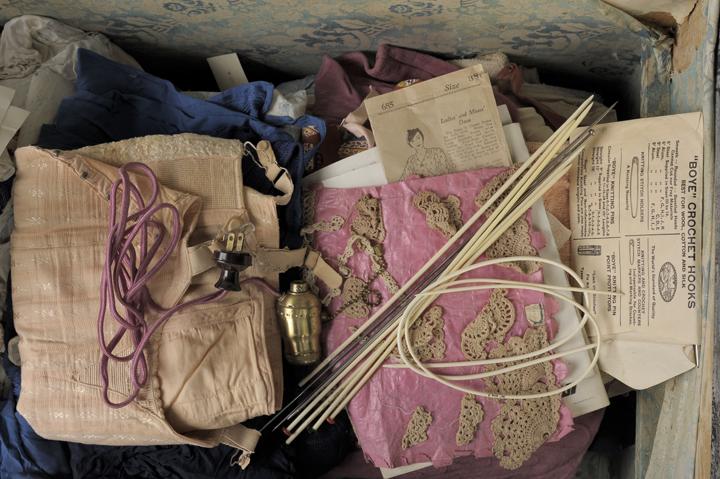
It will take us weeks to get through her things, but now that we have started, I feel excited to proceed. I will continue to post about her as we move ahead.
My son Peter sent me a link to an interesting article in Sunday’s Washington Post. It is about a woman who struggles with a lot of the same issues that many Willard patients must have experienced. Here is the link.
Willard Suitcases / Henry L

I have just uploaded a few more cases to the willardsuitcases.com site. Henry L’s cardboard box is one of the more interesting in the collection. This photograph was in the Exploratorium exhibit, and it is one that my friend Alex Ross printed at about 48 inches wide. It looks amazing huge.
Peg is back from her travels, and we hope to begin shooting again sometime this week. We are both eager to get back to it.
Have a great weekend, everyone.
Willard Suitcases / Thomas Y
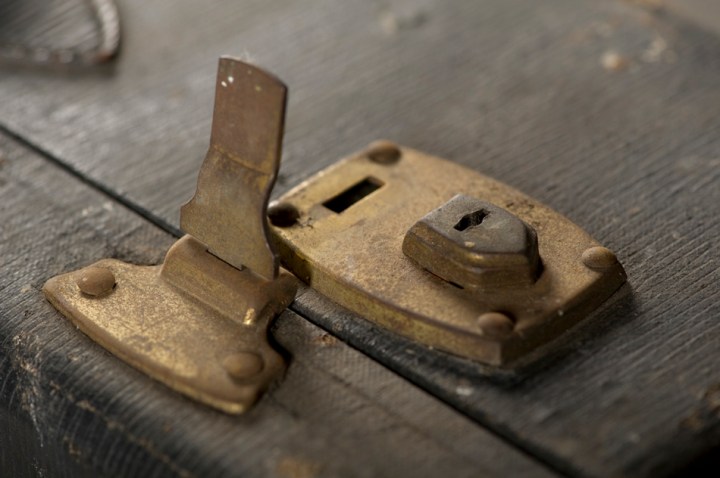
One of my goals in the early part of this year is to work very hard at uploading the cases to willardsuitcases.com. Today I edited Thomas Y’s case. Here is a shot of one of the locks. Sometimes I find myself just opening and closing them over and over; the sound can be very evocative.
When I started this project, I truly had no idea of the way that it could touch people. On a daily basis I get email and comments from folks who stumble across the photos online. I save them all, and sometimes I am awed by how the work is perceived by people whose lives have been touched by mental illness. Today, a comment was posted by Daphne and since it was put up publicly, I hope that she won’t mind if I quote her here.
“I just saw this. oh my, I am so humbled for those who you make alive and human again. They were just like us in many ways. To be shrunk into ONE suitcase…is beyond me. I have a lifetime of mental illness in my family, and I have to say, they are just like us…all in all…as you show. Thank you.”
No, Daphne…..thank you.
Hallway / Suitcases

I am in a motel in Erie, PA on my way to Wittenberg University where I will be spending the next few days talking to faculty and students about the suitcase project. I am really excited about this and owe a debt of thanks to my friend Peter Wray for reconnecting me to Witt.
Willard Suitcases / Joseph A / Peggy Ross
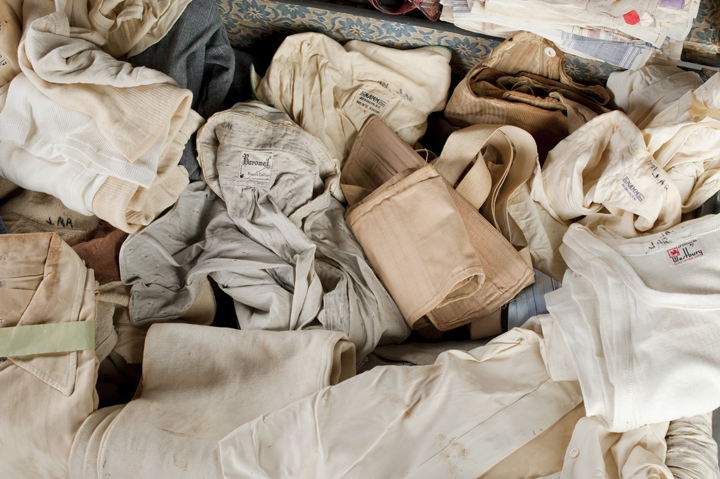
I was back in Rotterdam at the storage facility shooting suitcases this past Friday. The last time I was there, Peggy and I were only able to get part way through Joseph A’s possessions, and I was really eager to finish up. I posted about that day here. Most of what was in his two large trunks was clothing, and as I have said before, setting up this sort of shot is difficult for me.
Thank goodness for Peg. I have mentioned before just how important she is to the project. I probably would have never done the second Kickstarter without her, or for that matter, even thought about shooting all 400 of the suitcases. Friday was a good case in point. Every single article of clothing in Joseph’s collection had been assigned a catalogue number by the museum. This meant taking the objects out of their archival boxes, keeping track of the small pieces of paper on which those numbers were written, hiding the numbers in the folds of the clothes so they weren’t visible in the photographs, setting up the shot, taking the photographs, rematching all the numbers with the articles, and finally putting them back into their designated storage boxes. We worked for about four hours on this one trunk; had I been alone it would have taken days.
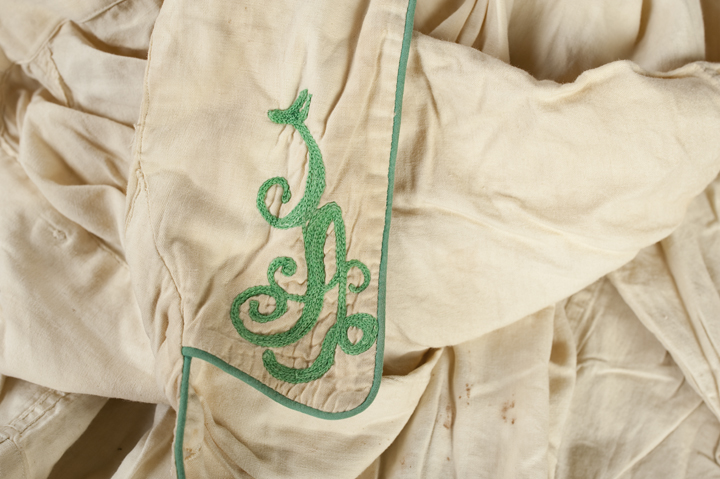
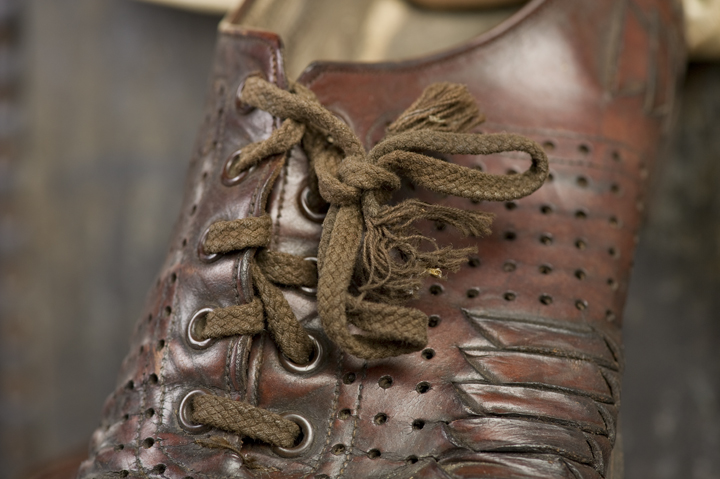
And in addition to all of this detail work, she helps to organize the shots, and sees things that I would otherwise miss. When we were putting Joseph’s clothes away, she pointed out that his initials had been embroidered onto the collar of his pajamas, and it makes for a lovely picture.
So a huge thank you to Peg for her organizational skills, hard work, and dedication to the project. I couldn’t do this without her.
Willard Suitcases / Thelma R
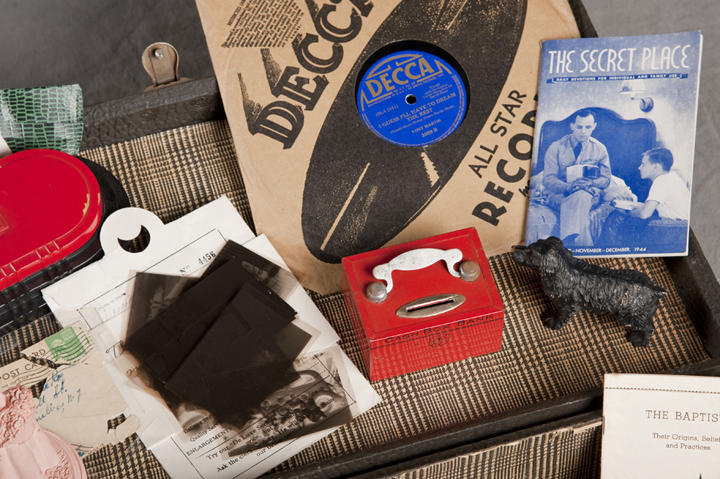
I have been working hard to continue uploading suitcases to the willardsuitcases site. I have just put up Thelma R’s case and it is one of my favorites. For those of you who are new to the project, you can see what is up so far here.
Hydrangea

We have a bunch of different hydrangea(s?) growing around the house. I especially like the color of these ones.
I keep meaning to post a bunch of photographs covering what’s been going on in the past few weeks, but I don’t seem to get around to it. I have been trying to put up at least one new case on the Willard site each day for the past week. Check out Pearl B’s case, which I uploaded this evening.
Thanks for following, everyone. Wishing you all a great week.
Willard Suitcases / Fred T / NYSHA presentation / La Repubblica

Hi everyone. Fred T’s suitcase is really interesting. I have just uploaded it to the willardsuitcases.com site and you should check it out (Click on “The Cases” and then click on Fred T). It was a great case for a lot of reasons, not the least of which it proves that many residents of Willard were free to walk the grounds and to leave on occasion.
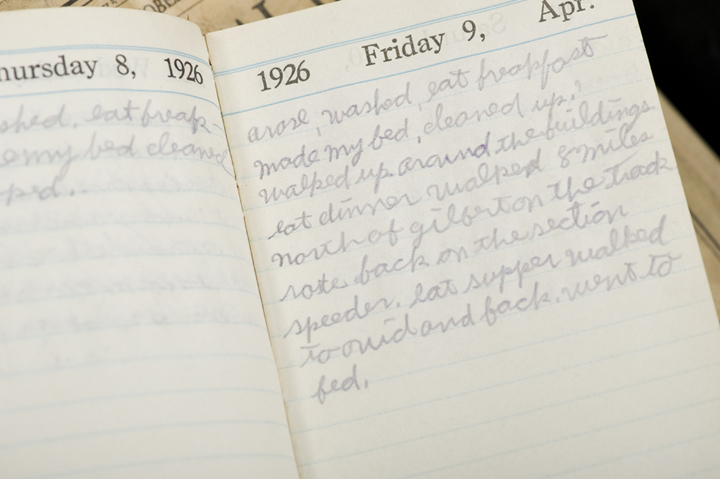
He also clearly had an entrepreneurial spirit.
Fred’s other interest was railroads. He made a comprehensive list of every train station in the United States.

The stations were alphabetized on these sheets of paper that were then folded into three columns. On the open one you can see Meadville, PA, which is the town where I grew up. My parents used to pile my siblings and me into the station wagon and we would go down to watch the evening passenger train go through.
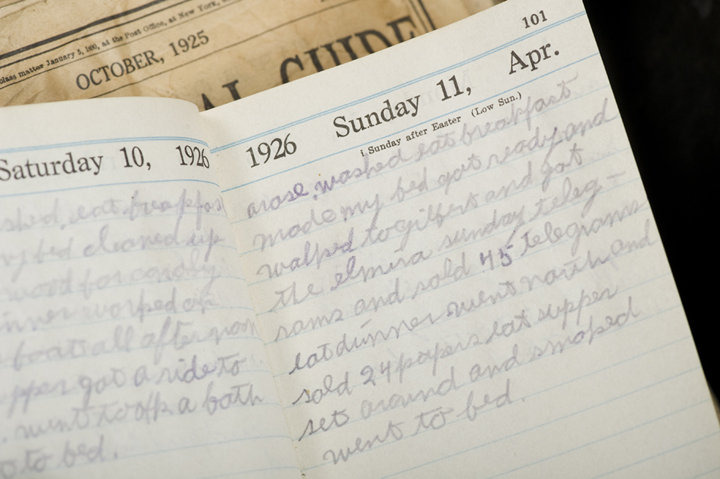
It is poignant to see the dates on Fred’s diary. It makes his life seem all the more real to me. Sunday the 11th April, 1926 was a day that Fred wrote about, and now we are able to learn something about his life more than 88 years later . Amazing
This coming Saturday morning (14 June), Karen Miller and I will be talking about our work with the suitcases at the annual conference of the New York State Historical Association. It will be held at Marist College in Poughkeepsie. There is a Saturday only fee of $25.00 to attend, but it would be great to see any of you who could make it. Karen will be reading some of her poems and I will talk about my work with the cases.
Finally, the Italian site La Repubblica did a very nice spread on the project. Check it out here. Thanks Agnese!
Kickstarter Rewards

Today I finished printing all the smaller prints for the backers of my Kickstarter campaign. I posted an update on my KS page for backers, but I wanted to mention it here as well. I LOVE printing these images. There is something about how they look on paper, as opposed to the computer screen, that knocks me out. I have printed extras as I usually do, and for any of you who missed out on the campaign and would like to be a part of the project, I would be open to selling prints. Just shoot me an email or comment below and I will be happy to talk about pricing. I’ll start stuffing and addressing envelopes tomorrow. Thanks for all the interest in the project and have a great week.
Willard Tour
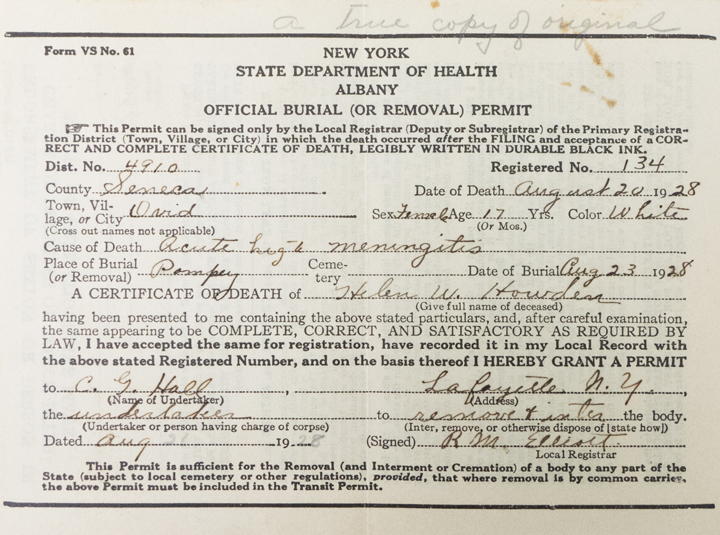
I wasn’t sure I would go to the Willard tour this past weekend until I was recently contacted by Ken Paddock. When Ken told me the story of his aunt Helen who died at a very young age as a patient at Willard, I really wanted to meet him. His family had kept an amazing collection of documents and artifacts related to her death in 1928 at the age of 17. She had contracted a disease (possibly scarlet fever) at a young age which caused blindness and other problems, and she was sent by the family to The Syracuse State School for Mental Defectives. She was transferred to Willard when the State School could no longer control her. The collection contains letters written to the family about her situation, including a letter from the head of the State School advising the family why she would be moved. Ken’s mother rarely talked about her older sister, and it wasn’t until just before her death in 2001 that details about Helen’s institutionalization started to come out. It is amazing to me that these artifacts were saved by the family, especially since it seemed that no one spoke much about her for such a long time. I met Ken, his wife Kathy, and their cousin Carol at the Taughannock Falls overlook on Saturday morning and was shown a binder full of artifacts. They encouraged me to talk about her life, and are graciously allowing me to photograph the collection, which I hope to do later this summer. It is great to be able to use her full name as this collection is in private hands and does not come under the state’s control. So, here’s a kind thought for Helen W. Howden, and thanks to Ken’s family for sharing her story.
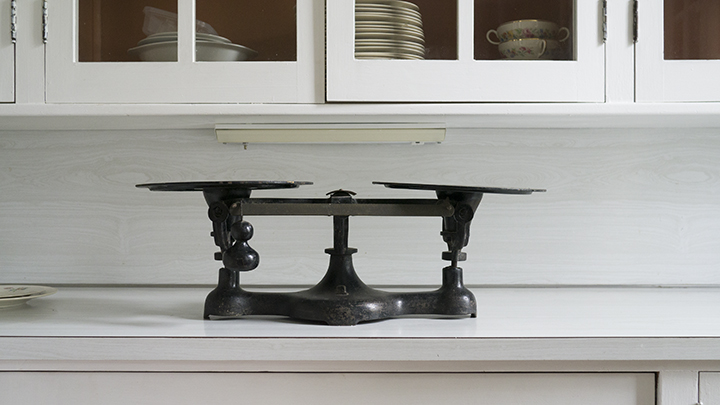
We got up to Willard at around 12.45 and were organized into groups for the tour. The first stop was Brookside, which is where the medical director and his family lived. It is a lovely early 20th Century house and situated right on the shore of Seneca Lake. As usual I was drawn to one of the three kitchens and took a few shots before I headed downstairs.
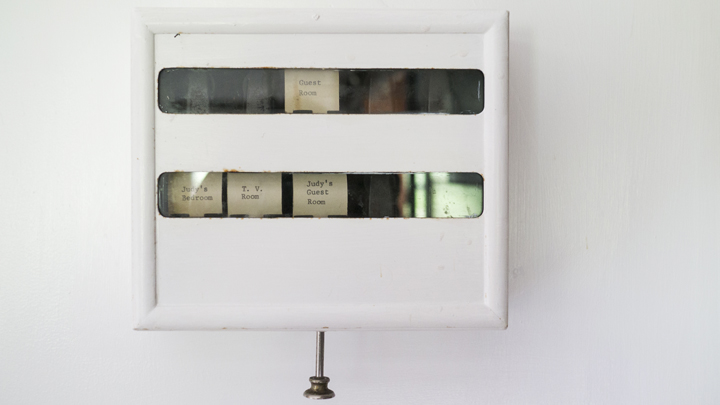
This device was used when the family wanted to request something from the staff. When Craig Williams and I were looking at it, the buzzer sounded when another member of the tour pushed a button in one of the upstairs rooms.

Next stop was the game room in the basement. I am not sure which director’s family would have used this foosball table, but it was most likely Dr. Anthony Mustille’s children.

Since I had already been in several of the buildings on the tour, Peggy Ellsworth suggested I come over to the morgue when it was between groups. She is one of the main boosters of Willard’s past, and spends a great deal of her energy keeping the spirit of the place alive. She told me an amazing story of her first day on the job after she had graduated from the nursing school. It involved her first autopsy when she was standing right where she is in this photograph.

It constantly astounds me that evidence of how these rooms were used is still in place decades after Willard’s closing.
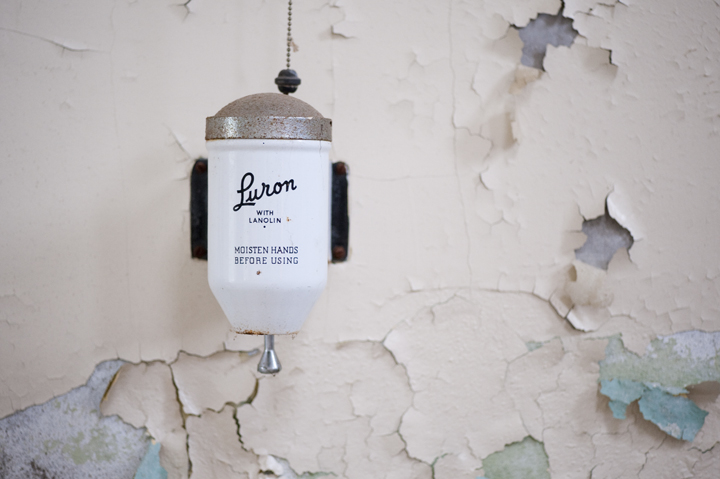
The morgue building is a tiny little brick edifice that I had never been able to get into on my earlier visits.

So many interesting aspects to this room.

This is the faucet at the head of the autopsy table.
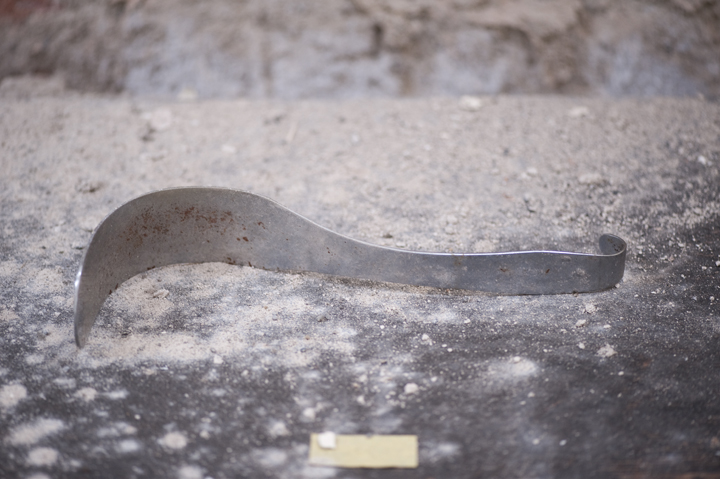
And who knows why this retractor was left behind?
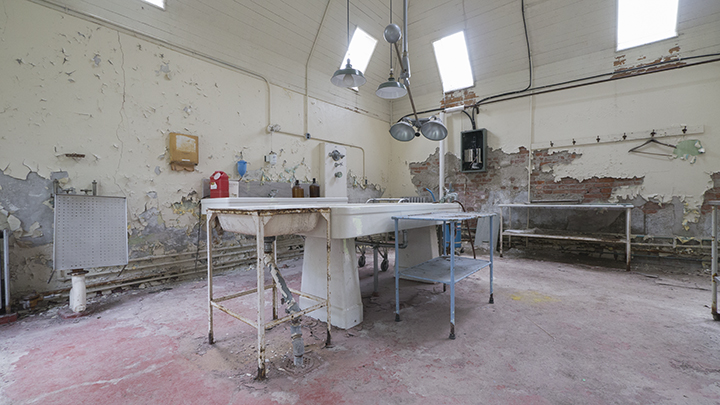
It is really quite a space, and reminds me a bit of the autopsy room at Ellis Island that I photographed a few years ago. After I left the morgue I headed over to Elliot Hall which was built in 1931.

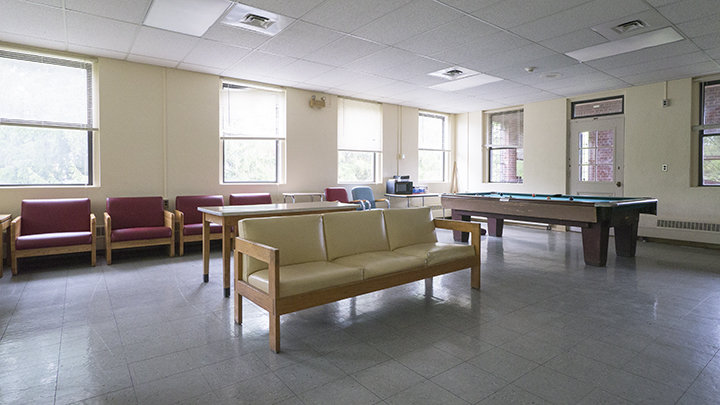
It reminds me of several of the other state hospitals I have visited; long corridors with day rooms at the end of hallways.
And the stairwells are very similar to ones I have photographed at other institutions.

Before leaving to head home, I stopped by the cemetery where the Willard Cemetery Memorial Project folks arranged this nice remembrance of Lawrence Marek (unfortunately not his real surname) who while a patient at Willard dug over 900 graves for those who died while living at the institution.

The next tour of Willard should take place again next May. It is a great opportunity to meet former staff and see first hand what an amazing place it was, and in many respects, still is.
 Jon Crispin's Notebook
2 comments