Raleigh / Galveston /Willard Suitcases
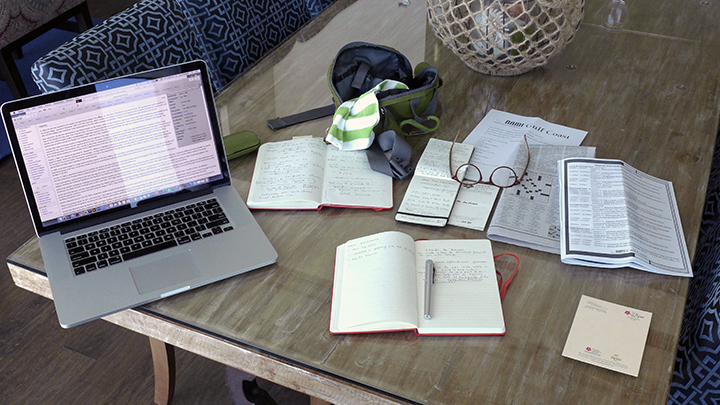
I had an amazing time in Galveston at NamiFest. What a lovely group of people and I felt so very welcomed by everyone. My presentation went really well and I got fantastic feedback about the suitcase photographs. NAMI is a fantastic grass roots organization, and if you or friends and family are dealing with mental health issues, they are a valuable resource.
Tomorrow I am off to Raleigh for the “Lives on the Hill” event which centers on the Dix Hospital complex. On Thursday just after 12.15 PM, I will be on “The State of Things” program with Frank Stasio. For those of you near a computer at that time, it can be streamed here. It will also be rebroadcast in the evening at 8.00 PM. The big event is on Sunday. Here are the details. If you follow the project, please stop by and say hello. I love meeting folks and talking about the suitcases. In addition to the Sunday event, photos are on display at The Mahler Fine Art, and at the Busy Bee Cafe. It should be an interesting weekend.
Galveston Pleasure Pier

I had a long walk around Galveston yesterday. My destination was the Galveston Pleasure Pier. Great name, but it was unfortunately closed! This is an interesting place with lots of amazing architecture and history. / I think the green plants in the foreground are some kind of gorse or heather. They had little yellow flowers and reminded me a bit of what I saw on the coast of Cornwall.
Water Fountains / Hobby Airport

I flew into Houston this morning on my way to Galveston to talk about the suitcases to the NAMI Gulf Coast’s annual NAMIFest.
On my way to pick up my checked bag I saw these water fountains, and stopped to take a quick photo.
Looking forward to my presentation Friday evening. I’ll post more soon.
Willard Suitcases /Karen Miller / Archives

When I started photographing the suitcases, I really had no idea what I was doing, or where the project would go. Very early on, Craig Williams introduced me to poet and psychiatrist Dr. Karen Miller, and it has been amazing to “share” the suitcases with her over the five plus years that we have had access to the collection. Because of her, I was included in the Exploratorium Exhibit in San Francisco, and because of her, I gained so much insight into the lives of the patients at Willard. She has illuminated the human side of the folks who, in many cases, lived their entire lives at the institution.

I have always seen the suitcases and their contents as a reflection of who the patients were before, and during their time at Willard. Because Karen went through the lengthly and difficult process of gaining access to the medical records of the suitcase owners, she was able to explore the clinical and bureaucratic side of their lives. On many occasions, we worked side by side at the museum storage facility in Rotterdam and were able to talk about what inspired us about the collection.

In many ways, I didn’t want to learn too much about the reason these folks ended up at Willard, since it was important to me to feel a connection to them through their possessions.
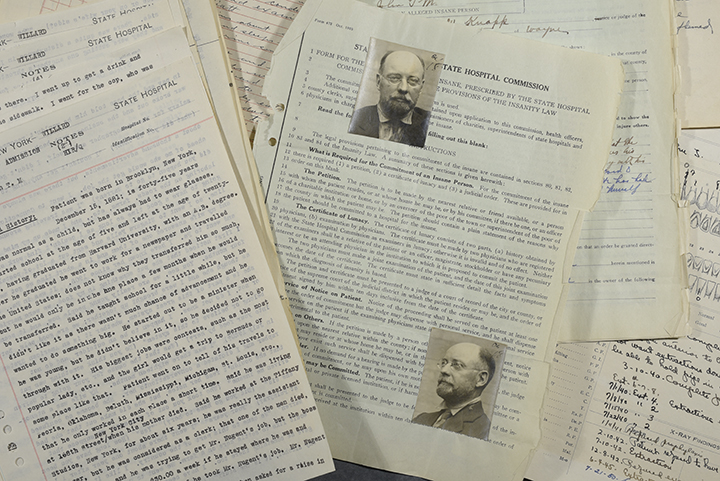
So it was with some trepidation that Peg Ross and I made arrangements to spend the day in the New York State Archives photographing some of the massive case files of the suitcases owners. Karen spent quite a bit of time getting Peg and me access to this otherwise closed collection, and I want to thank her so much for her efforts. It was a remarkable day, and so nice to be working close to Karen again.
I am still not sure what I will do with these photos, but I do know that they’ll eventually be a part of whatever happens with my work on the suitcases.
As I was profusely thanking Karen for all that she has contributed to my work on the collection, she remarked on something that really resonated with me. I’ll paraphrase here, but she said something to the effect that the most important things she has done in her life have been in collaboration with others. I feel that so deeply. Without Craig Williams, I would never had been able to begin the project. Without Peggy Ross I would never have photographed the entire collection, and without Karen I wouldn’t have anywhere near the insight as to what life as a patient at Willard would have been like. It is so fulfilling to be part of a team of such creative, smart, and great people, and I am so grateful to each for their help and support.
Octoberfest!

I spent an amazing day at the New York State Archives photographing patient records for the Willard Suitcases Project (I’ll post about that soon). As Peg Ross, Karen Miller, and I were walking to lunch on the concours under the capitol buildings, this guy was there to help celebrate Octoberfest. / Cristine once saw a bumper sticker that said “Play the accordion, go to jail”. Hard to see in this small photo, but that is an A & W Root Beer on his accordion case to keep him hydrated.
DC / Van Ness

They have been working on the escalators at the Van Ness Metro stop for quite a while now. Two down, one to go. The LED lighting is very nice.
J R Training Ball

I was photographing a house in Shelburn Falls today and was setting up in a shot in the billiard room. I racked the balls and was surprised to see an extra one.
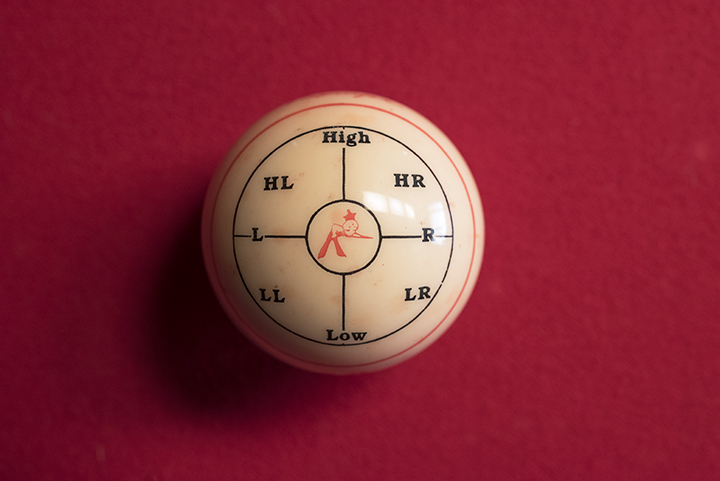
It is called the J R Training Ball, and even though I used to hang out in pool halls a lot as a kid, I have never seen one. It is graphically beautiful. I want one.
I looked online and found out they are for sale and are named after Jim Rempe. Here’s what I found out about him.
Cold War Bunker (Revisited)
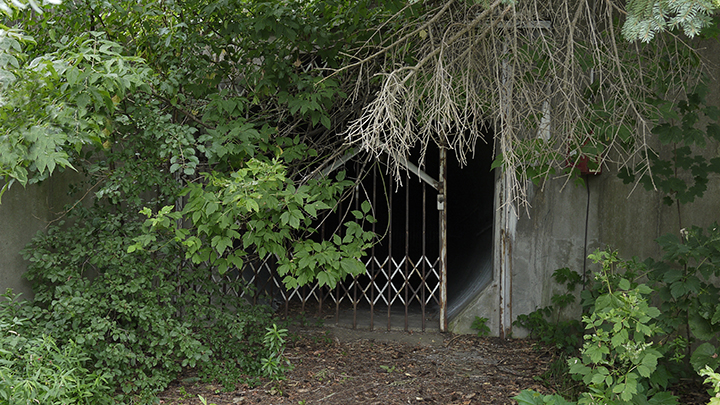
I was looking at some photographs that I took in 2010 of artifacts from the Attica Prison uprising, and came across these shots from a visit to a nearby New York State cold war bunker. I first mentioned it in a post here.

When Craig Williams and I went down into the bunker, we were accompanied by a couple of local policemen who thought there might be people inside, as the gate had been forced open. They checked it out and the space was empty, so we went in. As you can see by the beads of water on the wall, it was really humid and musty.
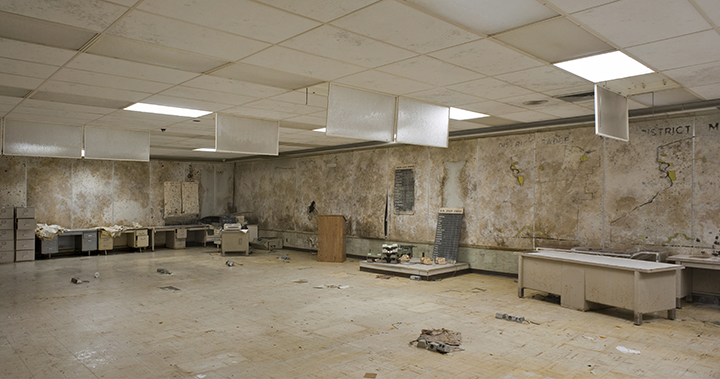
There was electricity, so most of the fluorescent lights were still working.

Abandoned spaces have always fascinated me, and I’ve been lucky to get access to some amazing buildings.
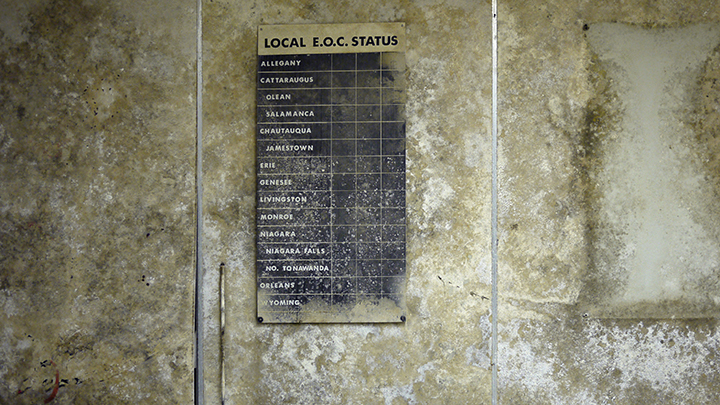
The idea that the usefulness of a place can end abruptly, and that an organization like the State of New York can basically walk away from it is especially interesting. I had the same feeling with my Silent Voices project (click on “asylums”).

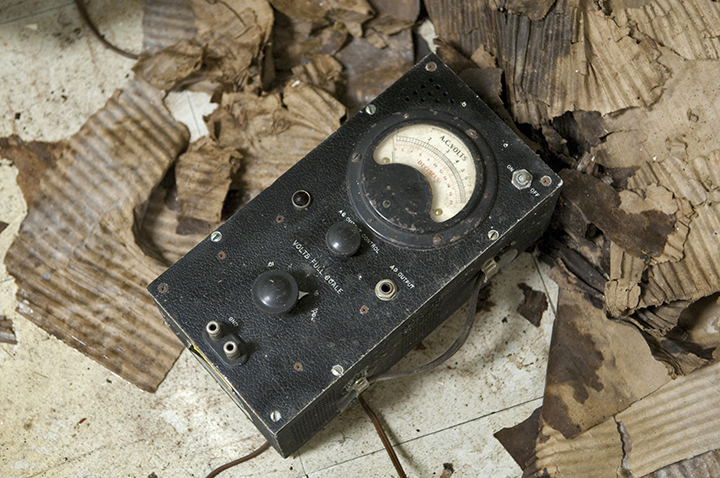
It is amazing what gets left behind. There is some pretty old technology in this shot. My dad had a Wollensack tape recorder like the one above that I used to play with as a kid.

There are usually lots of keys in places like this.

I am not sure when New York State shut down these sites, but I believe there were 6 or 7 of them scattered around the state.
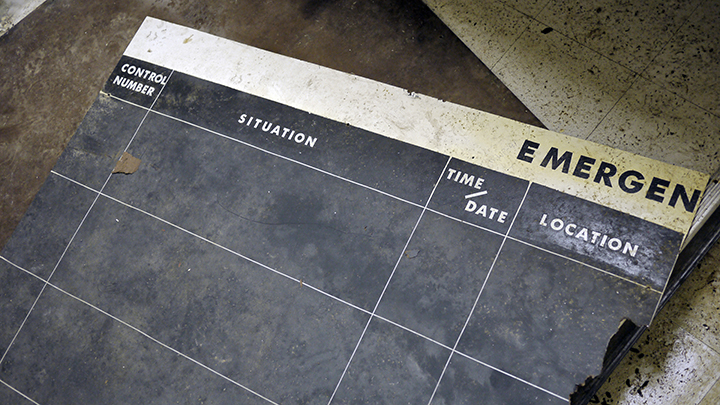
There must have been some permanent staff who worked here, but I would guess that it was a small crew that could have been expanded on during a crisis.

It must have been an interesting place to work.
I realized while writing this post that I knew very little about the history of these sites, so with a quick internet search, I found this great resource.

The U. S. Government logo for civil defense is a beautiful design; as I was growing up in the 60s it was everywhere.
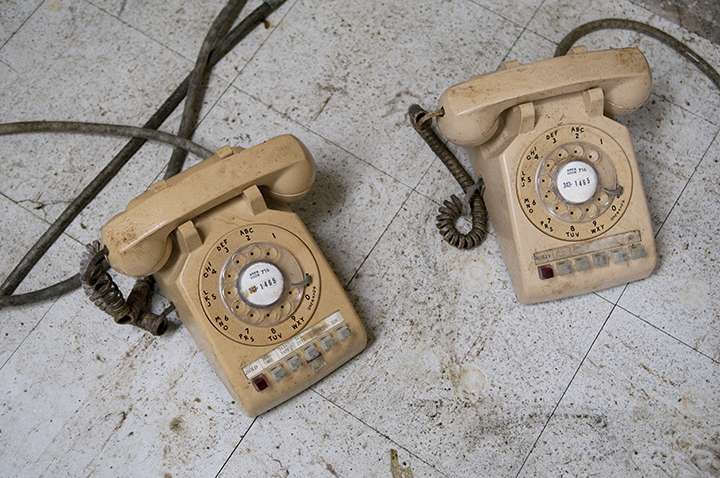
As were these old rotary phones.
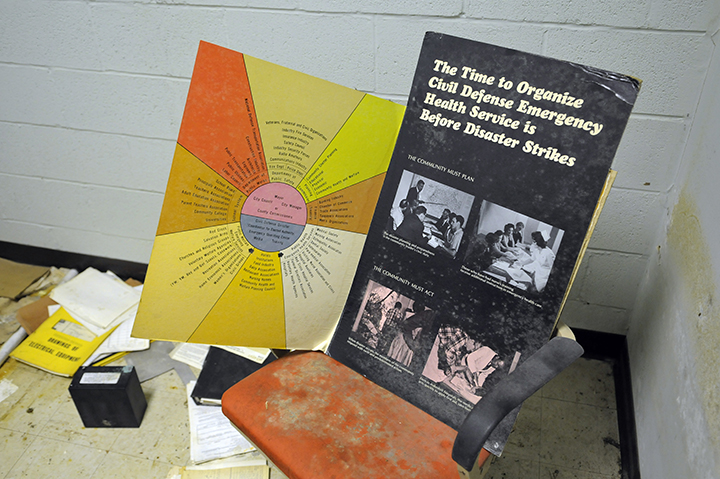
Both the Federal and State governments were active in distributing information about what to do in the case of an emergency situation, which seemed to always be about some sort of attack from the USSR.
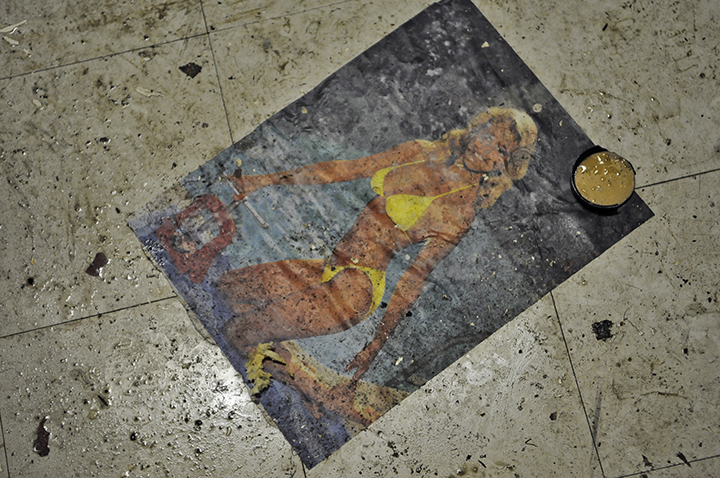
This is a page from an old Ridgid Tool calendar. There were a bunch of these scattered around the floor.

Here’s one last shot of the main room. Thanks to Craig for setting me up to get into this place. I’ll try to do something with the Attica artifacts sometime soon.
I finally figured out why I have so many new followers. WordPress featured me on their main site, and I want to thank them for doing so. I was going to try to explain to you recent followers what I am trying to do here, but it is kind of obvious if you just jump around through my previous posts. So, welcome and thanks for following.
Hello!

I am never sure why this happens, but this site is getting rather a lot of traffic today. Usually, a link gets published somewhere which mentions me for one reason or another, and I start getting emails from WordPress telling me I have new followers. So welcome everyone; happy to have you stop by from time to time. Wishing you all a great weekend.
Willard Suitcases / Margaret D / Journal of Contemporary Archeology
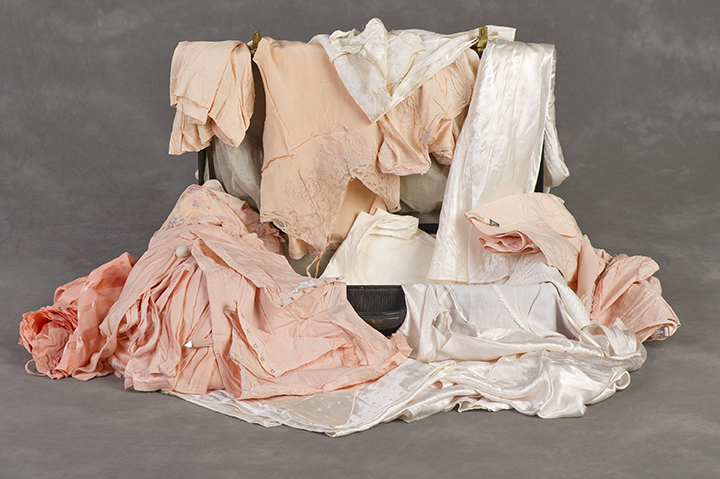
This case belongs to Margaret D, and she clearly liked beautiful underthings. It is difficult to describe just how wonderful the fabric in these garments felt to the touch.

Margaret was a nurse before she came to Willard, and she also brought along a massive collection of highly starched nurses uniforms.
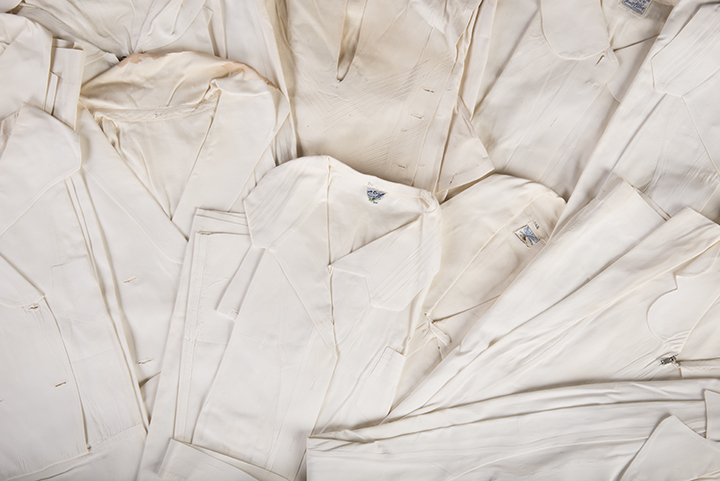
There had to have been at least 50 of these uniforms, and they were all folded nicely.
❖
I first met Zoë Crossland shortly after she backed the first suitcases Kickstarter campaign. She is an anthropology professor at Columbia University and has invited me on two different occasions to speak to her department about the suitcases. Both visits were amazing, and I learned so much about the project from hearing what the faculty and staff had to say. Over a year ago we started a dialogue about the project with hopes of getting it published. Six months ago the Journal of Contemporary Archeology agreed to do so, and the online version was released late last week. Here is a link to see a pdf of the article. Scroll down to “Download Media” and click on the little icon next to “PDF”. I am so proud to be a part of this as I think Zoë did a fantastic job of connecting my photographs with her interests as an archeologist/anthropologist. There will be a print version available soon which can be ordered through the JCA.
Thanks for following. I have been getting quite a few new subscribers to this site, so as a reminder, you can check out The Willard Suitcases site here.
 Jon Crispin's Notebook
leave a comment