San Francisco

Hey everyone, tomorrow I fly to San Francisco to help plan how my portion of the “Changing Face of What is Normal” exhibit will be hung. (Providing Logan in Boston is open for business. We had 20 inches of snow here in Western Massachusetts overnight, and Boston got totally wailed.) I’ll try to post daily from out there. I don’t know how much free time I will have, if any, but if you are in the area and want to meet up for a brief visit, just send me an email. It might work. This photo is from Flora T’s case. I think I published it in an earlier post, but lately this image has been sticking with me. The print I made is absolutely beautiful.
The Amazing Beverly Courtwright
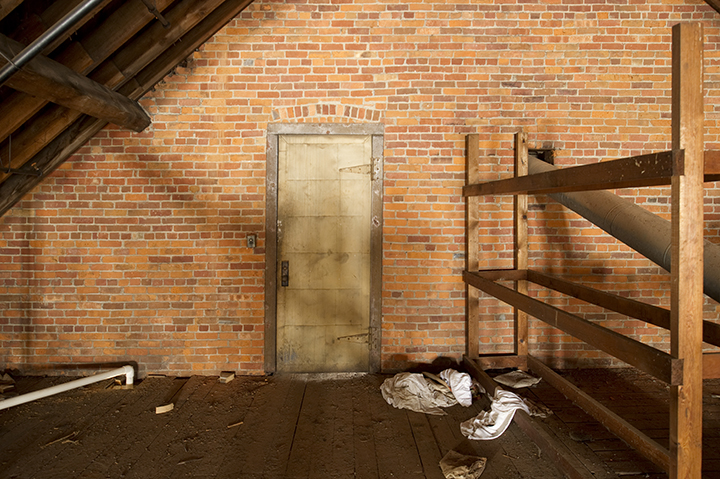
I have always given primary credit to Craig Williams for saving the Willard suitcases, and his contribution to the preservation of these objects was enormous. But if it wasn’t for Beverly Courtwright’s connection to Willard and her tremendous respect for the patients and their lives, the cases would have been lost forever. On Saturday I got the chance to meet her for the first time, and thanks to the corrections folks who now control the site, we were allowed to go into the attic for a few minutes. It is behind this door that in May of 1995 Bev “rediscovered” the cases. She had become one of the Willard employees heavily involved with the transition team responsible for shutting down the psych center. As a storehouse clerk, part of her task was to go through all the buildings to determine what should be saved and what could be thrown out. She described the first time she opened this door and saw the cases stacked up as a surreal experience, and told me that she felt a “whoosh of energy” sweep over her.

She grew up in the area, and as a child remembers Willard patients coming to her home through the Family Care program that allowed for patients not in need of direct care to live temporarily in private homes.
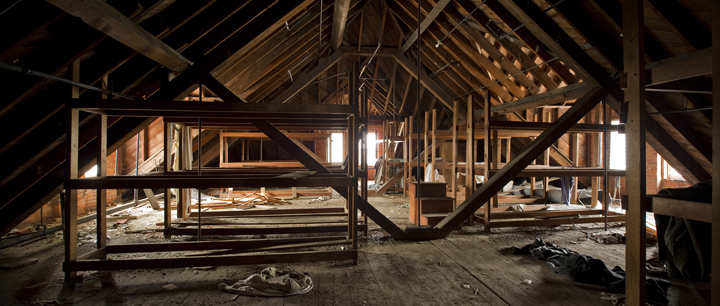
This is what the attic now looks like when you walk through the door. The racks are on either side of the attic with men’s cases on one side and women’s on the other. When Bev was talking about being up here for the first time it literally gave me chills.

You can see the letters on the racks representing the first initial of the surname of each patient. Whomever set up the system did an amazing job. I find it so interesting that as in the residential parts of the buildings, men and women were segregated up here as well.

There were a very few items left behind that could not be linked to a specific patient. This coat was one of them. / As my work on this project continues, I am constantly overwhelmed by the people I meet and the stories that they have to tell. Late last night I got an email letting me know of a new comment on this post. Scroll down toward the bottom of the comments section and read what Stephanie had to say. / Getting into the attic and meeting Bev really tied together everything that I have been trying to say with my work on this project. She is a truly remarkable person with a huge heart and the ability to convey a great sense of connection to the people who were at Willard, and I just want to thank her for all she has done.
Suitcases

On Monday I shot the last of the Willard suitcases for a while. I hope to use the rest of this month to begin editing the images for the Exploratorium exhibit, and knowing how my brain works I knew I couldn’t attempt to edit while I was still shooting. I was surprisingly emotional about the whole thing; an important part of the project ended and I am not sure when it might resume. It is also significant to me that it marks the end of the Kickstarter phase of this work. So some thank you’s are in order. I could NEVER have gotten this far without Kickstarter and the incredible support of the almost 700 people who backed me. Thanks to Alex Ross for the long term “loan” of his lights and soft boxes. He is a true friend. Craig Williams and the New York State Museum gave me access to the cases and Craig’s support was instrumental in keeping it all moving along. And Peggy Ross kept me organized. Without her help in unwrapping, setting up the shots, helping me see things I would have missed, and putting the objects back where they belong I would never have made it through as many of the cases as I did.
I will work on a post later today showing the last case in the queue, as it were. It was a great one to end on.
Hadley Hall Projection Room
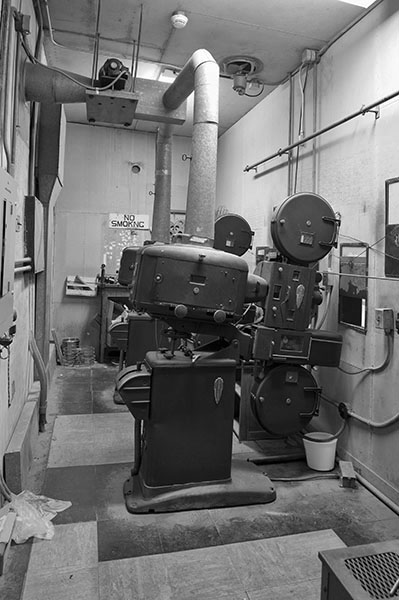
This is a bit of an experiment. When I was out at Willard recently, I shot the bowling alley in Hadley Hall and then went upstairs to the projection room. The lighting was the weirdest I have come across. I shoot most of this stuff in RAW, so that I have tons of latitude when it comes to editing the photos. I messed around with these images for a long time and I could NOT get the color to look good. The walls were yellowish and there were mixed fluorescents. Rather than get discouraged and stuff the whole idea of a post I decided to convert to black and white and see how they look online. Funny, since in the days of film I used to shoot this sort of thing in black and white much of the time.
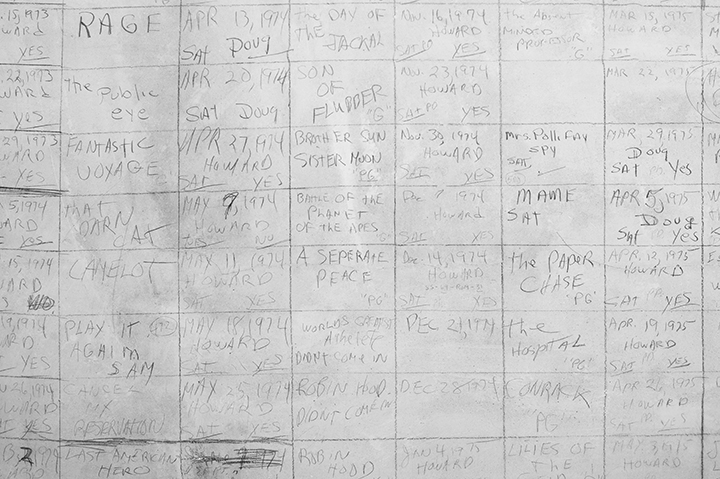
The tradition for the projectionists was to write the name of the film and the date it was shown on the walls.
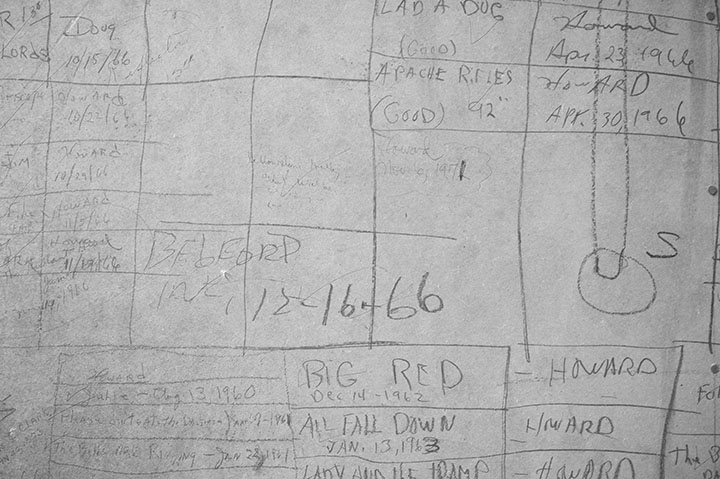
Lots of interesting films here. For example, “All Fall Down” was shown on 13 January, 1963, and Apache Rifles got a (Good) rating.
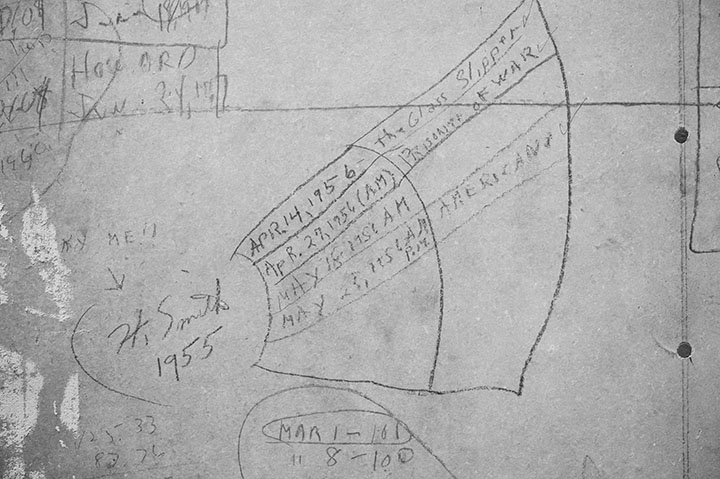
And here “The Glass Slipper” was shown on 14 April, 1956. And these were all 35mm prints!
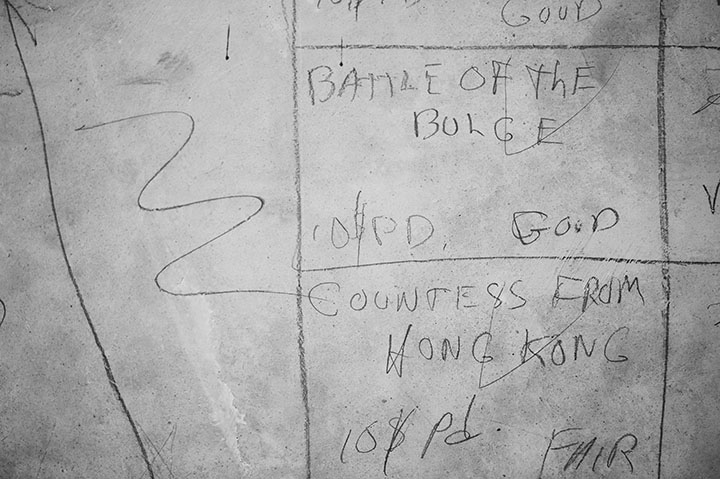
What really interests me about the asylum having shown first run movies is that the residents of the institution were able to attend, as were the people who lived in the surrounding towns. From what I have been told, the townsfolk sat in the balcony and the asylum residents sat downstairs.

I like these notes for the projectionist. There must have been someone downstairs who could send some sort of signal in case of a problem.
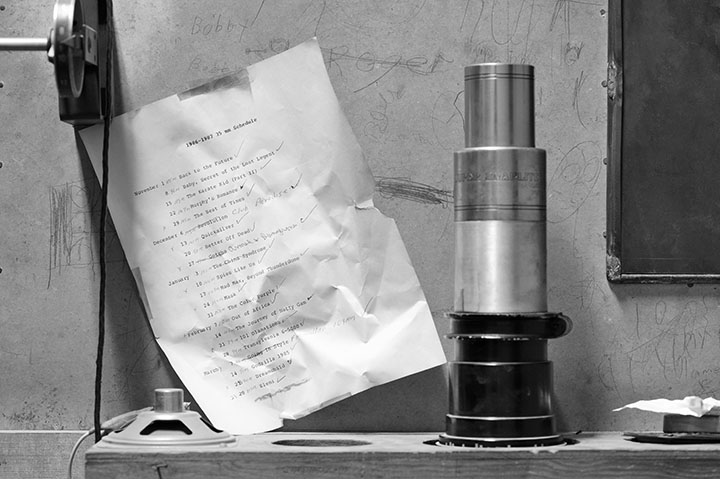
The projection room seemed to me to be almost totally intact. The sheet of paper here might be hard to read online, but at the top of the list is “Back To The Future”.

Here’s another of the projection lenses. A beautifully made optic.

There was still quite a bit of paperwork lying around.
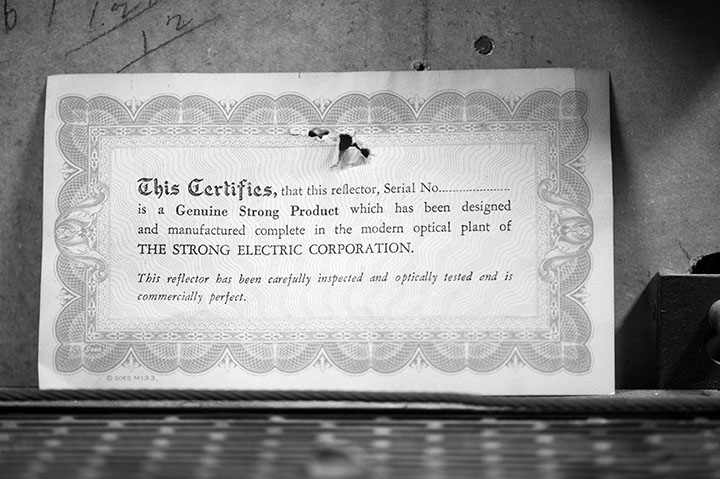
I was just blown away by this room and its contents.

It is really hard to put into words just how fortunate I am to get into places like this, and how important it is to me to be able to preserve images of something that very few people can see for themselves.

So, thank you all for checking in and encouraging me to do this kind of work. I am off to Rotterdam tomorrow to shoot more suitcases and will post an update to that project very soon.
Hadley Hall Bowling Alley

On Friday I got the chance to get into Hadley Hall on the site of the former Willard Psychiatric Center. The Romulus Historical Society was setting up the annual display of Willard suitcases and I helped out a bit by moving some boxes around. There were two areas of interest to me, and this post is about the first of those. Hadley Hall was the recreation facility for the asylum and was built in 1892. The building is dominated by a beautiful auditorium complete with a fully functional stage set-up. On the lower level is this bowling alley. According to people I have spoken to, the alley was used by both staff and patients.
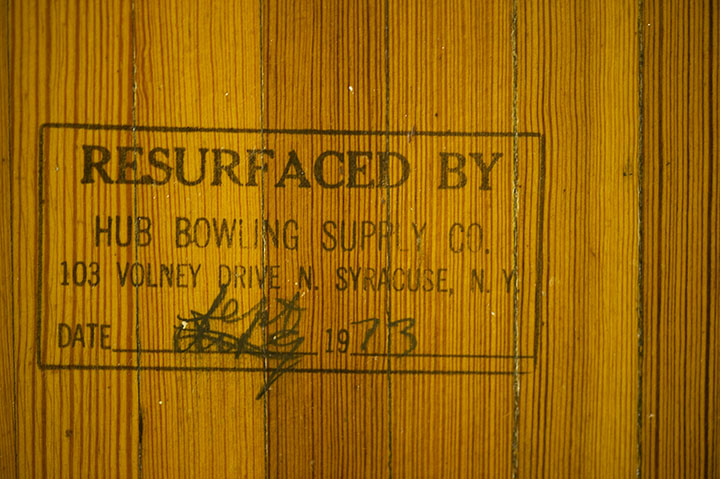
And I believe that the lanes were used up until the psych center closed in the mid 1990s.
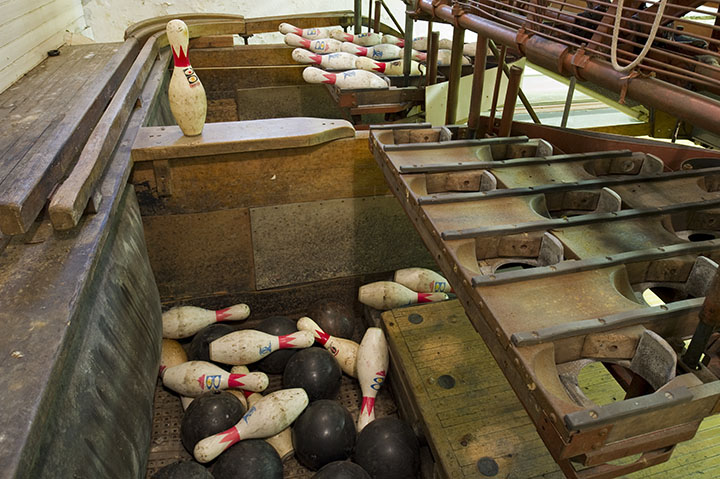
The system for resetting the pins and returning the balls was mechanical only to a degree. Someone back here behind the pins waited for the ball to arrive. It would be returned via the wooden track and the pins would be reset (depending on a strike or spare). The mechanical part of the operation involved the pins being dropped onto the lane once they were loaded onto the mechanism (see below).

When people were bowling, the place must have really been hopping.
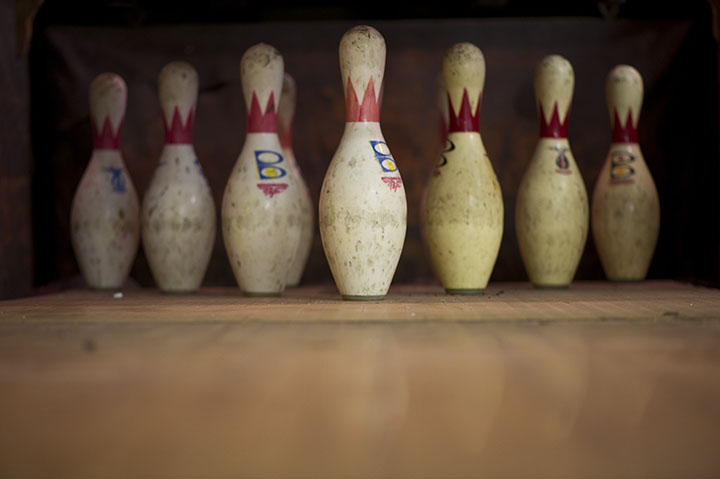
It is so interesting to me that most of the components of the alley were still here and relatively intact.
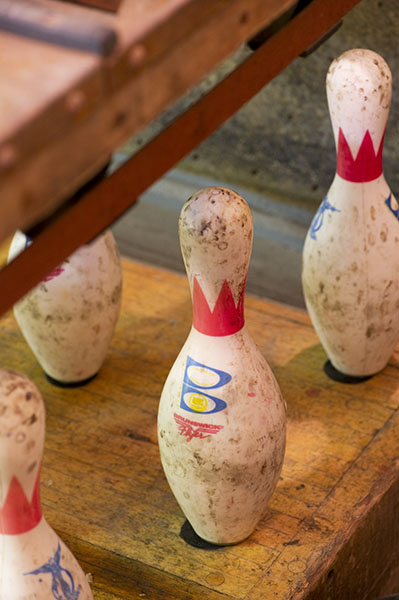
The pins certainly look well used.
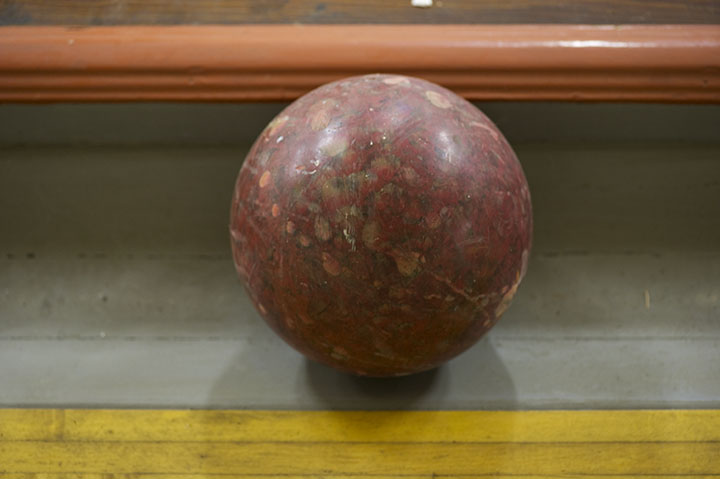
This is a very cool ball.

I am constantly reminded how fortunate I am to have access to these spaces.

Tomorrow I am back in Rotterdam shooting suitcases, but I hope to post part two of my visit to Hadley Hall later in the week.
Willard Suitcase #6
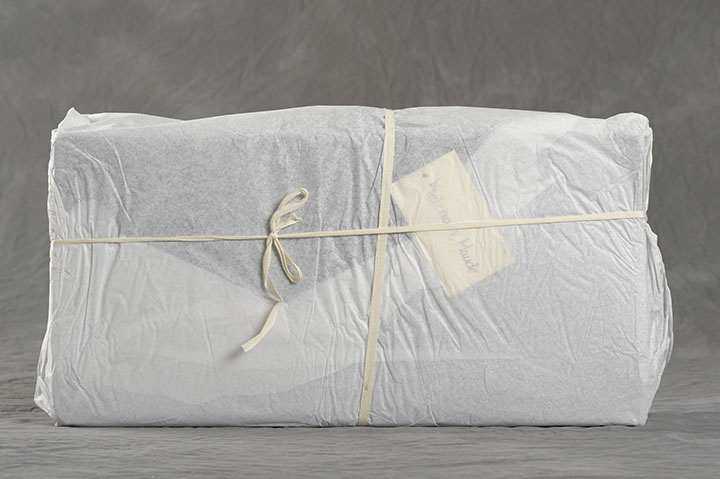
This suitcase belonged to Maude K. There seems to be some question as to her surname; on some of the tags it is spelled differently.

Three of her cases are in the collection and I shot all three but for brevity I am only posting this one.

I am starting to edit a bit more tightly for these posts since some of the cases contain a considerable amount of interesting objects.
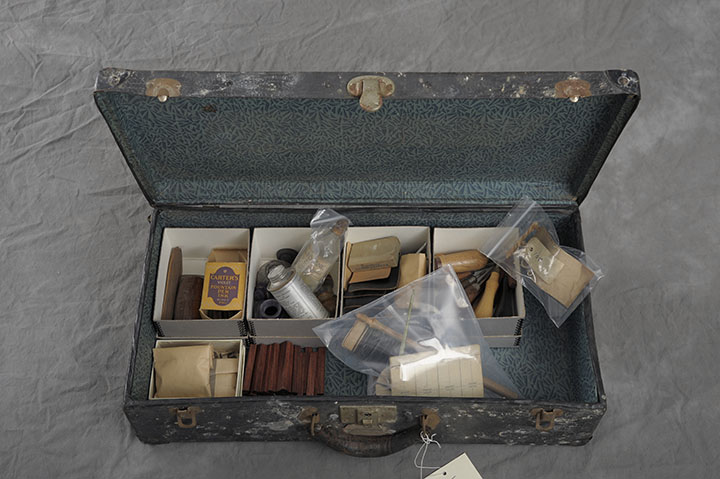
Maude was clearly involved in crafts of some sort.
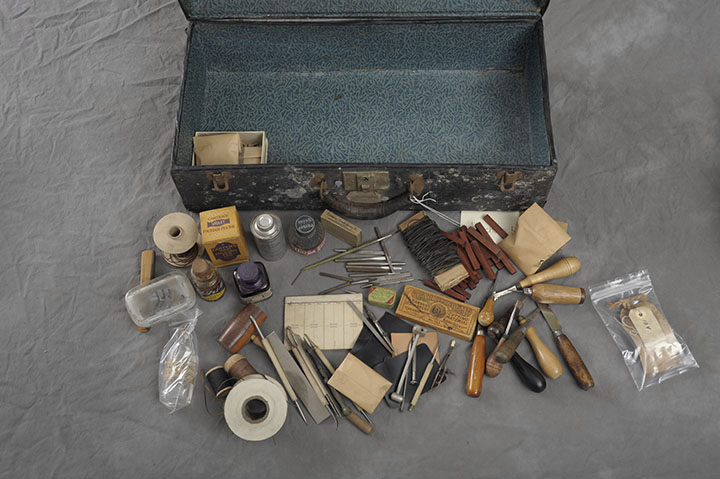
Her tools and materials are beautiful. I would love to know if there is any record of what she produced with them. And the question again arises as to whether or not she was able to access her case during her time at Willard.

There is definitely more information about her available through the archives, and once I have finished photographing the cases I’ll make every effort to find out more about her.
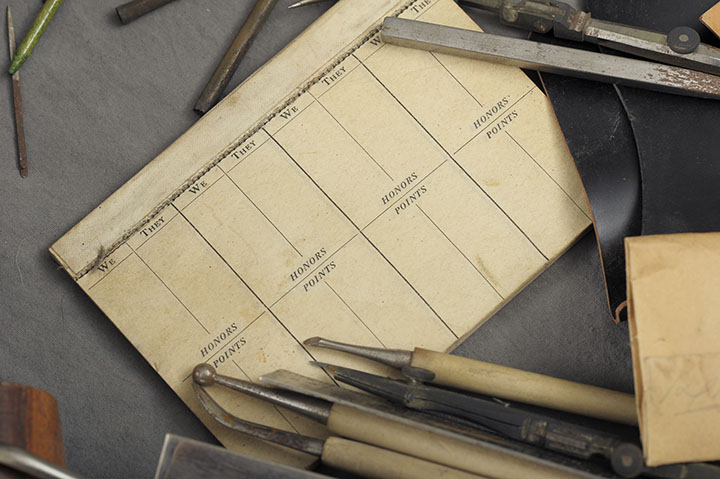
This score pad indicates that at one time she probably played bridge. The design of these objects knocks me out.
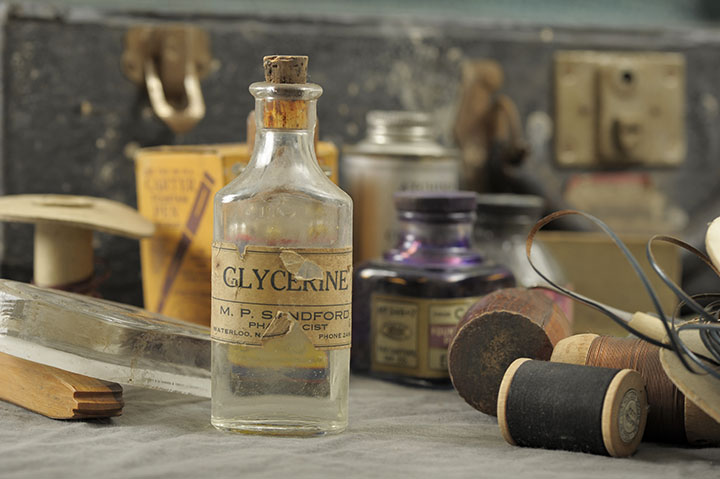
There was still glycerine in this bottle.
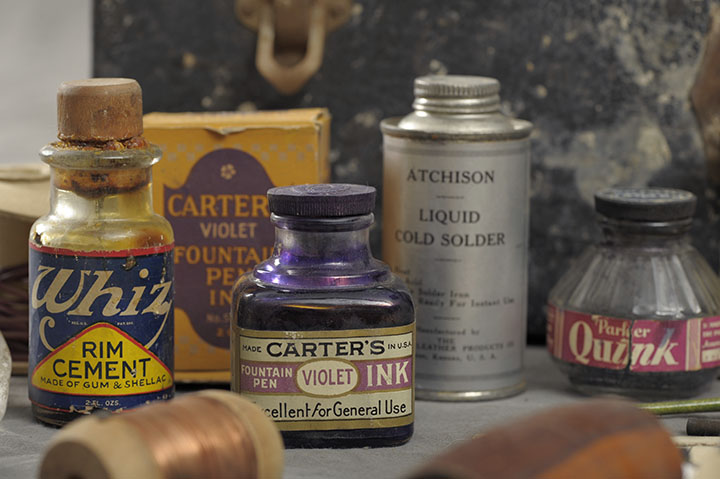
The inks were mostly dried out as the corks in the tops had deteriorated almost completely.

I would be glad to know if anyone recognizes what these items could have been used for.

I liked these tweezers, and believe that the white bit at the top is ivory.
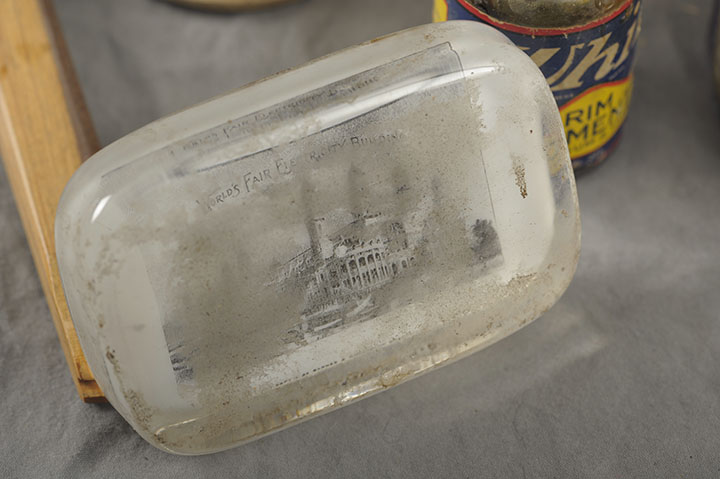
I think this glass paper-weight came from the “World’s Columbian Exposition of 1893” in Chicago. / Maude’s cases were really interesting. I hope to be back in Albany sometime this week to do some more work. For those of you seeing this for the first time, here is a link to my Kickstarter project. Thanks, Jon
Willard Suitcase #4

Here is another case from the Monday shoot. This one belonged to Clarissa B.

The leather straps were in pretty rough shape.
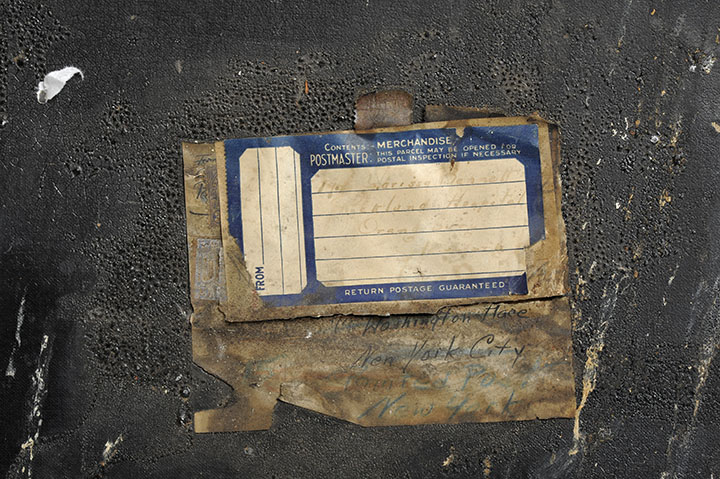
The address label is quite faded, but it is clear that she was in another hospital before Willard. I googled Rockland Hospital and it is in Orangeburg, NY. The label underneath is obscured, but Worthington Place in New York City is pretty clear.

I like the details of this case; the metal bits are a bit rusty, but the some of the leather has a nice patina.

The museum has done such an amazing job stabilizing these objects. After sitting unprotected in storage for so many years, it is incredible that they are as intact as they are.

Above is the opposite side of this suitcase with more labels.

It is clear that this case has traveled around quite a bit. Even the Railway Express labels have such a pleasing design. I really wish the Date line had been filled in.
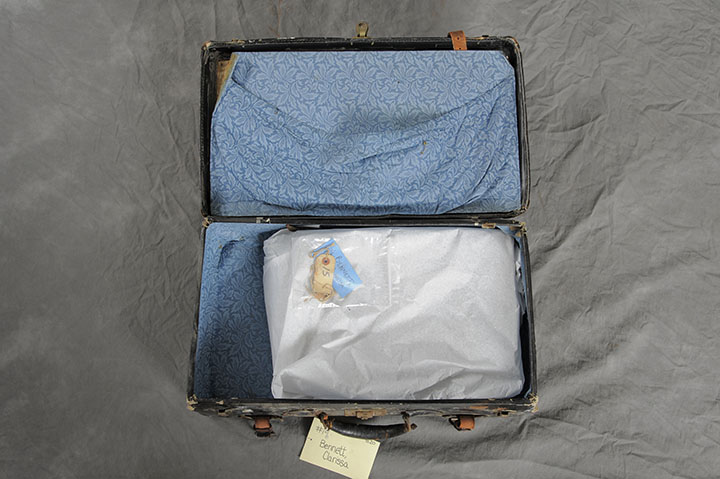
I was pretty sure there wasn’t much inside when I lifted it up.

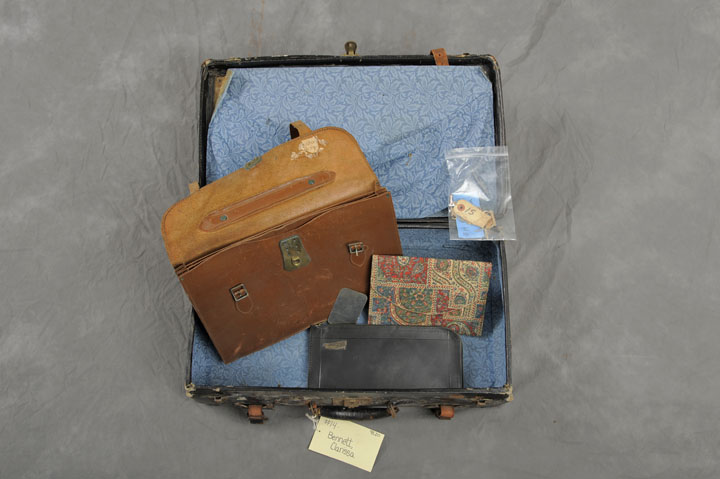
Just a few items, and nothing particularly personal.

This little metal plate was inside one of the smaller cases. Etched into it is her name and “Bldg 18” and what looks like the date “5/2 36”.
I hope to get back to Albany next week to do some more work. Thanks for looking. You can see more about the project here.
Willard Suitcase #3
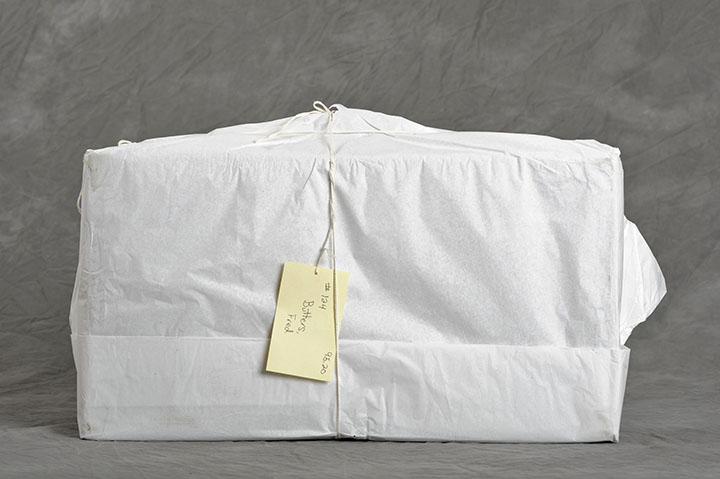
I was in Albany last Monday to shoot some more of the Willard suitcases. It was the day Peter Carroll was filming me for the Kickstarter video, so it was a bit different of an experience. I was comfortable when Peter was shooting me work, but as soon as he started interviewing me, I lost the plot. Sometimes it is hard to put into words what I am feeling about this project. The photos seem to speak for themselves and I have always expressed myself best through pictures and not words. Anyway, if you have seen the video here, you will understand what an amazing editor he is. He took my jumbled thoughts and made sense of them. Kickstarter emphasizes how important a short video is to getting funded, and I think it has really made a difference.
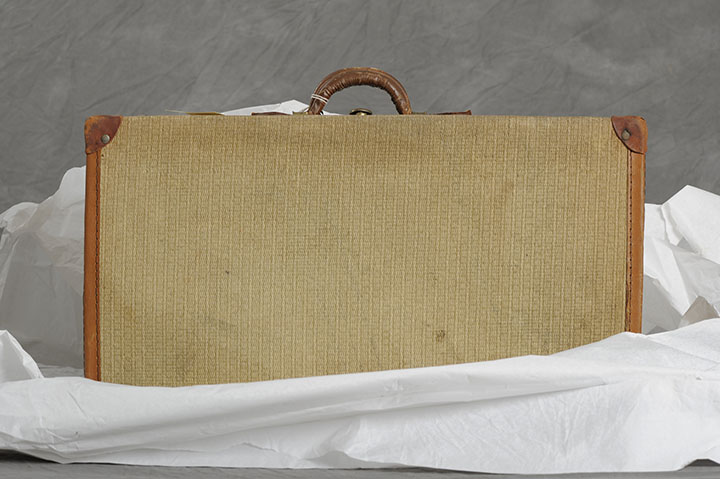
So here is Fred Butters’ case. It is a beautiful design, and I especially love how the leather helps to define it. The handle is also in really nice shape.

There wasn’t a lot in it when it was opened, but what was there was really interesting.

It is so touching to see what he brought with him to Willard.

I especially like the metal container of talc and the design of the Polident can.
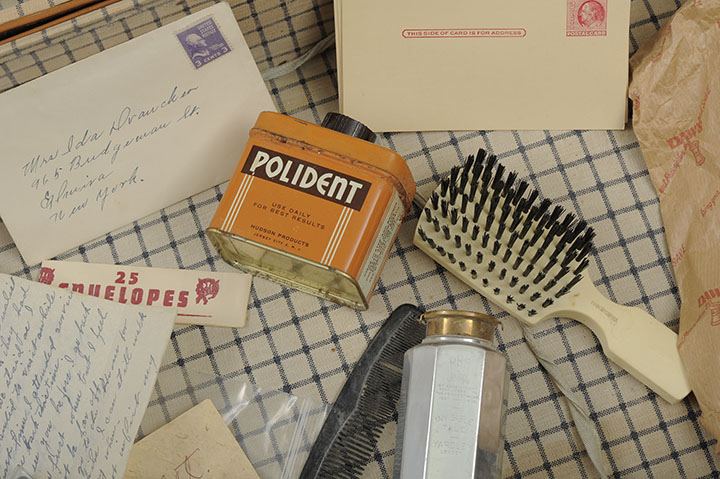
The blank postcards say alot too. One element of this project I need to have answered is whether or not the owners had access to the suitcases while they were at Willard. If they didn’t, what would explain the envelope with the stamp on it that wasn’t ever mailed? I’ll ask Craig; he will know.
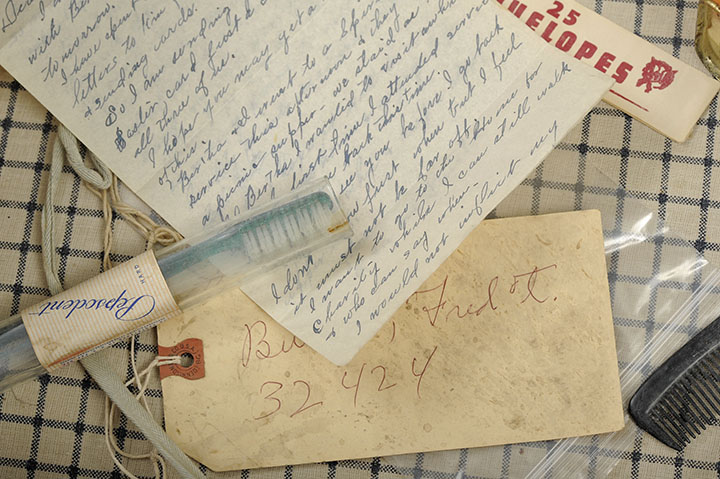
The toothbrush container is glass.

Here is the talc container, and below a letter. I really need to find out if he brought it with him or received it while living at Willard.
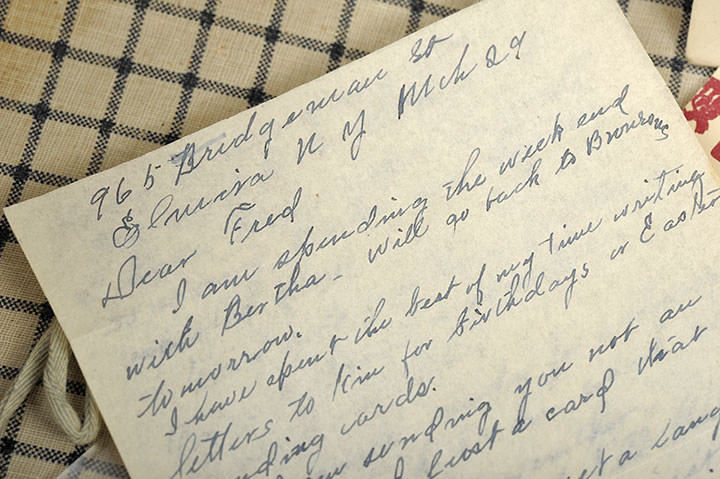
So, the project is now posted at Kickstarter. I am really hoping I reach my goal so I can continue to do this work. If you know anyone who might be interested, please feel free to forward it along. Thanks to everyone who has already donated, and to all who have looked at the photos.
Willard Asylum Suitcase #2

I was back in Rotterdam last week to photograph more suitcases from Willard Asylum. Check this out for the background of the project.

I am slowly beginning to formulate a plan for how to proceed.

Even though an inventory of each case has been prepared by the museum, I prefer not to know the contents before I begin taking pictures.

There is something about being surprised by what’s inside that helps me connect with the person.
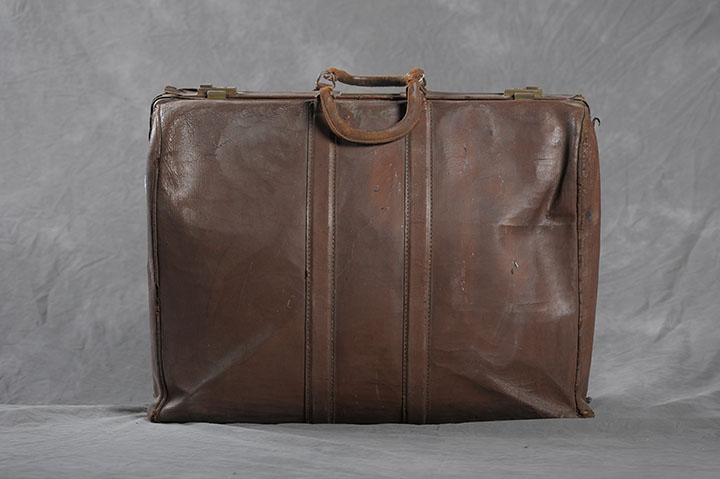
And I want the connection because I am trying to say something about the lives they lived before arriving at the asylum.
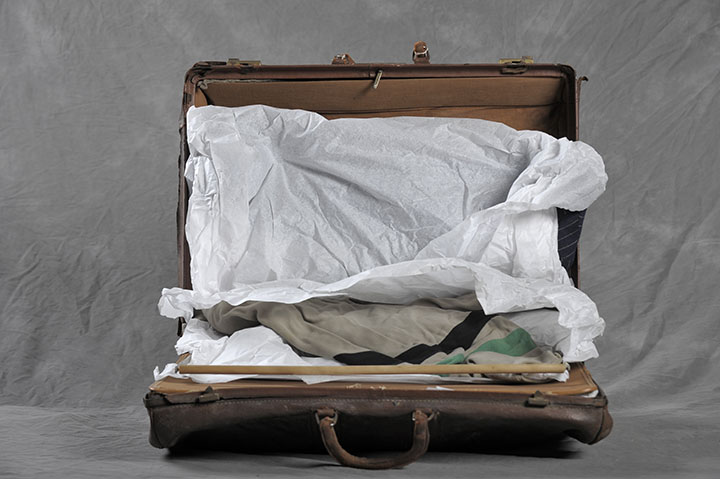
Anna’s first case contained mostly clothes.

I believe the inventory was done just as she arrived at Willard.

The museum is very careful about caring for each individual item.
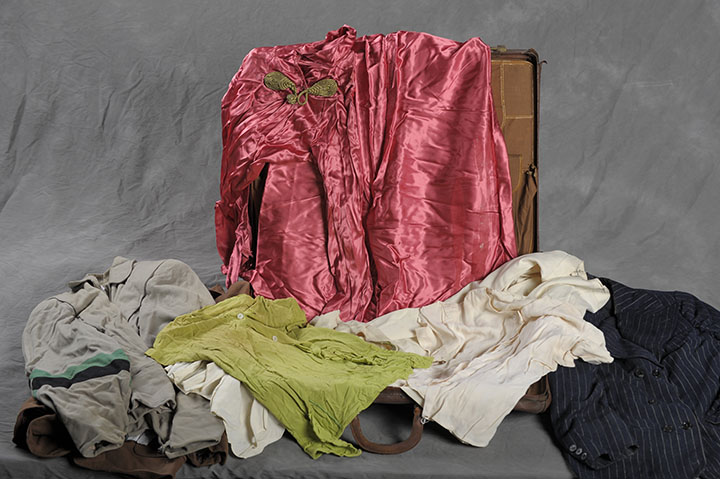
Anna had some really beautiful clothes.

Just about all of her clothes had nametags, which I have to assume were sewn in before her time at Willard.
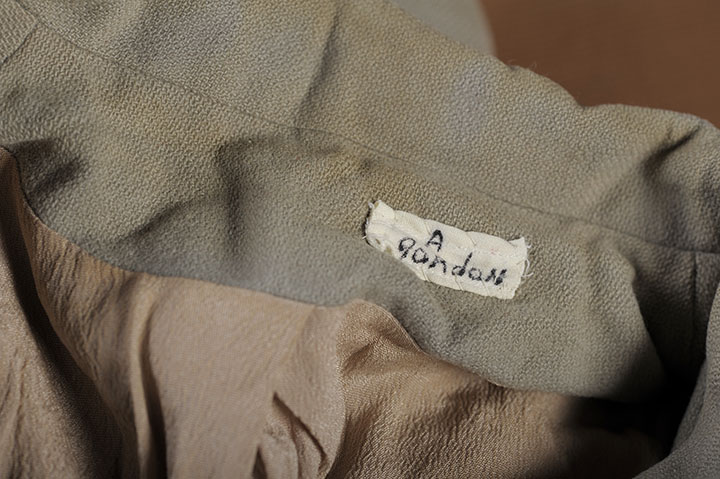
Below is the second of her cases.

This one had fewer clothes and more personal items.

For some reason, I really like the paper that the museum uses to protect the cases and their contents.

I especially like the design of this one.
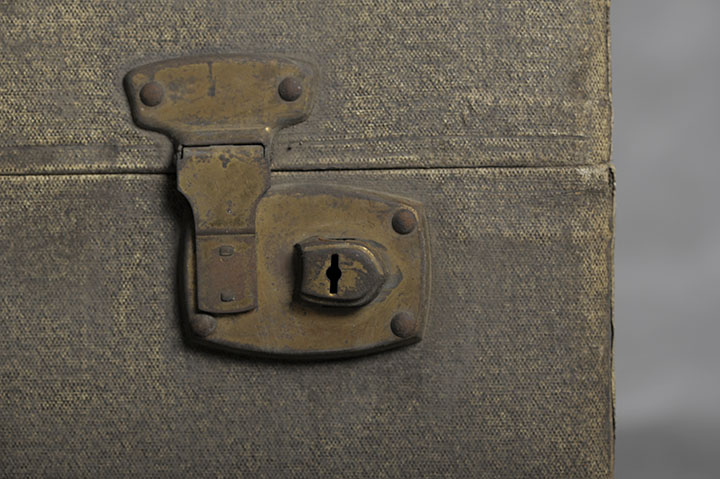
When I photographed the abandoned buildings on the earlier project, I tried never to move items that I came across. This is so different for me as I need to lay the items out in order to photograph, but I don’t want to make the arrangements look too studied. I actually work very fast when I am shooting.
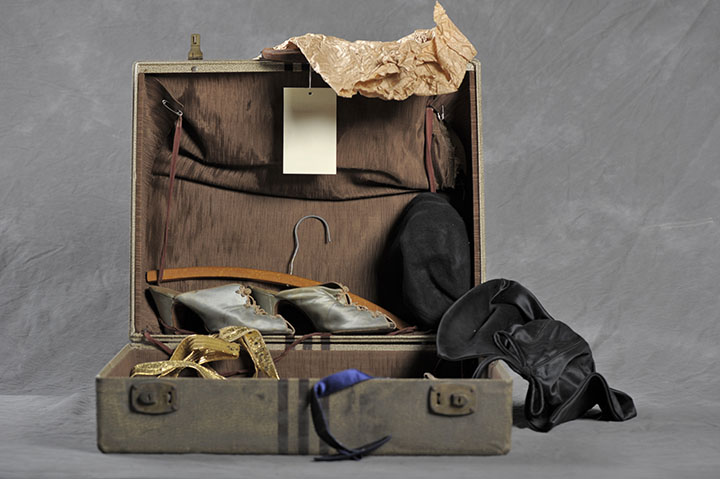
This case contained several hats, and an incredible pair of shoes.

There were also some indications of her life before Willard.

The hair pin packaging is beautiful.
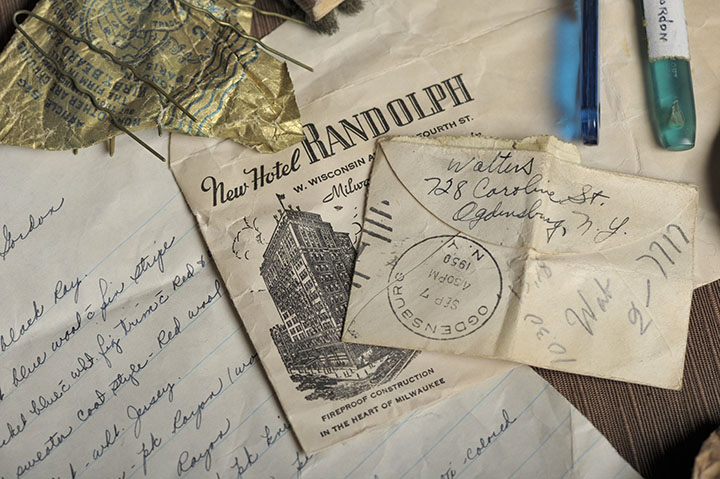
I am not sure if the residents of Willard had access to their possessions during the time they were living there, but somehow I think not. So this letter would probably have been received before she arrived.

And since it was not addressed to Anna, I wonder about its importance to her.
Thanks so much to Craig Williams at the New York State Museum for allowing me access. As I mentioned in the earlier post, I would really appreciate any feedback. I still don’t have an outlet for this work, and no funds to jump into it in any concerted manner, but I hope to keep chipping away. There is alot of information about the people attached to these suitcases and should I go much further with the project, I would like to be able to include some biographical background to accompany the photos.
Willard Asylum Suitcase
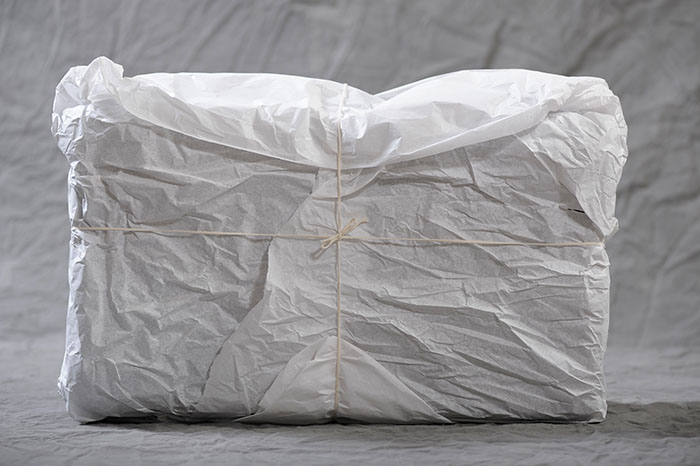
I’m not sure yet where I am going with this project, but I wanted to post some shots for feedback. / In 1995, the New York State Museum staff were moving items out of The Willard Psychiatric Center. It was being closed by the State Office of Mental Health, and would eventually become a state run drug rehabilitation center. Craig Williams was made aware of an attic full of suitcases in the pathology lab building. The cases were put into storage when their owners were admitted to Willard, and since the facility was set up to help people with chronic mental illness, these folks never left.
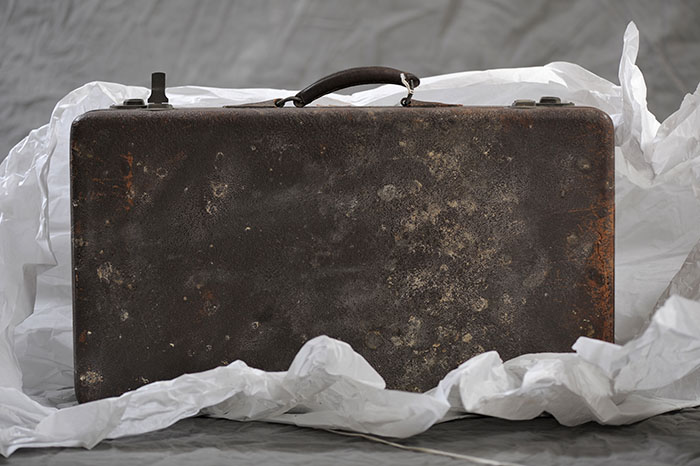
The Museum made arrangements to have the suitcases moved to the Rotterdam storage facility, where staff have catalogued each one, and have carefully wrapped and preserved their contents.

An exhibit of a selection of the cases was produced by the Museum and was on display in Albany in 2003 or 2004. It has also traveled around New York State. It was very moving to read the stories of these people, and to see artifacts from their lives before they became residents of the Asylum.
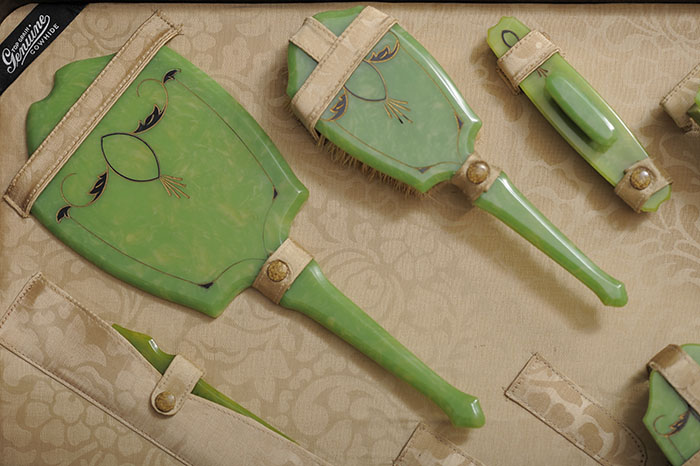
This particular case belonged to Freda B…..(I would really like to use her whole name here, but there is a massive debate going on as to whether people who have been at Willard and other psyc centers need to be protected by privacy laws. I come down strongly on the side that it is dehumanizing and stigmatizing to pretend that she doesn’t have a surname.)

I am so interested in these cases. I like the idea of documenting the care and energy that the Museum has put into them. And I am totally wigged out by being able to photograph a representation of the lives of people who struggled so much to make it in a very stressful and confusing world.

It is still early days, and I am struggling a bit as to how I should approach this. The cases have been photographed before, but in a totally different manner. The first hurdle seems to be cleared; I have access. The next is time, which I think I can manage. The big one is funding, which is something on which I need to work. And finally, what could come out of the project. An exhibit would be nice, or maybe a book.
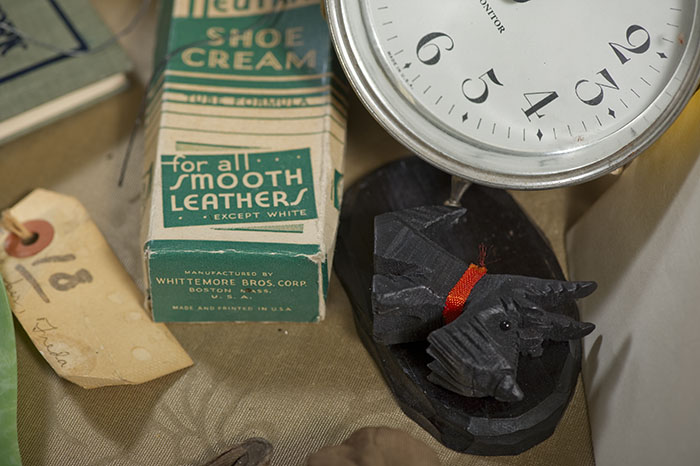
I have been working on some ideas with Dr Karen Miller, a writer and psychiatrist. She has also been spending time with the cases, and doing research on the lives of people who were at Willard. We’ll see what happens.

In the meantime, feel free to send this link around to anyone who might be interested. And any feedback would be appreciated.
 Jon Crispin's Notebook
4 comments