The Foundling Museum
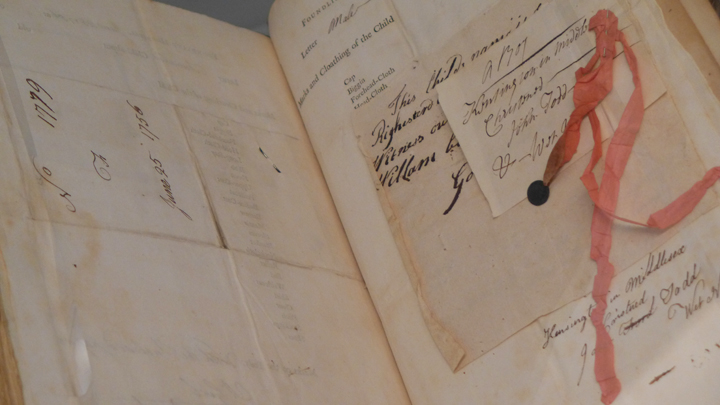
Early on in the suitcase project, people started sending me links to the Foundling Museum in London. Some saw an emotional connection between my project and the amazing stories that are a part of the museum’s collection. I was really flattered. This past Friday I finally got the chance to stop by and visit. It is really difficult to describe in words the impact of the exhibits, and of the building itself.
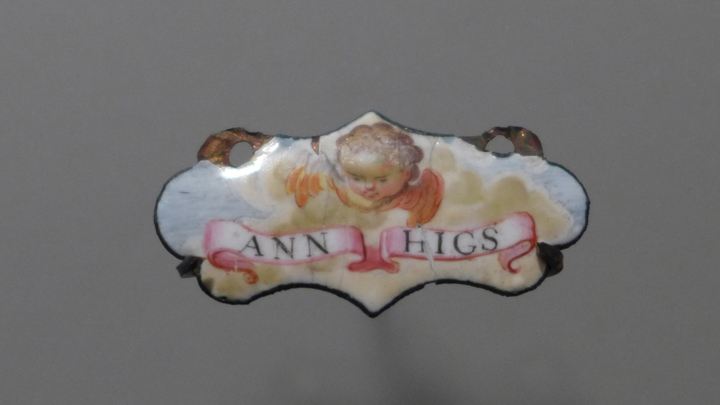
This is one of many tokens that mothers or fathers left behind to identify their children should they ever return to claim their abandoned child. It was a simple, but effective system. So much history here, and I would encourage going to their site to read about what an incredible institution Thomas Coram envisioned and successfully started.
I thought a lot about charity, art, and how brilliant Coram was in bringing in creative people to support the hospital. Both William Hogarth and George Frideric Handel were governors, and donated time and energy to the idea of saving abandoned children. The museum still utilizes this model in their temporary gallery space. I was really bummed to have just missed a Grayson Perry exhibit. (If you have a few hours to spare, please listen to this.)
Sometimes art can really have an impact.
TEDx Martha’s Vineyard

I’m back from the TEDx event at the Vineyard. It was an intense couple of days and was really interesting. Aside from my usual anxiety about presenting the project to people, my biggest concern was how to get 10 20 x 24 inch framed prints from my house to the venue. It all worked out, but it was a bit nerve wracking.

I was really happy that I was only showing prints, and not doing a formal presentation. I travel around and talk about the suitcases quite a lot, but mostly in give and take type of situations. The idea of standing up and delivering a 15 minute presentation still seems a bit intimidating. It was really helpful though to watch how others talk about their work in this type of format, and I learned a ton about how I want to refine my presentations.
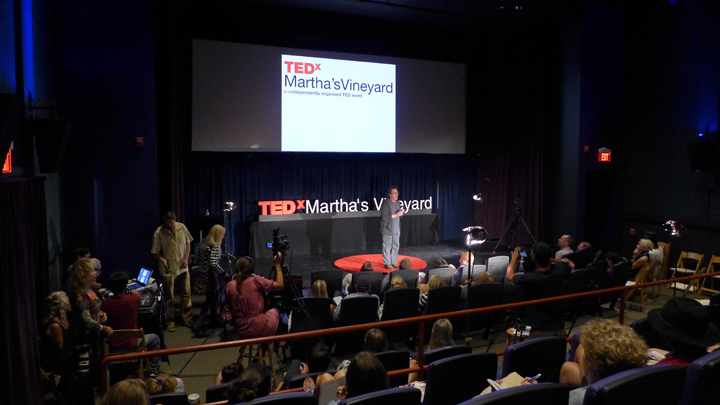
Here’s Jon Ronson giving his talk. I had read “The Psychopath Test” and seen “The Men Who Stare at Goats” and was happy to get the chance to hang out with him. So many creative and stimulating people were a part of the event, and the organizers did a great job setting up time for the participants to relax and talk about our work. It was an honor to be asked to a part of it and I am really grateful to all involved, especially Katy Decker who is an amazing bundle of energy and sweetness. It was also fantastic that my dear friend Sue Jackson, her husband Rick, and their friend Joanie made the trip over from the Cape. It meant so much to me to have familiar faces there.
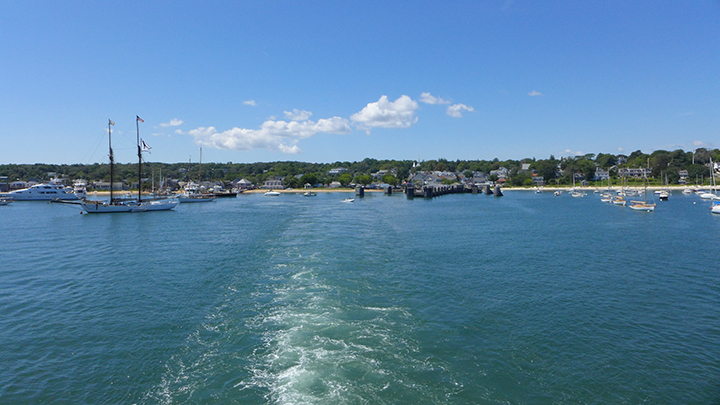
The Vineyard is a really lovely place and as I hadn’t been there in years, it was great to be back.

It was only slightly weird that since the President was in residence for his vacation, the Coast Guard was out in force. I would guess it was just for training purposes, but there were three chase boats that shadowed us back to Wood’s Hole and it felt a bit strange to see a manned 50 caliber machine gun so near to the ferry.
I am hoping to post more here over the next week. Thanks, as usual, for following.
Willard Suitcases / John H / News

Peggy and I are were back shooting last week, and found John H’s case to be really interesting. More cutlery and lots of tools and knives.
I wanted to mention that I have been asked to participate in a TEDx event on Martha’s Vineyard on the 19th of August. Details here. I am very excited about this as I will be showing prints and getting the chance to meet some very interesting people. If any of you are able to make it, I’d be happy to see you.
Also, there is some interesting action going on in regards to the cemetery which I posted about before. Here is a link to an online petition that is trying to memorialize Lawrence Mocha.
Peta Pixel/Peabody Essex Museum/Farnham’s
There was a very nice mention of the suitcases project on PetaPixel yesterday. Thanks DL Cade!
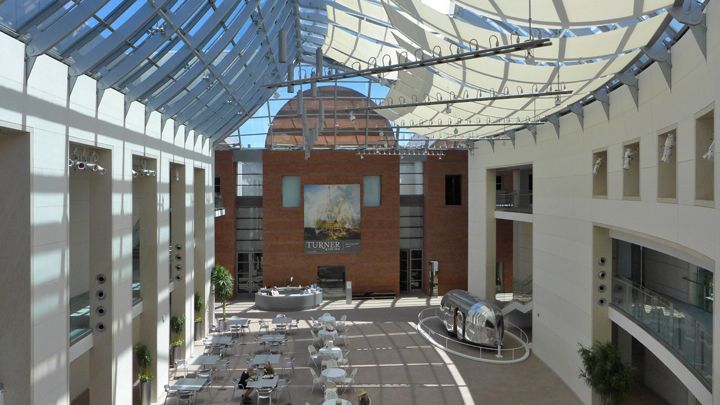
Cristine, our friend Kate, and I drove to Salem today to see the J M W Turner exhibit at the Peabody Essex Museum. It is amazing and worth the trip. No photos allowed in the gallery, but it is a very cool museum. Note the early Airstream trailer (lower right) that is part of the mid century LA exhibit.

We then drove up to Essex to eat some clams at Farnham’s. For those of you who follow this site, I have posted about this place before.
The upcoming 10 days are going to be very hectic for me, so please be patient if I don’t respond directly to email. I’ll do my best.
Willard Tour
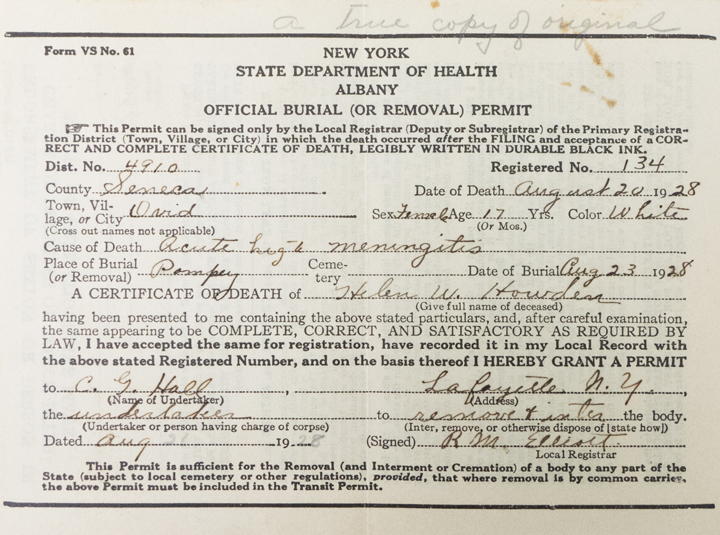
I wasn’t sure I would go to the Willard tour this past weekend until I was recently contacted by Ken Paddock. When Ken told me the story of his aunt Helen who died at a very young age as a patient at Willard, I really wanted to meet him. His family had kept an amazing collection of documents and artifacts related to her death in 1928 at the age of 17. She had contracted a disease (possibly scarlet fever) at a young age which caused blindness and other problems, and she was sent by the family to The Syracuse State School for Mental Defectives. She was transferred to Willard when the State School could no longer control her. The collection contains letters written to the family about her situation, including a letter from the head of the State School advising the family why she would be moved. Ken’s mother rarely talked about her older sister, and it wasn’t until just before her death in 2001 that details about Helen’s institutionalization started to come out. It is amazing to me that these artifacts were saved by the family, especially since it seemed that no one spoke much about her for such a long time. I met Ken, his wife Kathy, and their cousin Carol at the Taughannock Falls overlook on Saturday morning and was shown a binder full of artifacts. They encouraged me to talk about her life, and are graciously allowing me to photograph the collection, which I hope to do later this summer. It is great to be able to use her full name as this collection is in private hands and does not come under the state’s control. So, here’s a kind thought for Helen W. Howden, and thanks to Ken’s family for sharing her story.
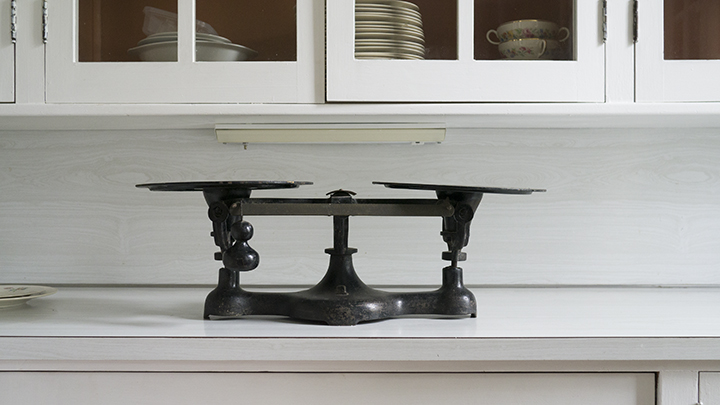
We got up to Willard at around 12.45 and were organized into groups for the tour. The first stop was Brookside, which is where the medical director and his family lived. It is a lovely early 20th Century house and situated right on the shore of Seneca Lake. As usual I was drawn to one of the three kitchens and took a few shots before I headed downstairs.
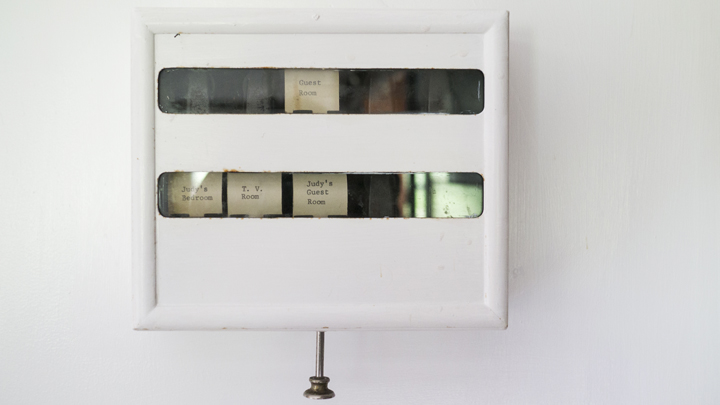
This device was used when the family wanted to request something from the staff. When Craig Williams and I were looking at it, the buzzer sounded when another member of the tour pushed a button in one of the upstairs rooms.

Next stop was the game room in the basement. I am not sure which director’s family would have used this foosball table, but it was most likely Dr. Anthony Mustille’s children.

Since I had already been in several of the buildings on the tour, Peggy Ellsworth suggested I come over to the morgue when it was between groups. She is one of the main boosters of Willard’s past, and spends a great deal of her energy keeping the spirit of the place alive. She told me an amazing story of her first day on the job after she had graduated from the nursing school. It involved her first autopsy when she was standing right where she is in this photograph.

It constantly astounds me that evidence of how these rooms were used is still in place decades after Willard’s closing.
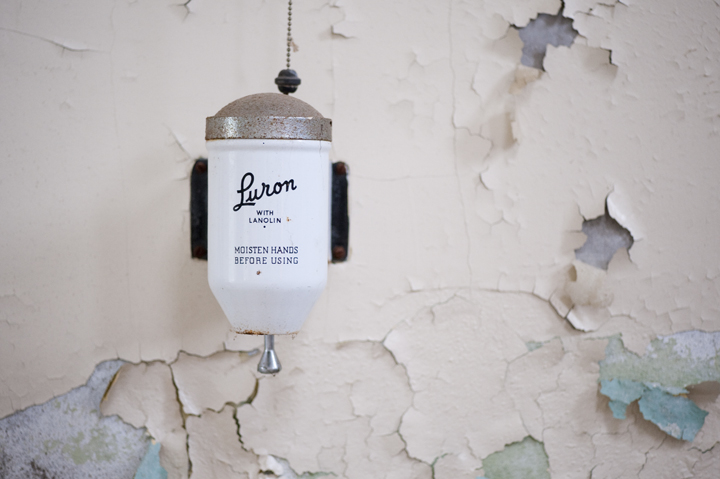
The morgue building is a tiny little brick edifice that I had never been able to get into on my earlier visits.

So many interesting aspects to this room.

This is the faucet at the head of the autopsy table.
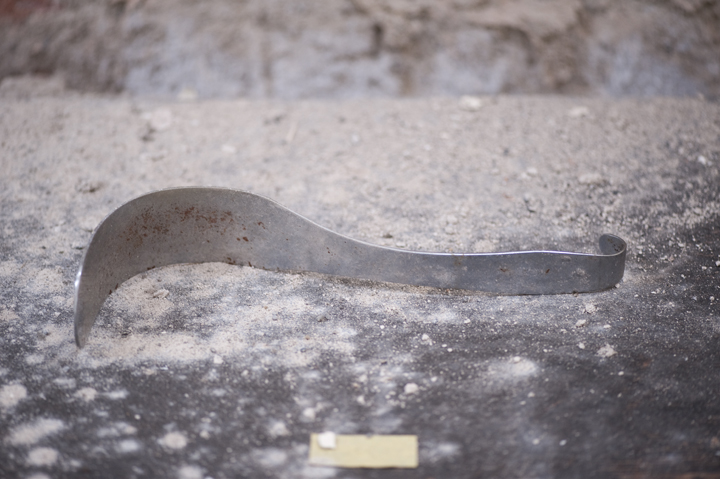
And who knows why this retractor was left behind?
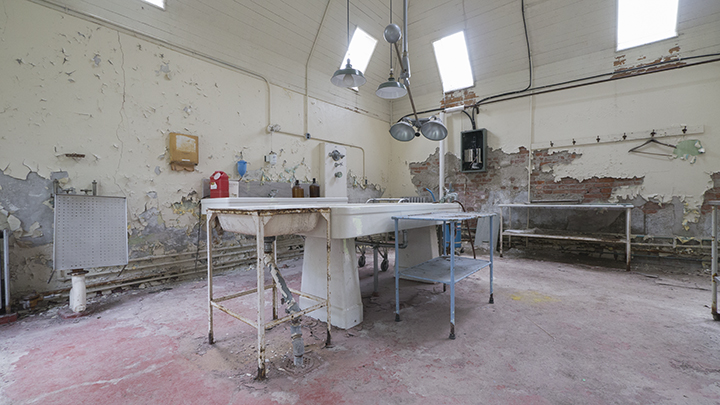
It is really quite a space, and reminds me a bit of the autopsy room at Ellis Island that I photographed a few years ago. After I left the morgue I headed over to Elliot Hall which was built in 1931.

It reminds me of several of the other state hospitals I have visited; long corridors with day rooms at the end of hallways.
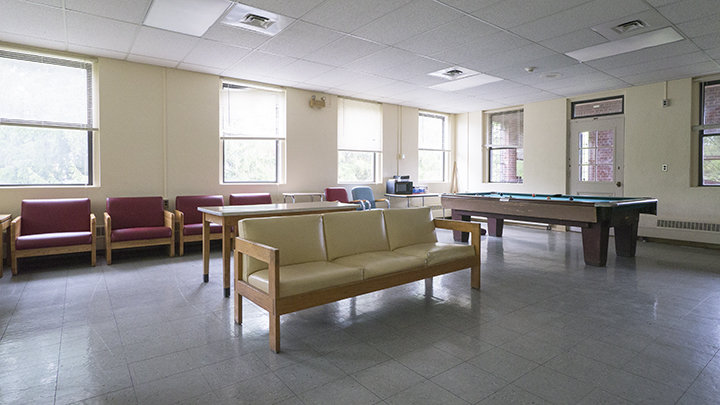
And the stairwells are very similar to ones I have photographed at other institutions.

Before leaving to head home, I stopped by the cemetery where the Willard Cemetery Memorial Project folks arranged this nice remembrance of Lawrence Marek (unfortunately not his real surname) who while a patient at Willard dug over 900 graves for those who died while living at the institution.

The next tour of Willard should take place again next May. It is a great opportunity to meet former staff and see first hand what an amazing place it was, and in many respects, still is.
Willard Suitcases / John R
Near the end of a day’s shooting yesterday I asked Peg how many suitcases she thought we had photographed. She went to her computer and checked the database. We were up to 248 (out of 420) with two left to do before we shut down for the day. So we are well past the halfway point, and I was really cheered that we have made it so far. I shot the first case in March of 2011 and haven’t really been paying attention to the numbers, so it was a very pleasant surprise to see our progress.
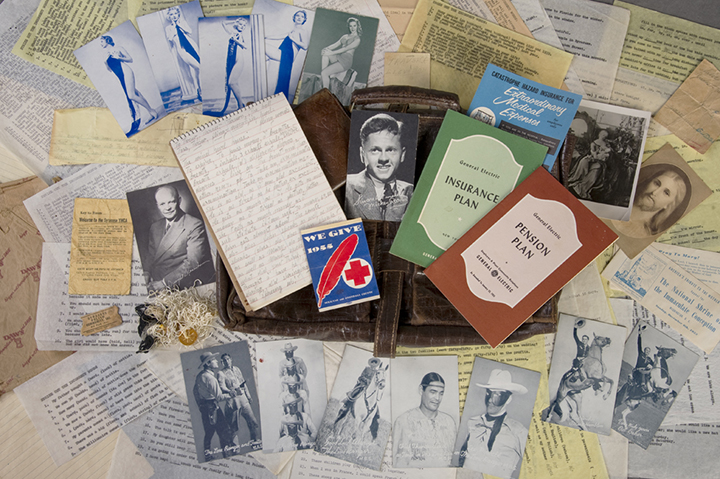
John’s briefcase is particularly interesting, with a varied collection of items. All of the onionskin papers in the background are English language word and sentence exercises. It is possible he worked at General Electric for a time as he saved the pension and insurance plan brochures. And he was clearly a fan of the Lone Ranger and Tonto, Dwight Eisenhower, Mickey Rooney as well as cheesecake shots of women. The reporter’s notebook is especially interesting as it is full of a stream of conscious like composition in his beautiful handwriting.
Thanks for all the support and interest in the project. Cheers, Jon
Willard Suitcases / Over The Top
Well, it seems we made it. Late this afternoon we went over the $20,000 goal, with 324 backers. There is still just under 24 hours to go and I am hoping a few more folks will come in to be a part of the community.

I couldn’t find a date on this scan of a bird’s-eye view of Willard, but I am guessing late 19th Century. The main building in the foreground is Chapin House, which sadly, is now gone.

And this photograph is from a Hallowe’en party in Hadley Hall (also where movies were shown). I assume it was taken sometime in the 1950’s. The band almost certainly are not patients, but the dancers and the folks sitting around the dance floor would mostly be. This room still exists, in fact it is where Karen Miller and I spoke at the Romulus Historical Society event this past summer.
Every time I write up a post here, or update the Kickstarter page, I find myself wanting to over-use the word “amazing”. This whole project is that way for me. Amazing that I have access to the cases, amazing that the cases even exist, the amazing lives that are revealed by the contents of the cases, the amazing people that are working with me (thanks Peg, and everyone at the museum), and the amazing people that are supporting this work through Kickstarter and in so many other ways. There, I think I got it out of my system. But, you know, it is really something to be a part of all this. Cheers everyone, and thanks. I am back shooting the suitcases tomorrow, and hope to have an update in the evening when I get back.
Miscellaneous Stuff
It has seemed that for the past three weeks, my life has been consumed by the Kickstarter appeal. It has been a great, if not intense, experience. What I like most is that I am meeting such interesting people who are drawn to the project. Paul Mullins is a professor of anthropology at Indiana University-Purdue University, Indianapolis, and he just posted a great piece on his wordpress site. Here is the link. I like how serious academics have taken to thinking and writing about the suitcases.

Last Wednesday I drove to Exeter, NH to photograph the poet Willie Perdomo for Poets & Writers Magazine. He is an amazing guy, and we had a tremendous dialogue about art, creativity, and life in general. The story will run in the May/June issue. I’ll post a link when it is online. He generously gave me a copy of his new book and I had fun reading it on the train back from New York on Saturday evening.
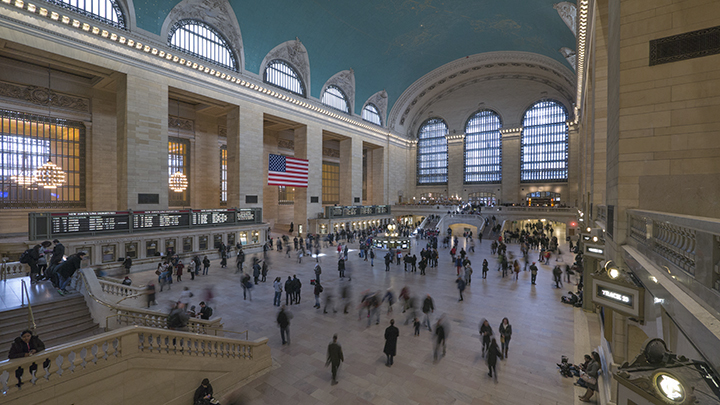
I was in the city for a memorial service for the husband of a good friend who I met through the suitcases project. I am reminded again and again how way beyond photography the cases are for me. The service was very moving, and as these events often do, it reinforced the idea that friendship, love and a simple appreciation of being alive and healthy are what it is all about. So thanks to all of you who are reaching out. The connections mean so much to me.
Willard Suitcases / Mary E. B.

We had a very productive day shooting in Rotterdam yesterday. Again, most of the cases were largely empty, but there was still some interesting things to notice. You can see the outline of the handle in dust from when the suitcase was stored in the racks at Willard. I like how the museum staff left it as they found it before wrapping it up for storage.
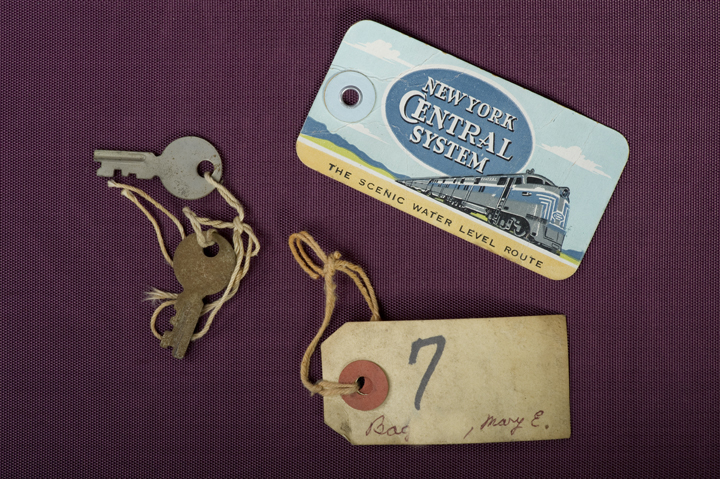
This was all that we found in the case. The New York Central luggage tag is beautiful.

This is what was written on the reverse site. When I showed it to Peggy, she got a chill. We both often react that way when the real life of the person is shown to us through their possessions. Mary had a suitcase, she travelled, and at one time, she lived at 417 W. Main Street in Waterloo, NY.
Danger / Invisible Laser Beam
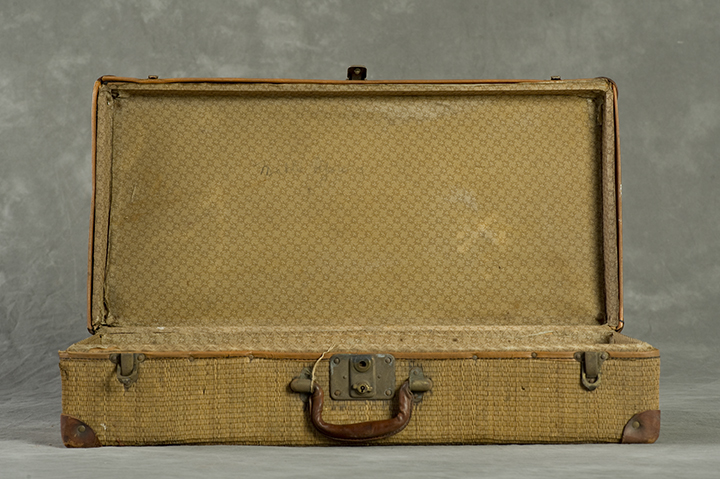 I really liked this case when I shot it on Wednesday. It belonged to Mabel Y. The pattern on it is actual weave as opposed to a fake print pattern made to look like weave. It, like many of the suitcases, has no means to support the top when opened, so Peg and I are constantly coming up with some way to hold it upright for the photograph.
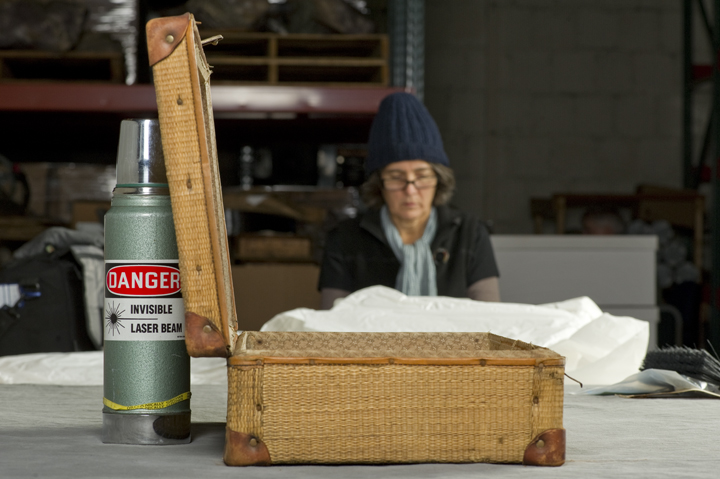 Here is one of our usual tricks. My parents gave me this thermos for my birthday at least 30 years ago. I always make a pot of milky tea for the drive over to Rotterdam, and since the storage facility is very chilly in the Winter months it is great to have something warm during the day. The laser beam sticker comes from my great friend Peter Carroll who seems to pick up things like this on occasion. / You can see Peg in the background working on her computer. She created an amazing database into which we can enter all the pertinent information about each case, its contents, and the owner. She is doing her best keeping me and the project organized, and I am so grateful for her help and support.
 Jon Crispin's Notebook
3 comments