Willard Tour
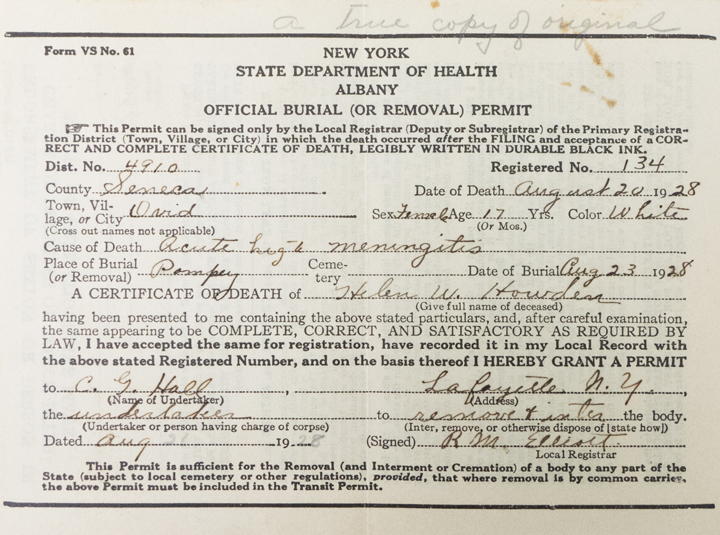
I wasn’t sure I would go to the Willard tour this past weekend until I was recently contacted by Ken Paddock. When Ken told me the story of his aunt Helen who died at a very young age as a patient at Willard, I really wanted to meet him. His family had kept an amazing collection of documents and artifacts related to her death in 1928 at the age of 17. She had contracted a disease (possibly scarlet fever) at a young age which caused blindness and other problems, and she was sent by the family to The Syracuse State School for Mental Defectives. She was transferred to Willard when the State School could no longer control her. The collection contains letters written to the family about her situation, including a letter from the head of the State School advising the family why she would be moved. Ken’s mother rarely talked about her older sister, and it wasn’t until just before her death in 2001 that details about Helen’s institutionalization started to come out. It is amazing to me that these artifacts were saved by the family, especially since it seemed that no one spoke much about her for such a long time. I met Ken, his wife Kathy, and their cousin Carol at the Taughannock Falls overlook on Saturday morning and was shown a binder full of artifacts. They encouraged me to talk about her life, and are graciously allowing me to photograph the collection, which I hope to do later this summer. It is great to be able to use her full name as this collection is in private hands and does not come under the state’s control. So, here’s a kind thought for Helen W. Howden, and thanks to Ken’s family for sharing her story.
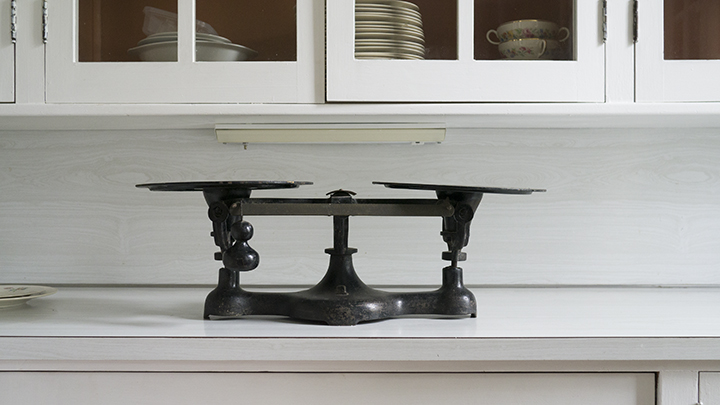
We got up to Willard at around 12.45 and were organized into groups for the tour. The first stop was Brookside, which is where the medical director and his family lived. It is a lovely early 20th Century house and situated right on the shore of Seneca Lake. As usual I was drawn to one of the three kitchens and took a few shots before I headed downstairs.
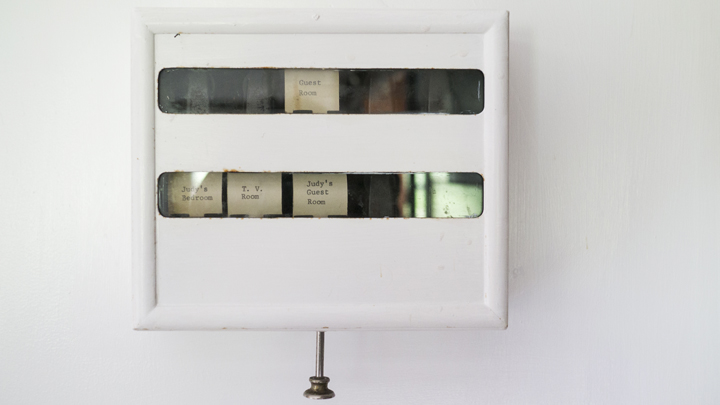
This device was used when the family wanted to request something from the staff. When Craig Williams and I were looking at it, the buzzer sounded when another member of the tour pushed a button in one of the upstairs rooms.

Next stop was the game room in the basement. I am not sure which director’s family would have used this foosball table, but it was most likely Dr. Anthony Mustille’s children.

Since I had already been in several of the buildings on the tour, Peggy Ellsworth suggested I come over to the morgue when it was between groups. She is one of the main boosters of Willard’s past, and spends a great deal of her energy keeping the spirit of the place alive. She told me an amazing story of her first day on the job after she had graduated from the nursing school. It involved her first autopsy when she was standing right where she is in this photograph.

It constantly astounds me that evidence of how these rooms were used is still in place decades after Willard’s closing.
The morgue building is a tiny little brick edifice that I had never been able to get into on my earlier visits.

So many interesting aspects to this room.

This is the faucet at the head of the autopsy table.
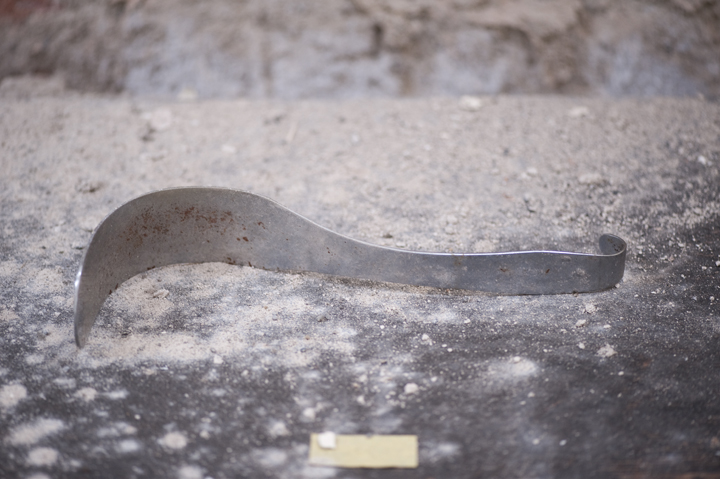
And who knows why this retractor was left behind?
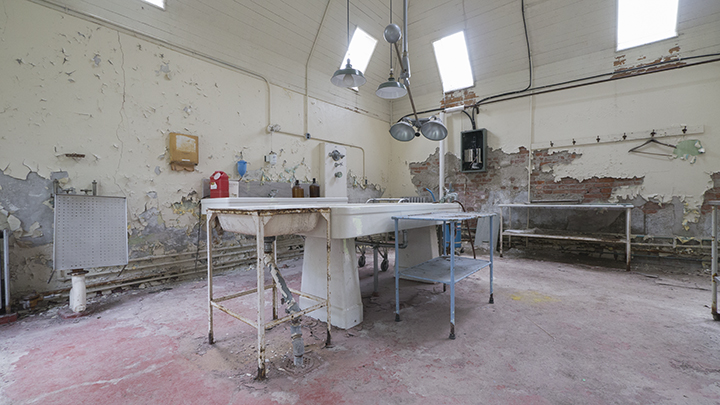
It is really quite a space, and reminds me a bit of the autopsy room at Ellis Island that I photographed a few years ago. After I left the morgue I headed over to Elliot Hall which was built in 1931.

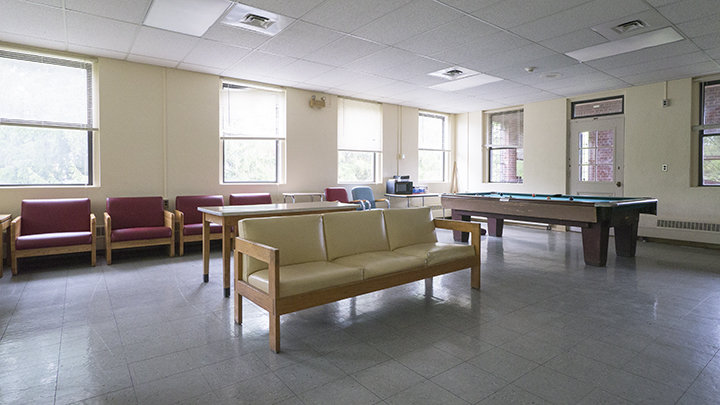
It reminds me of several of the other state hospitals I have visited; long corridors with day rooms at the end of hallways.
And the stairwells are very similar to ones I have photographed at other institutions.

Before leaving to head home, I stopped by the cemetery where the Willard Cemetery Memorial Project folks arranged this nice remembrance of Lawrence Marek (unfortunately not his real surname) who while a patient at Willard dug over 900 graves for those who died while living at the institution.

The next tour of Willard should take place again next May. It is a great opportunity to meet former staff and see first hand what an amazing place it was, and in many respects, still is.
Willard Suitcases / Anna H / Talk in Albany
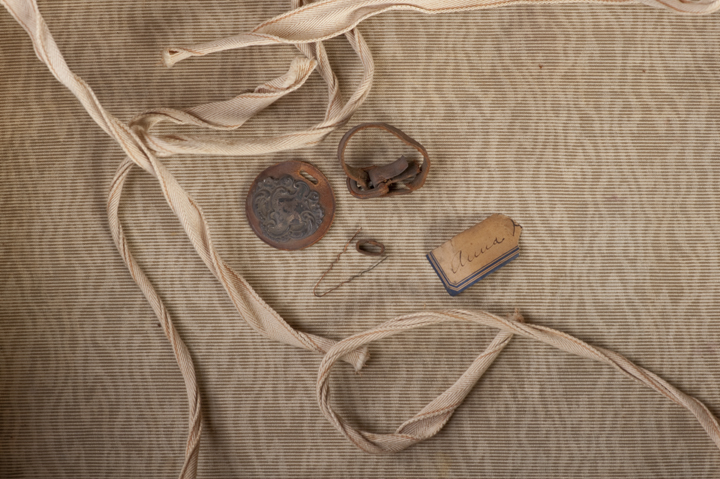
After a bit of a break, we were back to shooting more of the suitcases yesterday. It was a productive day, and after the intensity of the Kickstarter appeal, it was nice to be back to doing what is the most important part of the project.
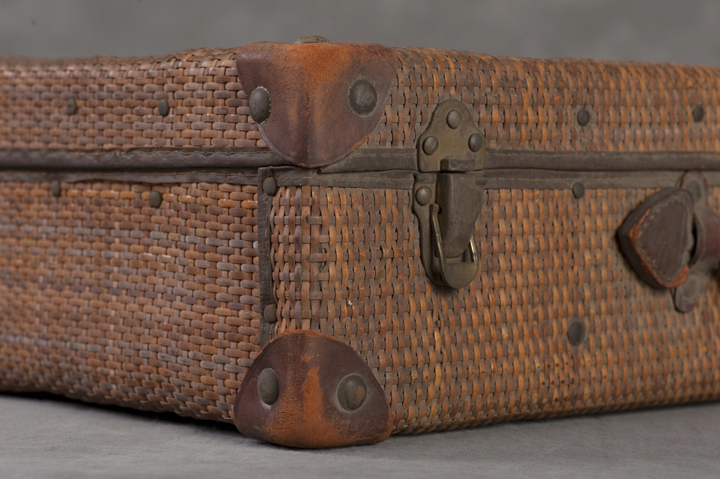
Anna’s case was in nice condition and the wicker pattern was lovely.
For those of you in the Albany area, I would love to see you at a presentation I will be giving at The University at Albany next Thursday the 10th. I will be talking about the suitcases and some of my other work to Katherine Van Acker’s class on documentary studies. Here are the details: Uptown Campus, Science Library Room SL G02, 5.45 pm. On our way back from Rotterdam yesterday, Peg drove me around the campus so I could get my bearings, and the first thing I noticed is that parking could be very difficult. There is a very small visitors lot (link to campus map), so if you plan on attending I would encourage you to get there early.
Willard Suitcases / Over The Top
Well, it seems we made it. Late this afternoon we went over the $20,000 goal, with 324 backers. There is still just under 24 hours to go and I am hoping a few more folks will come in to be a part of the community.

I couldn’t find a date on this scan of a bird’s-eye view of Willard, but I am guessing late 19th Century. The main building in the foreground is Chapin House, which sadly, is now gone.

And this photograph is from a Hallowe’en party in Hadley Hall (also where movies were shown). I assume it was taken sometime in the 1950’s. The band almost certainly are not patients, but the dancers and the folks sitting around the dance floor would mostly be. This room still exists, in fact it is where Karen Miller and I spoke at the Romulus Historical Society event this past summer.
Every time I write up a post here, or update the Kickstarter page, I find myself wanting to over-use the word “amazing”. This whole project is that way for me. Amazing that I have access to the cases, amazing that the cases even exist, the amazing lives that are revealed by the contents of the cases, the amazing people that are working with me (thanks Peg, and everyone at the museum), and the amazing people that are supporting this work through Kickstarter and in so many other ways. There, I think I got it out of my system. But, you know, it is really something to be a part of all this. Cheers everyone, and thanks. I am back shooting the suitcases tomorrow, and hope to have an update in the evening when I get back.
Willard Suitcases / Ethel S

Ethel S came to Willard with some beautiful quilts, which I have reason to believe she had made herself.

She also had some interesting photographs, and her Bible was a very nice edition.

And for some reason she arrived with a complete set of cutlery.

I especially liked this spoon, which was most likely hers as a child.

I often find myself wondering what impact her faith had in how she coped with life at the asylum.
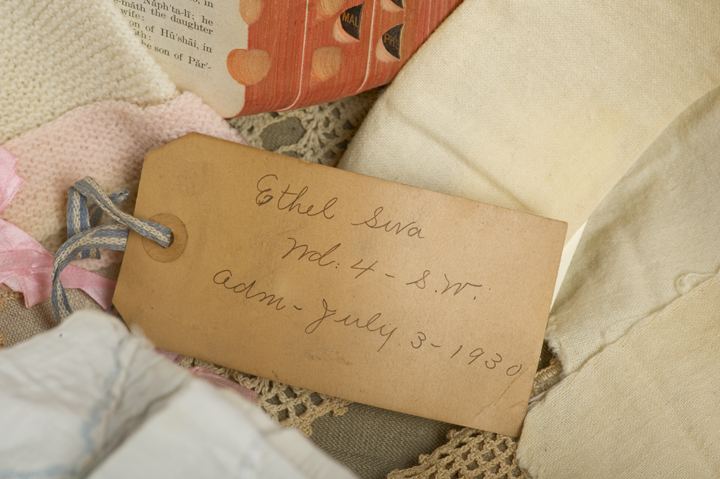
As you can see, Ethel was admitted on 3 July, 1930.
Three days to go on the Kickstarter appeal. Thank you all for your support. I have every confidence we will make it. I especially want to thank those of you who have increased your pledges. I am a bit overwhelmed by all this. You all must know that this is not so much about me and my life as a photographer, but about the people who lived at Willard, those who took care of them, and all of you who are a part of the project. Have a great week everybody.
Willard Cemetery / Thanks

Last February, Craig Williams and I were at Willard shooting the attic where the suitcases were “rediscovered. (Here’s a link to an earlier post) There aren’t many of these upright metal markers left.

After we were done, we walked across the road to the cemetery. It is always very moving to see the field where many of the Willard patients are buried in numbered graves. And interesting to note that starting in the late 1930s, and ending just before he died 1968, a patient named Lawrence M was the primary gravedigger. Amazing.
I have posted before about the cemetery and the people who are working diligently to honor the dead by attaching names to the numbers. Click here and here to read those previous posts.
Thanks for all the tremendous response to my “appeal” post the other night. We are at $14,000 on the Kickstarter appeal, and I am feeling very positive.
Oysters / Tilghman Packing Company

I had fun today photographing models of boats at the Tilghman Waterman’s Museum, as well as a great collection of oyster cans that Mark Sadler brought in. I really liked the typeface on this can, and the utensil on top was designed to open the can and then spoon out the oysters.
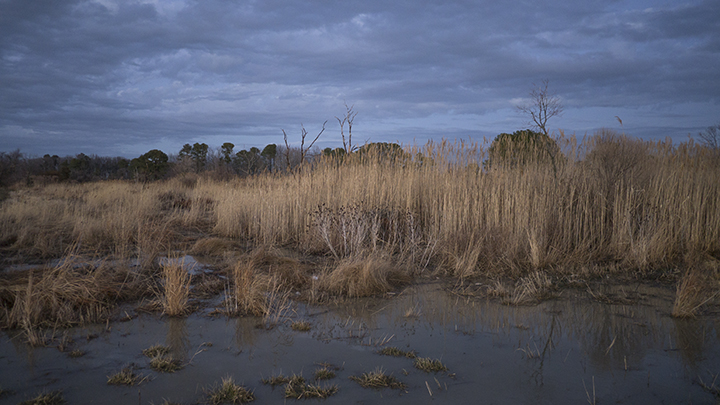
It rained very hard in the afternoon (tornado warnings for a bit) and then it cleared. Around sunset, more clouds came in and the light was beautiful. This shot was taken just off Bar Neck Road. When the tide is high and the wind is coming from the south, the road is often underwater. It has been a very wet winter on the island. / Ham and oyster dinner at the church tomorrow night and then into DC to see Peter.
Willard Suitcases / Margaret S.

We had a very productive day shooting the cases yesterday. We made it through another box, and it continues to feel like we are making real progress. For the second week in a row, I was knocked out by a case when I opened it up. This one had the classic type of latch that makes such a familiar sound when you slide the buttons to release the locks. And I really liked the design and pleasant shade of grey.

Whoa, what a case!

Margaret S came to Willard on 6 June, 1967 and went to Ward 2 in the Hatch Building.
I have just cleared the $8,000 mark on the Kickstarter appeal, and I am very grateful for the support. We still have a long way to go before we reach our goal so I would really appreciate anything that could be done to spread the word. Thanks for following.
Willard Suitcases / Alice M.

When I am working with the suitcases, my biggest reaction comes when I open a case for the first time. I just never know what to expect.

I have always like these wicker-like suitcases and this one is particularly interesting.

I just didn’t expect to see such an amazing lining when I opened Alice’s case. It took my breath away.

She was admitted to Willard on 6th October, 1941.
The second Kickstarter appeal has been up for less than 48 hours, and I am really excited. Thanks for all the support.
Willard Suitcase / Benjamin M.

I often talk about the unique nature of the suitcase collection, and at times refer to the truly incredible job the New York State Museum did in preserving the cases and their contents.
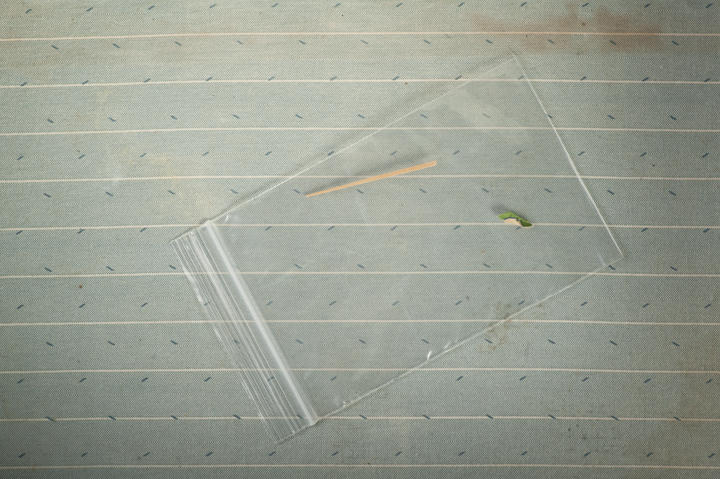
The above photo is a great example of the museum’s work. The only items in Benjamin’s case were the original label, a toothpick, and a tiny scrap of paper. When we opened this case, the label was in one archival bag, and the toothpick and paper scrap were in another. This may be something only museum curators and conservators can truly appreciate, but we are all beneficiaries of the care and concern shown to these materials.

I also often mention the major contribution Peggy Ross makes to this project, but today she really did something huge. Over the last few months she has been working on a database of everything we have shot and what is left to do. She made this list while I was shooting today, and just seeing it made me feel that not only have we made real progress, but now being able to complete a documentation of the entire collection seems within reach. We now know exactly what remains to be shot and, that makes me feel really good.
It was great to see my friend Connie Houde who was working at the storage facility today. She is on staff at the museum and is also a really interesting photographer. She’s been working on updating her website and you should check it out here.
Thanks for following. Cheers, Jon
National Museum of Natural History / DC
Peter and I had a great visit to the Museum of Natural History this afternoon. I wanted to show him the Hope Diamond and some of the other gems.

The big diamond was ok, but we were drawn more to the emeralds and rubies. This necklace was pretty cool.

These two pieces of chalcedony (quartz) were so cool; especially the green one. Amazing that this stuff appears in nature only to be found, polished, and put on display.

Cool elephant in the main foyer.

Not being much in the way of scientists, we didn’t understand a lot of what was going on in the genome exhibit.

When we told Cris we were going to the Natural History Museum, she said “Ooooh, dioramas!”

The guy here looks like he is hailing a cab in New York City. I have actually seen guys who look pretty much like him doing just that. When I was taking this photograph, a dad beside me was photographing his two kids and one of them said, “Daddy, I want to be a caveman.”

We kept coming back to the elephant.

We had an early dinner reservation at Mon Ami Gabi to celebrate Peter’s birthday. It was great. The escalator at the Bethesda station is enormous.
Back home tomorrow.
 Jon Crispin's Notebook
12 comments