Cold War Bunker (Revisited)
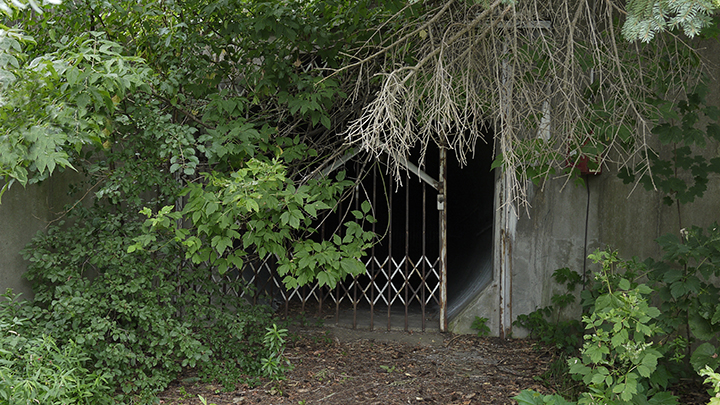
I was looking at some photographs that I took in 2010 of artifacts from the Attica Prison uprising, and came across these shots from a visit to a nearby New York State cold war bunker. I first mentioned it in a post here.

When Craig Williams and I went down into the bunker, we were accompanied by a couple of local policemen who thought there might be people inside, as the gate had been forced open. They checked it out and the space was empty, so we went in. As you can see by the beads of water on the wall, it was really humid and musty.
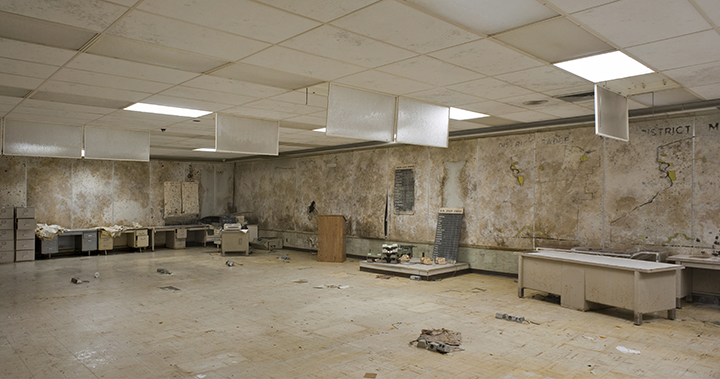
There was electricity, so most of the fluorescent lights were still working.

Abandoned spaces have always fascinated me, and I’ve been lucky to get access to some amazing buildings.
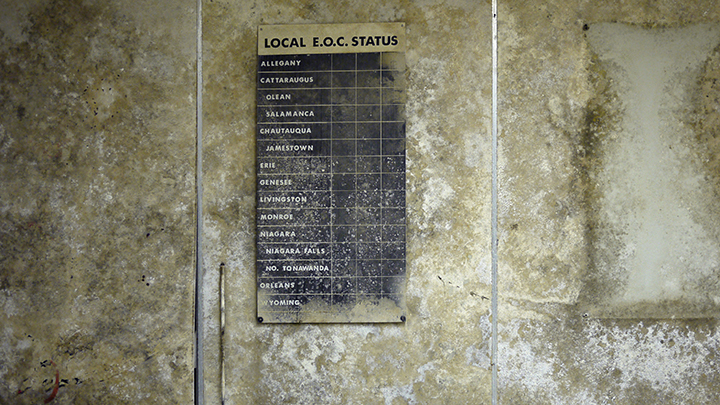
The idea that the usefulness of a place can end abruptly, and that an organization like the State of New York can basically walk away from it is especially interesting. I had the same feeling with my Silent Voices project (click on “asylums”).

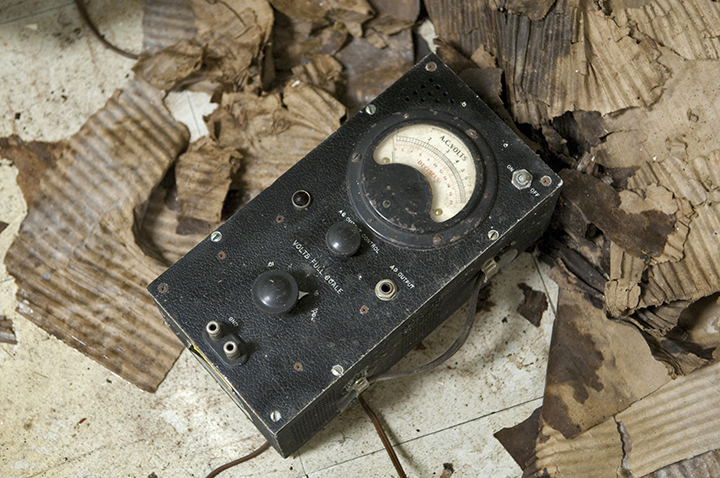
It is amazing what gets left behind. There is some pretty old technology in this shot. My dad had a Wollensack tape recorder like the one above that I used to play with as a kid.

There are usually lots of keys in places like this.

I am not sure when New York State shut down these sites, but I believe there were 6 or 7 of them scattered around the state.
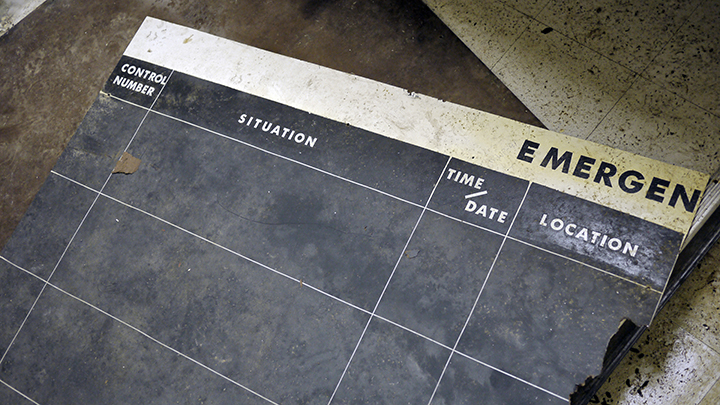
There must have been some permanent staff who worked here, but I would guess that it was a small crew that could have been expanded on during a crisis.

It must have been an interesting place to work.
I realized while writing this post that I knew very little about the history of these sites, so with a quick internet search, I found this great resource.

The U. S. Government logo for civil defense is a beautiful design; as I was growing up in the 60s it was everywhere.
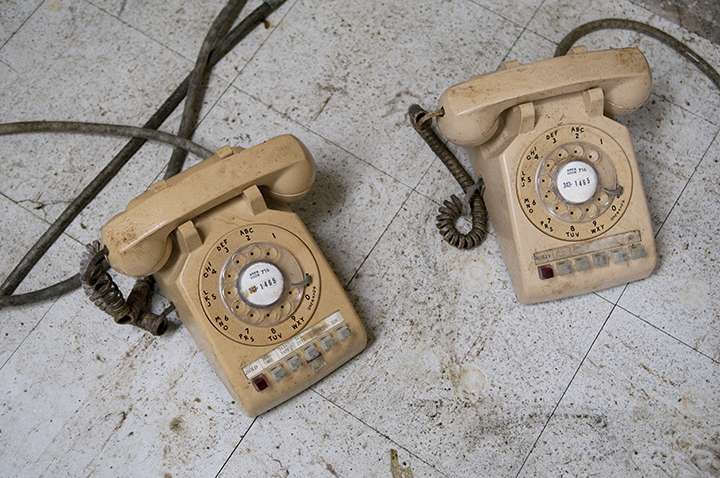
As were these old rotary phones.
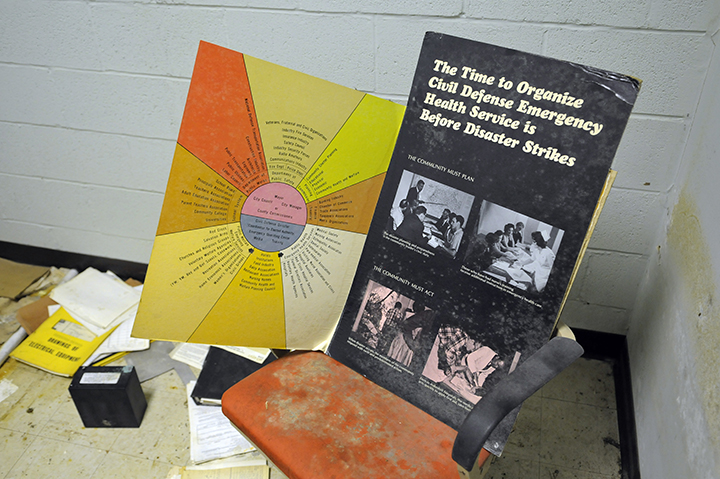
Both the Federal and State governments were active in distributing information about what to do in the case of an emergency situation, which seemed to always be about some sort of attack from the USSR.
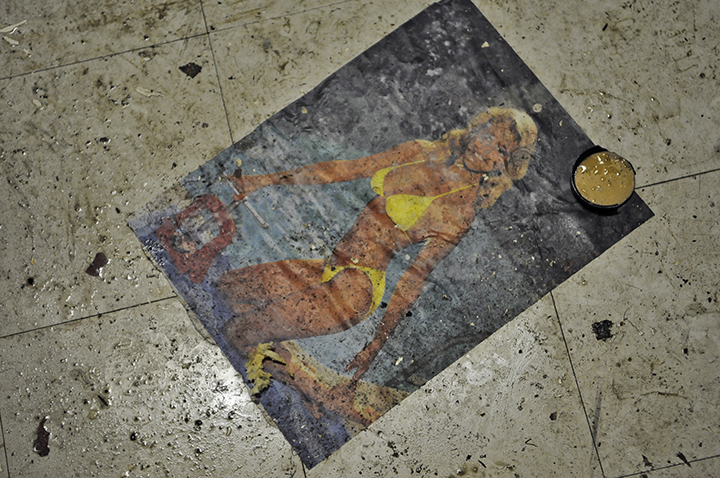
This is a page from an old Ridgid Tool calendar. There were a bunch of these scattered around the floor.

Here’s one last shot of the main room. Thanks to Craig for setting me up to get into this place. I’ll try to do something with the Attica artifacts sometime soon.
I finally figured out why I have so many new followers. WordPress featured me on their main site, and I want to thank them for doing so. I was going to try to explain to you recent followers what I am trying to do here, but it is kind of obvious if you just jump around through my previous posts. So, welcome and thanks for following.
Hello!

I am never sure why this happens, but this site is getting rather a lot of traffic today. Usually, a link gets published somewhere which mentions me for one reason or another, and I start getting emails from WordPress telling me I have new followers. So welcome everyone; happy to have you stop by from time to time. Wishing you all a great weekend.
Willard Suitcases / Margaret D / Journal of Contemporary Archeology
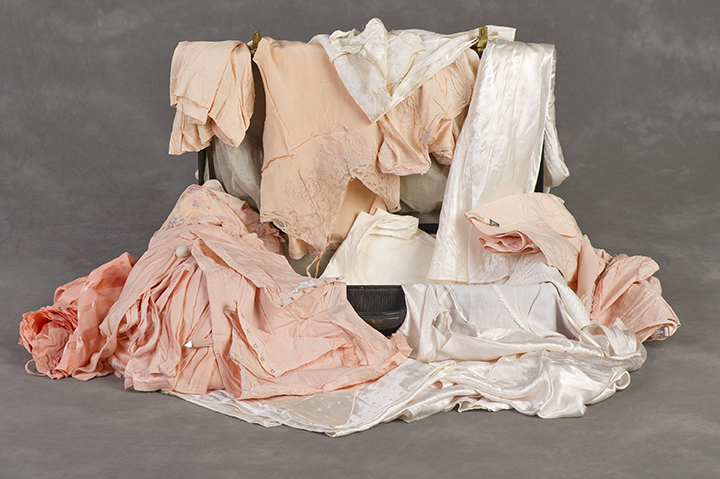
This case belongs to Margaret D, and she clearly liked beautiful underthings. It is difficult to describe just how wonderful the fabric in these garments felt to the touch.

Margaret was a nurse before she came to Willard, and she also brought along a massive collection of highly starched nurses uniforms.
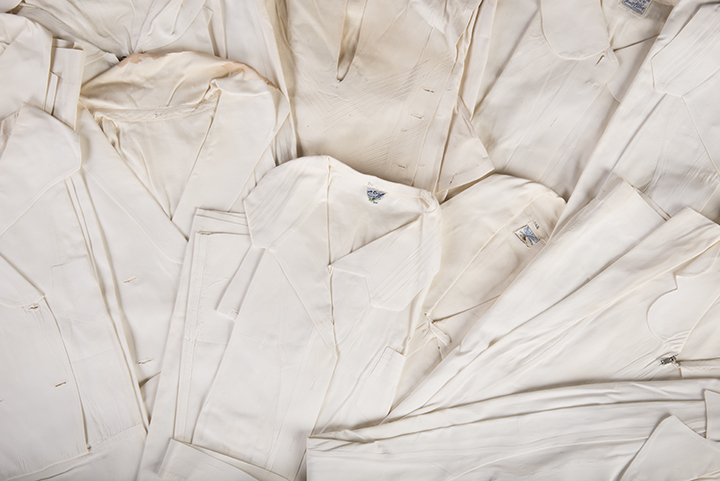
There had to have been at least 50 of these uniforms, and they were all folded nicely.
❖
I first met Zoë Crossland shortly after she backed the first suitcases Kickstarter campaign. She is an anthropology professor at Columbia University and has invited me on two different occasions to speak to her department about the suitcases. Both visits were amazing, and I learned so much about the project from hearing what the faculty and staff had to say. Over a year ago we started a dialogue about the project with hopes of getting it published. Six months ago the Journal of Contemporary Archeology agreed to do so, and the online version was released late last week. Here is a link to see a pdf of the article. Scroll down to “Download Media” and click on the little icon next to “PDF”. I am so proud to be a part of this as I think Zoë did a fantastic job of connecting my photographs with her interests as an archeologist/anthropologist. There will be a print version available soon which can be ordered through the JCA.
Thanks for following. I have been getting quite a few new subscribers to this site, so as a reminder, you can check out The Willard Suitcases site here.
Chickens / Transperformance

I have been seeing these chickens and their mobile home in Hadley for a while now and the light was nice tonight so I stopped.
I passed them as I was driving over to Northampton to see my friend Tom Schack’s band Outer Stylie perform as Talking Heads in the annual Transperformance show at Look Park. It is an annual event that benefits the Northampton Arts Council and is huge fun.
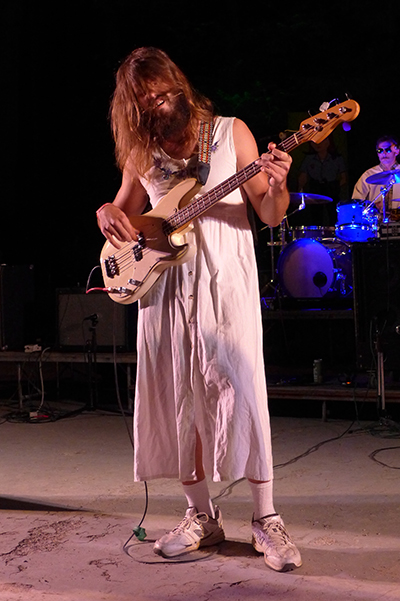
Here’s Tom rocking out dressed as Tina Weymouth. He is the sweetest guy in the world.
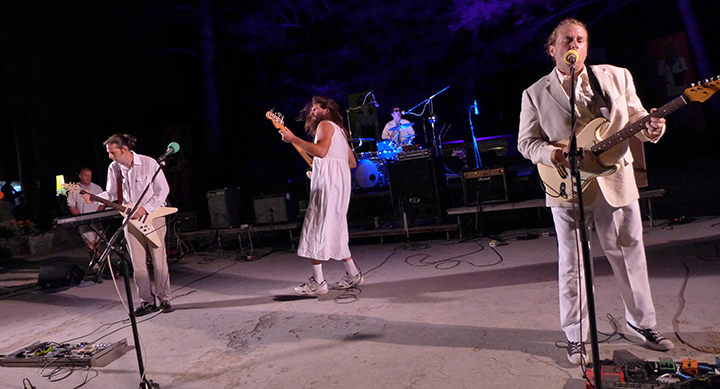
And here’s the full band. They sounded great!
Willard Suitcases / Names

I just got word that the governor of New York State has signed Senate Bill S840A. Here is the summary of the bill; “(Senate Bill S840A ) relates to patients interred at state mental health hospital cemeteries; directs the release of the name, birthdate and date of death of certain patients 50 years after the date of death”. I am not totally clear about what “certain patients” means, and to whom this information may be released, but this is certainly good news. Here is a link to two earlier posts I did about the cemetery and the whole issue of names. Click on Coleen Spellecy’s and Lin Stuhler’s links to read about the two people who did the most to get this bill through the legislature. And thanks to Joe Robach for being persistent in getting the bill passed and signed into law.
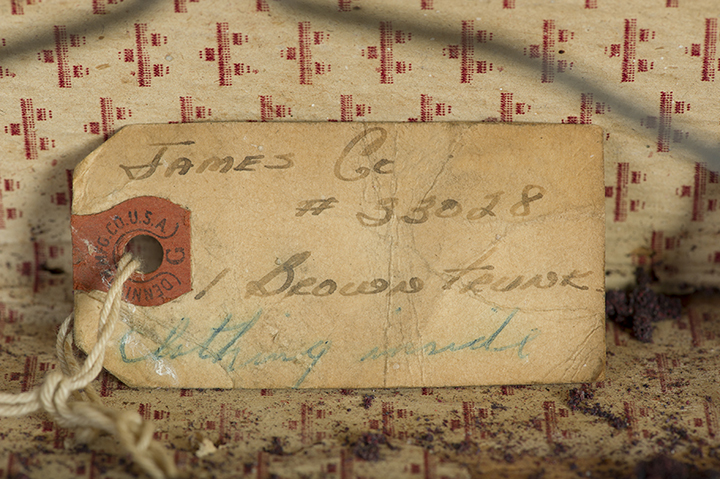
The issue of not being allowed to name the owners of the suitcases has always bothered me. I have been expressly told by both the New York State Museum and the New York Office of Mental Health that due to state law, I am forbidden to use the surnames of the patients when I publish the photographs, even though some of those names have already been mentioned in local newspapers and in other sources. I feel that not using surnames continues to dehumanize the folks who were already stigmatized just by being patients at Willard. Due to this new law, it might be possible, in some instances, to begin using full names. All in all, this is a pretty exciting development.
Thanks for following and check out the suitcases site to see the latest.
Karma Congestion… (UPDATE)
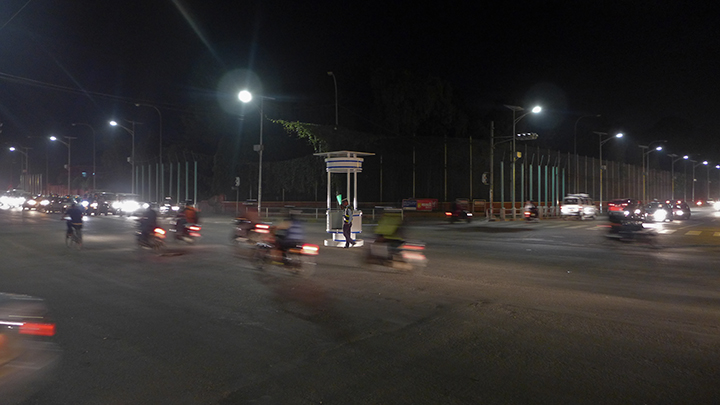
…is a phrase my dear friend Alex Ross coined many years ago. I think I have mentioned it here before. We use it as a general catch-all to cover anything from mild creative block to what the Germans call Weltschmerz. I have been somewhere in it for a while now. I haven’t been posting much, but I have been shooting quite a bit and I wanted to put up a few shots here. / I was chastised by a Kathmandu policeman just after I shot this ↑. The white kiosk in the middle of the intersection was put there this very day. The old one was lying on its side on the corner beside me (and is quite possibly still there).

I’ve been in and out of the New Haven train station a lot lately and have always liked these tunnels.

Our friends Scott and Lisa very generously invite us to visit them on Block Island for a few days in July. This was the view from their rental. We had a lovely time.

Olive is now just over 2 years old and is the most wonderful dog. My pal Peter Carroll took this picture.

These two big stones are in the empty lot next to the house on Ensenada Drive in Woodland Hills, CA where Captain Beefheart and his Magic Band recorded “Trout Mask Replica”. I was going to take a photo of the house, but it is a private residence now and I didn’t want to bother the current occupants. I had a friend in college by the name of Greg Trout whose granny gave him a copy of the album for his birthday. The only reason she bought it for him was that his surname was in the title. When I first heard it, it seemed beyond unlistenable. Now it is one of my most favorite records. Beefheart was a genius. Click on this only if you are open to weirdness.
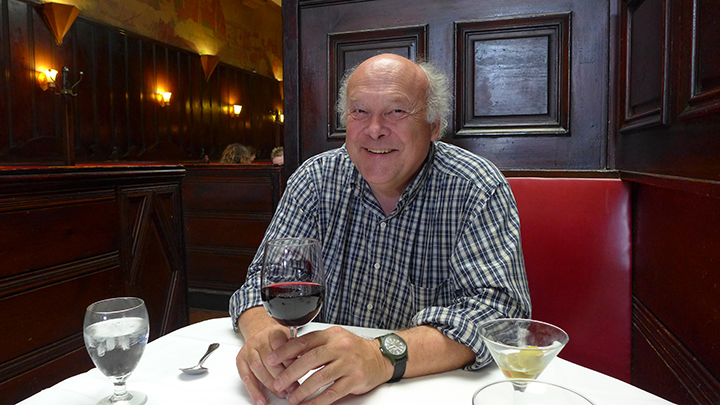
My brother-in law John is also a huge Beefheart fan. He was up for the excursion to Woodland Hills especially if it involved a stop at Musso and Frank is Hollywood. John is totally amazing and so much fun to be with. He was raised in Southern California and his knowledge of the area is staggering.

He grew up in Palos Verdes and gave us a tour on a lovely Sunday morning. This is a detail of a fountain that is in the center of town.
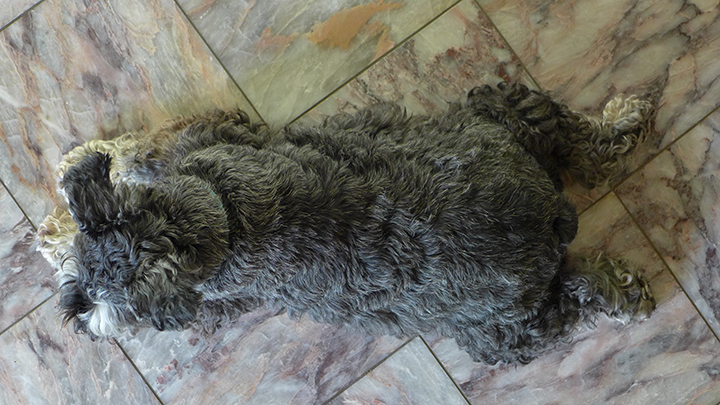
Here is John and Lynne’s dog Scooter. He is a mischievous sweetie.
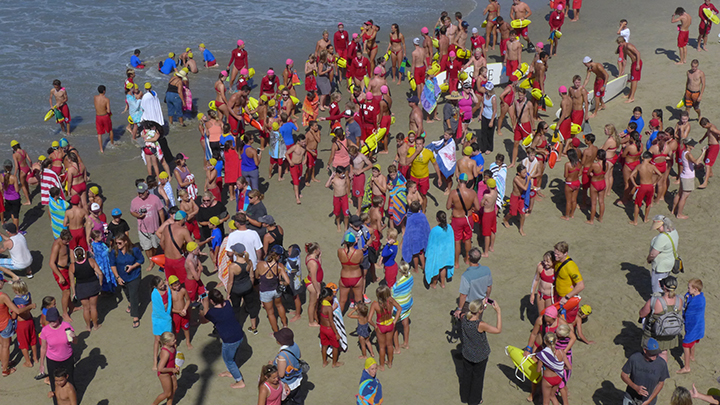
Cris and I always go to Huntington Beach when we are in California. The summer program for future lifeguards was happening as we were there. There was a wide range of ages of the kids, and it was way cool to see all of the participants in their red suits and colorful caps.

The older kids paddled out beyone the end of the pier and back. It looked exhausting.

The US Open of Surfing was happening the same day and the pier was jammed with people.

We also usually make it out to the Huntington Library in Pasadena,
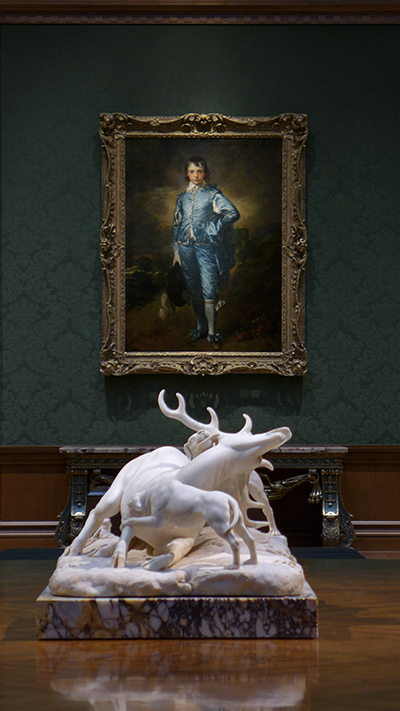
mostly just for the chance to see Gainsborough’s Blue Boy. It never gets old.

Peter was visiting from DC last week, and we made our annual trip to Essex to eat fried clams at Farnham’s. It was a beautiful day and the view from the picnic tables can not be beat.
Thanks for following and for giving me the opportunity to unclog some of that karma congestion. I think it worked. Cheers.
UPDATE. This is indicative of how spaced out I am, but the picture of Olive was taken by Peter Carroll. It is the best photograph of her ever, and he totally deserves the credit. Sorry Pete!
Willard Suitcases / Theresa F / Events
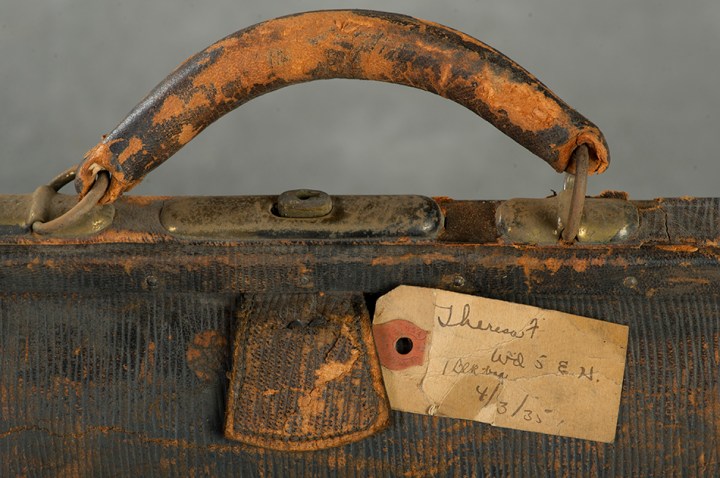
Even though my summer has been scattered location-wise, I have been able to work regularly on editing the suitcases, and have been able to upload a good number of them to the Willard Suitcases site. Click on “The Cases” to see the latest. Theresa F was admitted to Willard on 3 April 1935.
It might be a good time to mention a couple of upcoming events where I will be talking about the project. In early October I will be traveling to Galveston to speak at NAMIFEST 2016. NAMI is a national organization dedicated to supporting individuals and families dealing with issues of mental illness. I’ll be speaking at the dinner event on Friday (the 7th). If you have been following the project and live in the Gulf Coast area, please think about attending.
The following week, I will be speaking at a very interesting event in Raleigh, NC. The “Lives on the Hill” project is being organized by the North Carolina Health News folks, and will be highlighting the shuttered Dix Hospital property in downtown Raleigh. I will be speaking at the Sunday (the 16th) event taking place at the Student Center on the NC State Campus. There will also be an exhibit of the photographs up for the entire month of October. I’ll update about the location once those details are finalized.
It is very exciting to be involved in both of these events, and I am really looking forward to being a part of them.
Sanphebagar Schools / Nepal

I have been all over the place this summer and posting here has been irregular. Nepal was a while ago and I still have photos to share, but it is difficult for me to play “catch-up”. I like being able to post immediately and when I put it off, I often lose interest. But I do want to share some of this.
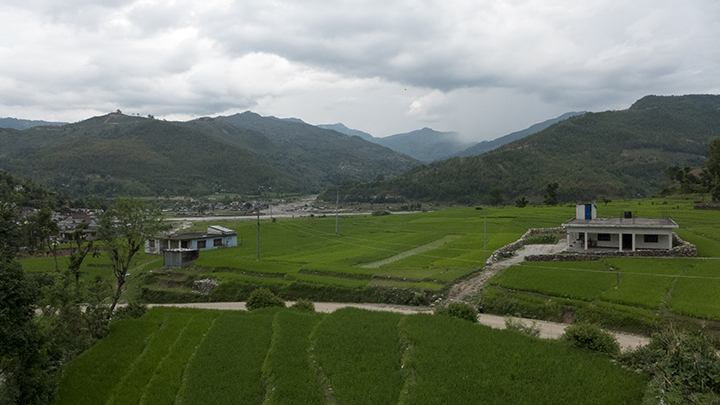
Our second full day in the Western Hills started in Sanphebagar. We visited two different schools and it was amazing.

There are two types of education in Nepal; public and private. Kids who go to the public schools wear blue uniforms.
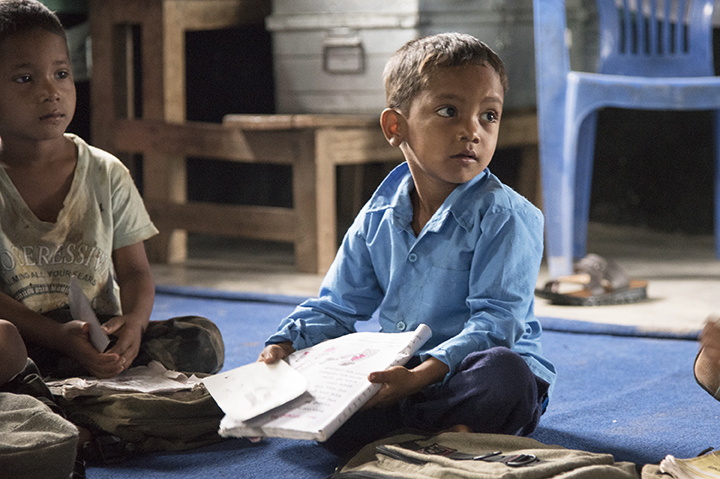
This young fellow is at the Khaparmandu Primary School (Sanphe municipality-2, Goyal Pani, Achham).

I often had to quietly enter the classrooms because the kids were very interested in my presence. I didn’t want to disrupt the lessons, but there was always at least one kid who wanted to see what I was up to.

They eventually got used to me though. This little girl was especially connected to what was going on in the classroom. She was really paying attention to the teacher and seemed to have an answer to any question that was posed.

Males in Nepal often have a comfortable physical association with each other. It is really nice to see this kind of connection.

I like this photo of the bus. It doesn’t really fit into the narrative, but here it is anyway.

The second school we visited was the Saraswoti Lower Secondary School (Sanphe Municipality-2 Loli, Achham).

The classrooms are only illuminated by window and door light, and it is amazing what digital cameras can record in such low light. This is a pretty typical room with fabric covering a dirt floor.

Everyone leaves their shoes outside.

The classes featured a bit of participation by the kids. Often, one child would come up to the front of the room and be asked to recite a lesson.

The kids were so sweet. As I noted earlier, they were very interested in us, and quite open. It is likely that they haven’t seen any Westerners at their school before. Sanphebagar isn’t particularly on any trekking route, and especially during the recent Maoist uprising there wasn’t much contact with outsiders.

The monsoon began in earnest as we were heading back to Dhangadhi. Driving is always interesting in Nepal, and in these conditions was quite thrilling.
There will be one last post on the trip, which I hope to get up soon. I spent a day in Sindhupalchowk, which was devastated in last year’s earthquake. There are some very interesting projects there that World Education Nepal is supporting and I am eager to share them here.
Thanks for following.
Willard Suitcases / Dorrit Harazim Book

Several months ago I was contacted by the Brazilian publisher Compania Das Letras about the suitcases project being included in a book by Dorrit Harazim. They have been really great to deal with, but I wasn’t entirely clear about the nature of the project. When I got back from Nepal, a copy was waiting for me in my post office box. It seems to be a collection of essays about photographs (it is in Portuguese so I am not sure), and I was amazed to see the other photographers that were included. Several Magnum photographers are involved along with Gordon Parks and Vivian Maier and some other illustrious names. I am thrilled an honored to be a part of it. “O instante certo” translated roughly to “the right moment”. It is available through Amazon, so if you read Portuguese it might be nice to get a copy.
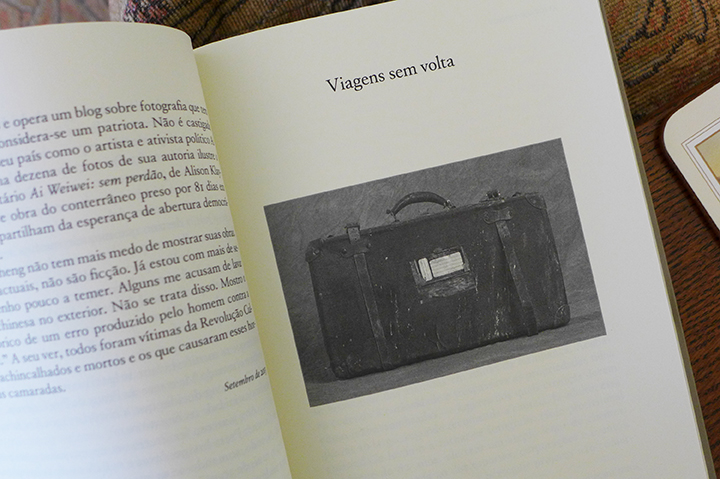
The article on the suitcases translates to “travel without return”. I would be happy if the book was translated into English at some point, but in the meantime, I’ll ask for a pdf and plug it into google translate.
Dadelhura to Sanphebagar

One of the things I like best about this site is the immediacy of being able to share images. It is always a bit difficult for me to put up a post if more than a few days have passed since I took the photographs.
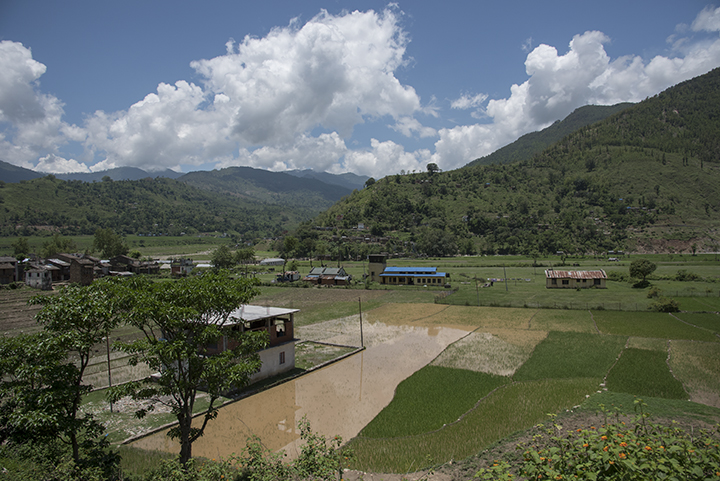
But I have been very busy editing the photos that I took for World Education, and I have had a bit of a hard time getting back into a routine since we returned. Fortunately I made fairly good notes while we were in the Western Hills. / Before we left Kathmandu, I looked up Achham on the internet and came across this Wikipedia entry. I was a bit baffled by the phrase “sporting a non-functional domestic airport”. That is it in the photo above. Apparently it is non-functional because the Maoists blew up the control tower during the recent conflict.
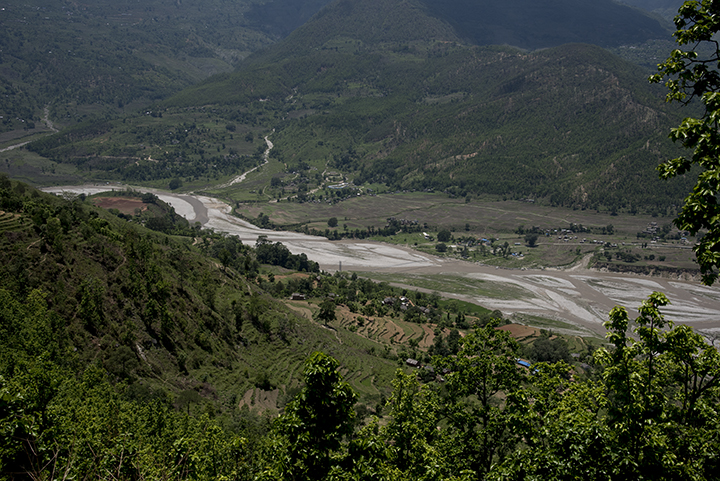
Here is a view of the Seti River. At that point of the trip, the monsoon hadn’t really kicked in so the rivers were still a bit dry.
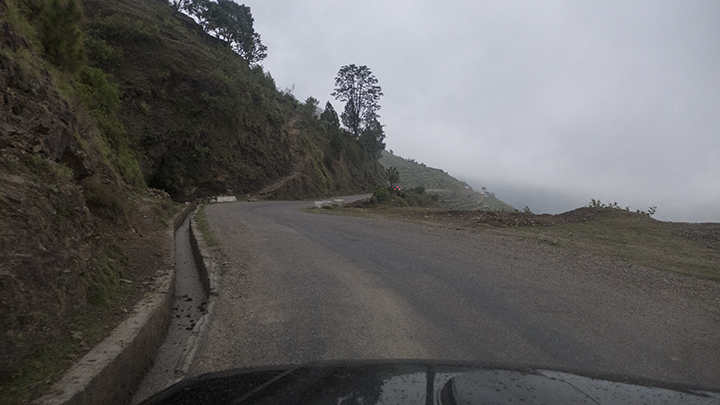
I spent a lot of time shooting out the front window of the car since we had a lot of ground to cover to get to the first school.
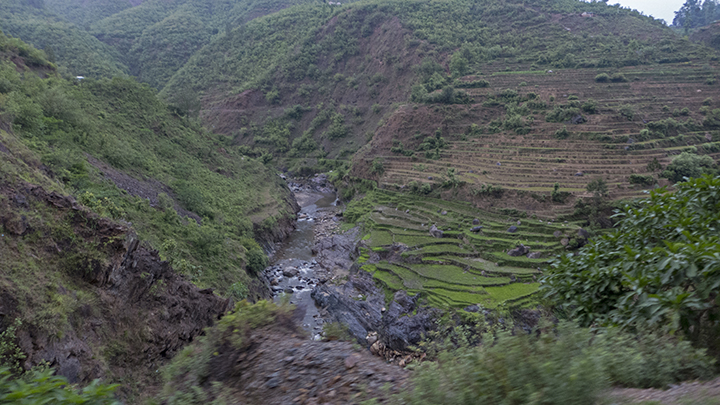
I felt guilty asking the driver to stop, but the scenery was so exotic that I couldn’t resist shooting as we drove.
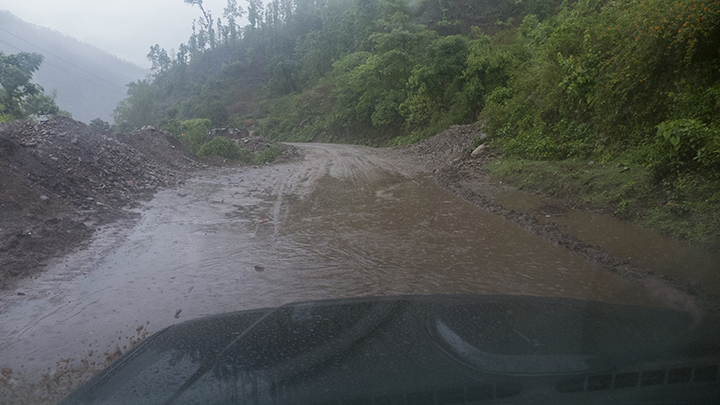
It had started to rain as we got closer to Achham and the roads became interesting.

There was a lot of water running down the hillsides which made driving a bit hazardous.

At one point we ended up in a line of cars and busses that were stopped by this slide. But a front-end loader was just finishing up clearing up the debris and we didn’t have to wait long.

That’s Nanda Ram, the driver, holding the umbrella with Jagdish on his right and Sukha Ratna on his left. Jagdish is the early grade maths guy and Sukha Ratna works on reading and did an amazing job organizing the trip. Cris and I first met Nanda Ram when we were in Nepal in 1992 just after he had started driving for World Education. He is amazing behind the wheel and such a lovely fellow.
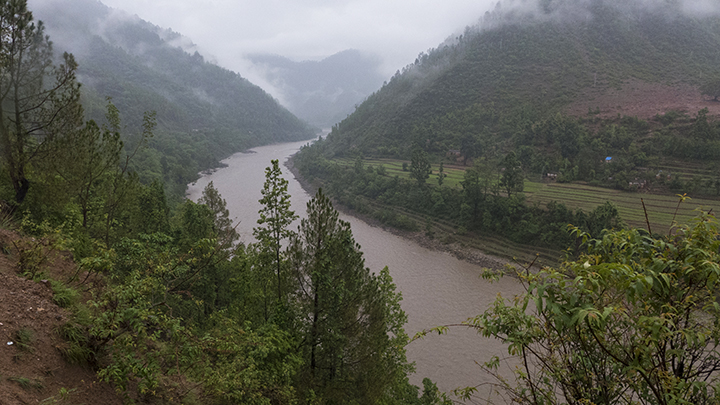
It was really interesting how quickly the rains started. We would be climbing up one side of a hill with blue skies and as we would start our descent into a valley it would be foggy and rainy.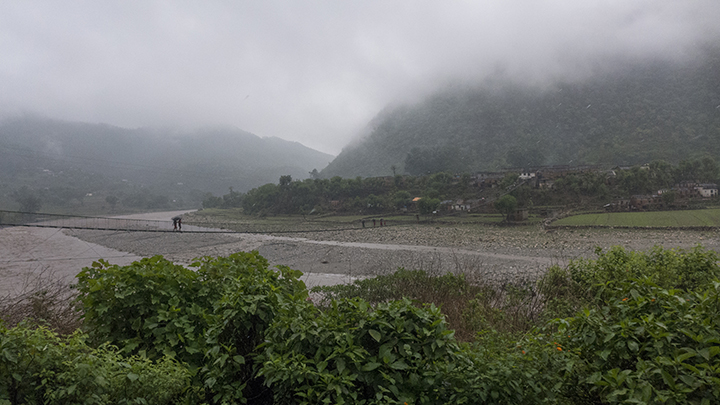
Here is a footbridge over the Budhi Ganga.
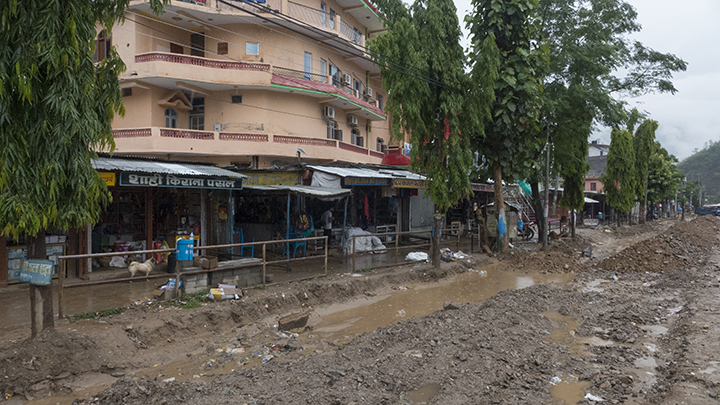
We stopped in this town for a bite to eat (I think it might be Doti). More dal bhat if I recall correctly.
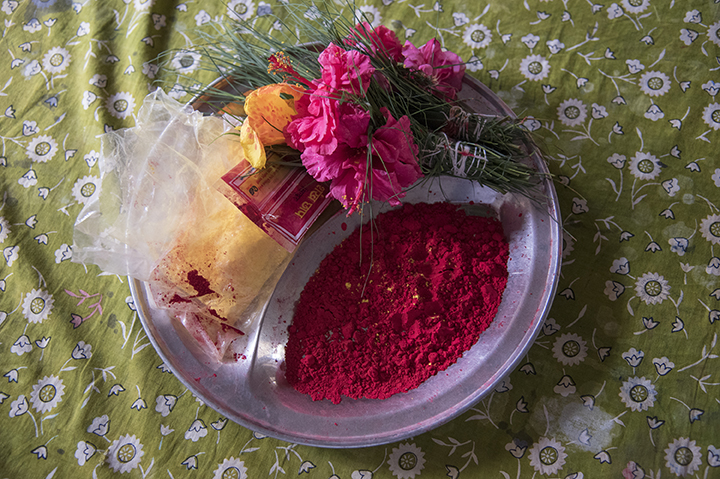
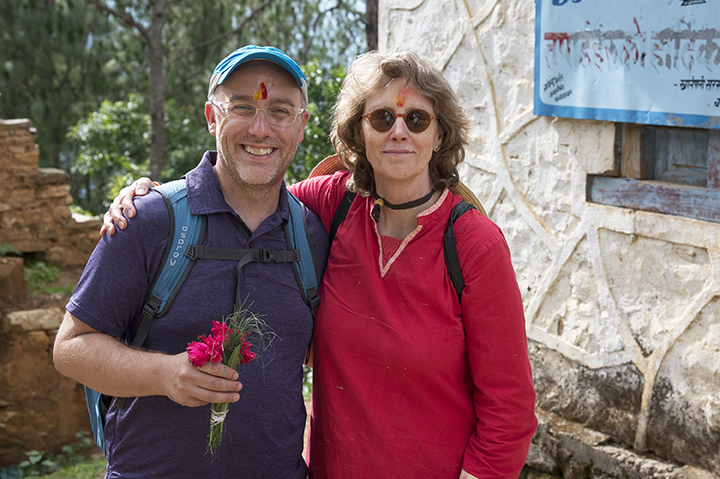
Since we had had such a long drive to get to the first school, the students had left for the day, but the World Ed staff met with a large group of teachers and administrators to talk about the Early Grade Reading / Maths project. Every school we visited gave us flowers and put tikas on our foreheads. It is such a nice way to be welcomed.
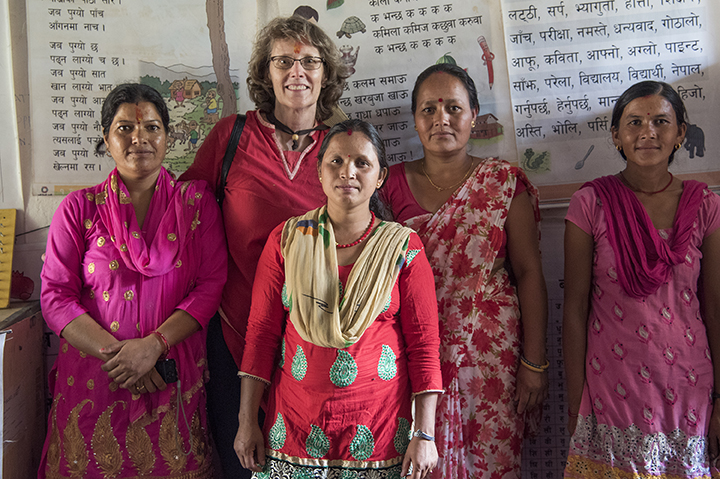
Here’s Cris with some of the teachers from the Saraswoti Higher Secondary School in Bardadevi V.D.C. (Village Development Committee).
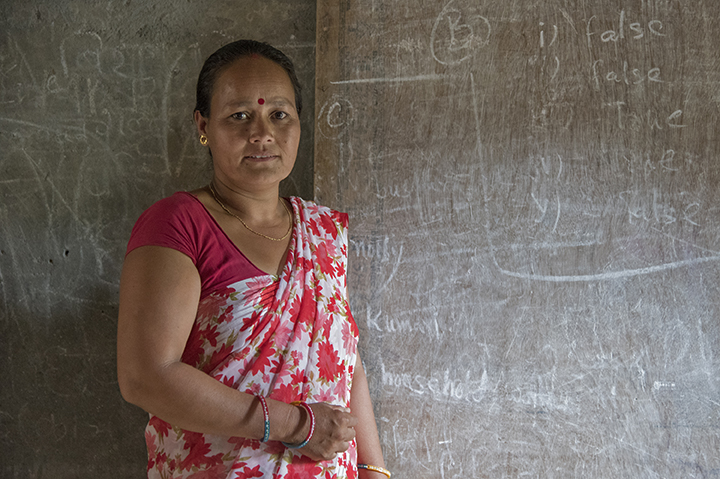
And here’s Mamta Joshi who teaches at the school.
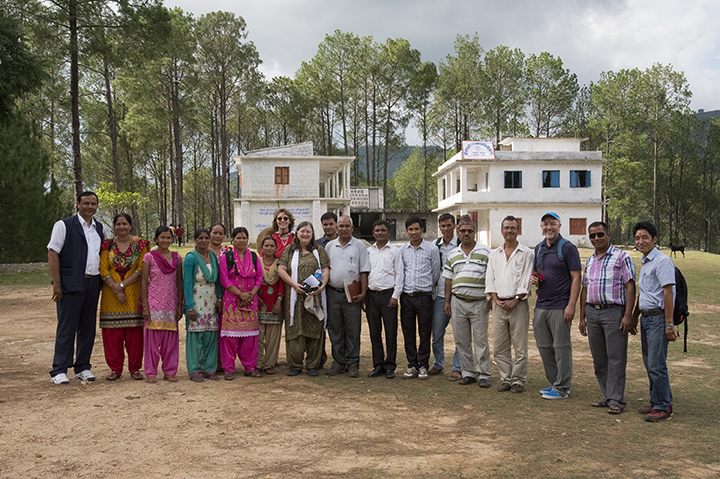
Here’s a group shot of the World Ed staff with teachers and administrators after the meeting. That’s a goat in the background.
Darrell Earnest is UMASS faculty member who is working on the early grade math part of the project. He was a fantastic travel partner and he and Cris really had a ton of fun working together.
Thanks for following along. More soon.
 Jon Crispin's Notebook
7 comments