Very Good News

I just received word from the New York State Museum that I have permission to start shooting more suitcases. I’ll call them next week to set up a schedule. This is a huge relief to me and I would like to publicly thank them for allowing this to happen. / This photograph was taken on 22 May, 1984 on the very first day that I was allowed into Chapin House. It was a wild day. My dear friend Richard Pieper was with me and basically ran interference as I was assigned two security guards to follow me around. He would stop in the middle of doorways and turn around to ask a question thus holding them up so I could be left on my own a bit. I remember feeling that I might not have much more access than on this day, so I shot 35 mm black and white film with my Leica rangefinders (these two shots), 35mm slide film with my Nikons, and 120 color negative film with my Pentax 6×7. Almost everything great that I got out of this building came from this day. / I was so thrilled last evening to get an email from Michael Labate who was director of facilities planning for OMH at the time I was trying to access the buildings. He single-handedly got me access to Willard and I will be forever grateful. He had heard about the suitcase project and was so complimentary about my work.

These broom-like devices weighed a ton and were used by the patients as they walked the corridors. As it was explained to me, the wooden floors were in constant need of maintenance, and paraffin would be put on chamois cloths attached to the bottom of these polishers. I only ever shot this scene in black and white, but it is so very evocative to me.
Lin Stuhler’s Willard Cemetery Project

Central stairway, Chapin House, Willard Asylum
There are a lot of great and interesting people working on New York State asylum issues. I have been following Lin Stuhler’s work on the Willard cemetery for a while, but only had the chance to meet her a few months ago. We keep in touch, and she just emailed me with a link to her recent blog post about the recent open house, and the bill she has been pushing in the state legislature to name the people buried at the graveyard. There is also a link to a really great video that was made by her local cable company. It is an interesting post and there is some nice video footage of some of the buildings and the cemetery. She has a real passion for this issue and should be commended for all the hard work she has done in the name of Willard patients.
Pier 70, San Francisco

Due to a remarkable set of circumstances I was invited to stay at the home of Toby and Jerry Levine while I was in San Francisco. My friend Meredith from the Pelham Cultural Council is a great friend of theirs and encouraged me to get in touch before my trip. They were super hosts and are both very involved in San Francisco neighborhood preservation and development. Toby serves on several boards and seems to be familiar with every important neighborhood issue both past and present. At one point early in my stay she asked me if I was interested in large industrial sites. Indicating that I was, she made arrangements for me to have a tour of a few buildings at Pier 70 that are slated for development.

I only had about an hour and just my little cameras with me, but Everardo, who interns with the development company gave us a grand tour of buildings 112/113 and 104.

I get so jazzed about shooting in these environments.
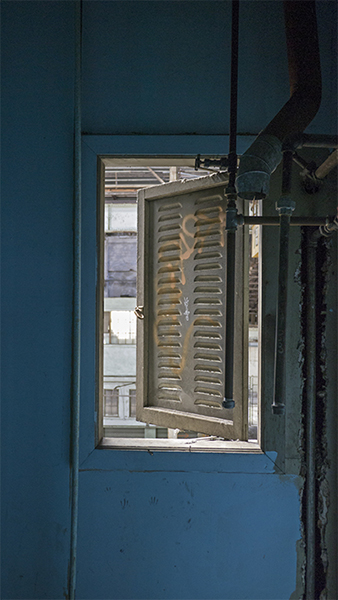
There is something about this time in the life of a building that intrigues me.

Since I was not able to photograph during its productive era, I can only imagine what was happening in these rooms when they were in use.
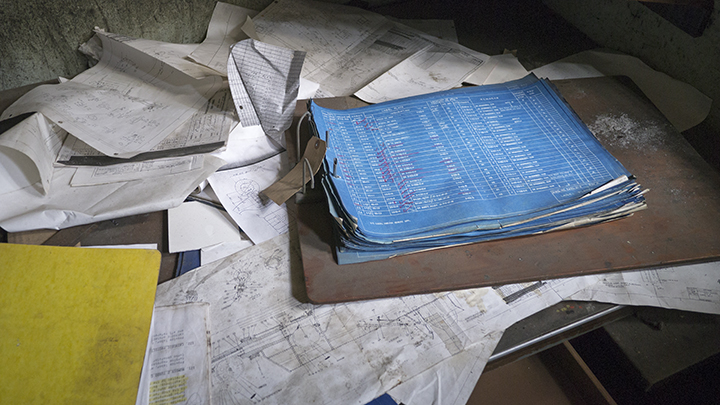
But there is usually enough evidence left behind to give an inkling to what it might have been like to work here.
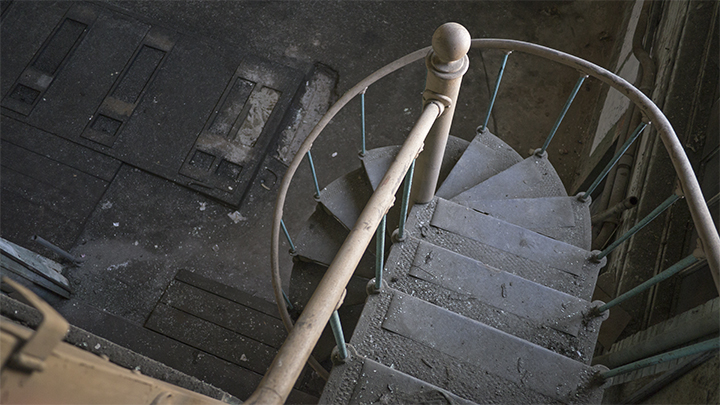
And the light is always so natural and soft.

This building is huge. It was part of a ship building and dry dock facility which at one time was part of Bethlehem Steel. I believe that it was originally the Union Iron Works.

Which at one time must have employed a ton of people.

I especially like old locker rooms and bathrooms.
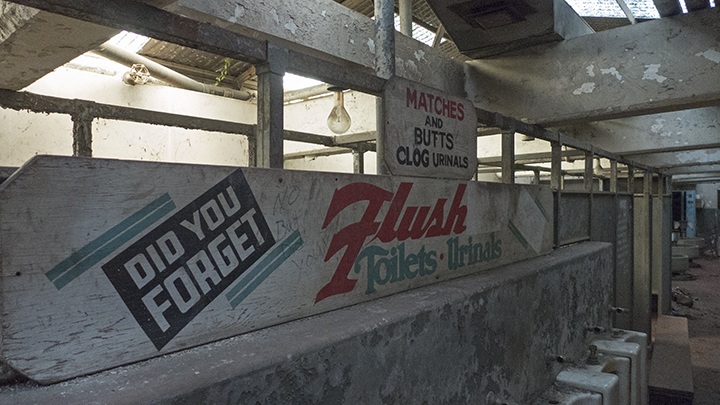
Nice sign over the urinals.

It is not difficult to imagine people using these sinks after a long day’s work.

I like this little office in the middle of everything.
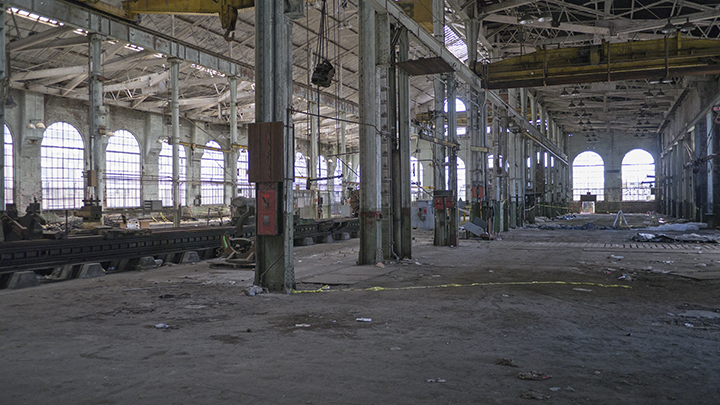
This is a view of the second floor of 113.
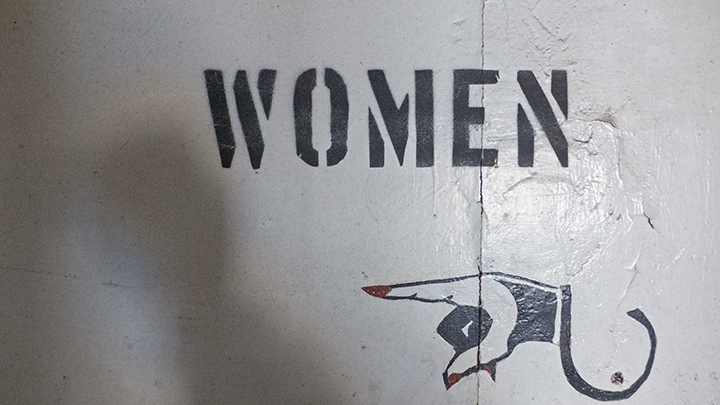
How about the red fingernails painted on this stylized hand which points the way to the rest room?

This color green shows up regularly in buildings like this one. The light fixtures give a bit of a clue to when this office space was last renovated. I’d say mid 1960’s.

These last few shots are from building 104 which seems to have been mostly used for administrative offices.

This is the top floor of 104. You can just see the skylights which at some time were painted black.
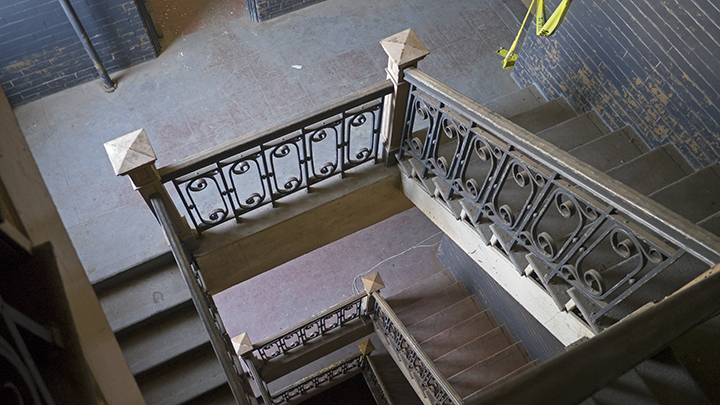
The staircases are fantastic.
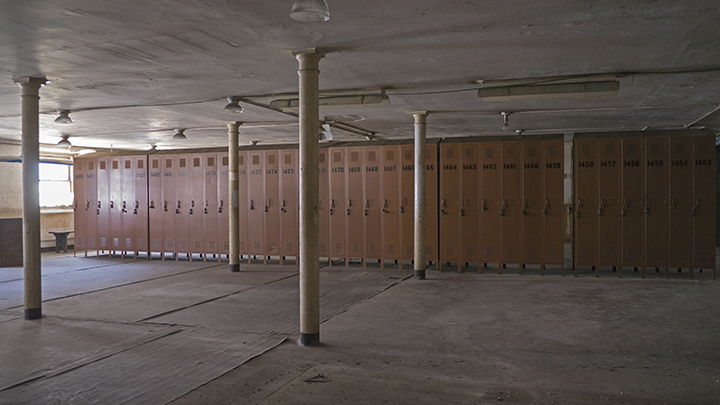
More lockers here, and it seems odd to me that they were in what was essentially an office building.

There was a small hospital in one wing of 104, and with all the machinery that is saw, I can imagine it was a busy place at times.

Thanks so much to the Orton Development people for granting me access to these amazing buildings. And of course to Toby and Jerry. Here are a few links to learn more about the site, its history, and future. Click here and here.
Stahl House (Case Study House #22)

I have been fortunate as a photographer to get into a number amazing buildings. Not many quite as incredible as the Stahl House in LA. Cristine’s sister Lynne and her husband John are docents there, and on Sunday evening we had the privilege to be in one of the most iconic mid-century homes in the world.
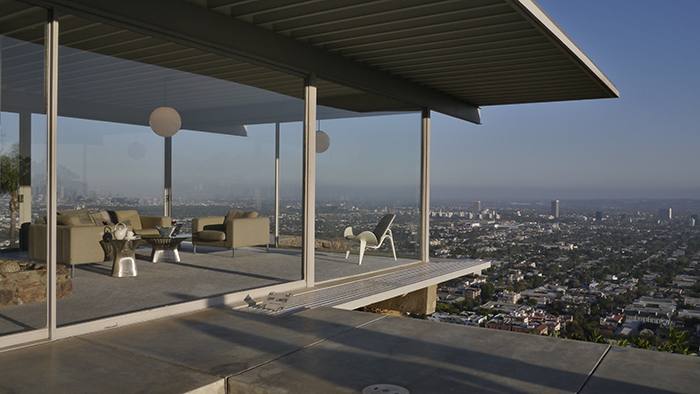
The story of the house is well documented so I will not go into it, but it is well worth reading about. Click on the Stahl House link above and you can read a bit more about it here.

The most amazing aspect of the house now is that it is still family owned, and they have graciously made it open to the public. For what is a very reasonable fee, small groups can have guided tours (possibly by Lynne and John) that allow visitors to experience something so rare that it is almost inconceivable. (Cristine looks quite at home in this shot.)

This is a stitched photograph (2 images) that is not perfect (one funky area that I noticed right away), but it shows the house pretty well at twilight. / Big thanks to the Stahl family, and especially to Lynne and John who have become experts in mid-century architecture and artifacts. They also docent at the Eames House, which is open to the public on a limited basis. / Go to the Stahl House website to poke around and set up a tour. If you are in LA it is easily one of the top 5 things to do.
London Bits and Pieces

I always try to be positive when I post here, so I will not say much on the death of Margaret Thatcher. But here is a link to a great song. This photograph was taken on 11 November, 1980 on Remembrance Day. It used to be possible to get pretty close to Number 10.
As I was going through my contact sheets I came across a couple of other shots I have been meaning to post here.
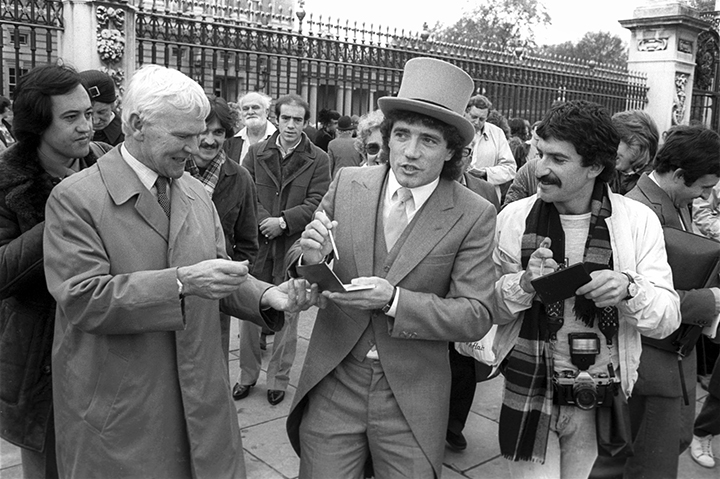
I think this is the English footballer Kevin Keegan outside of Buckingham Palace on 9 November,1982, the day he received his OBE from the Queen. Anyone out there who can correct me?
And finally, this shot.
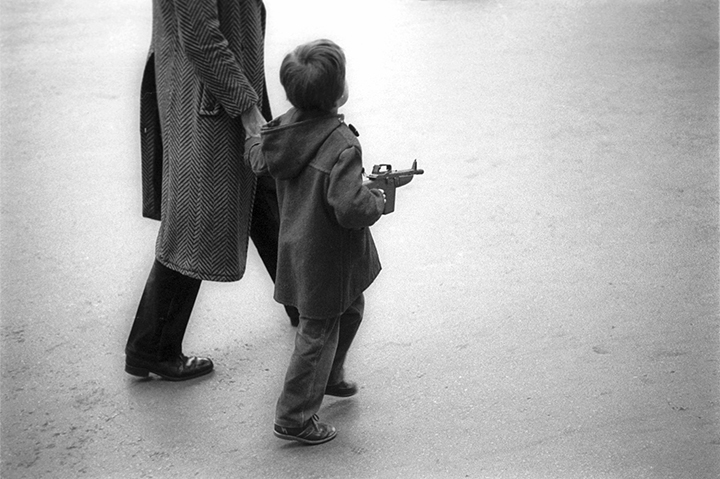
This photographed has always gotten to me. I have a framed copy above my desk here in my studio. I was walking through Victoria Station in November of 1983 and saw this child, with an adult who I assume is his father. A month later the IRA set off a bomb outside of Harrods that killed six and injured 90. I am not sure why I put the two events together, but the connection of toy guns and real violence seems reasonable to me.
A Saturday Post
Here’s a bunch of random stuff.

On our last day in New Orleans we took the trolley out to the Garden District. I was very happy to walk under The Pearl neon sign and see that it was turned on this time.

I have always liked wandering around graveyards and the Lafayette Cemetery was near to the trolley.

There is a great bookstore nearby and I was finally able to find a copy of Maira Kalman’s “And The Pursuit of Happiness”. I have been looking for a while now, and was so happy to find it. She sent me the nicest email about the Willard Suitcases and I was eager to see this book, as I really like her work. I especially like that she mentions the numbered graves at Gettysburg since they are so much like the ones at the Willard cemetery.
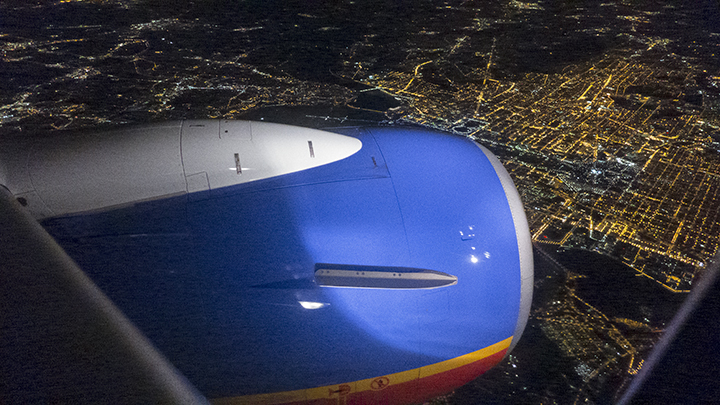
We flew back very late into BWI and this is what I saw out the window as we flew over DC.
I had a great shoot on Wednesday with another amazing writer. Poets & Writers asked me to photograph Neil Gaiman and he is the nicest guy. I can not post any shots until the story runs sometime this summer, but I will as soon as I can.
And finally, we drive Peter to DC tomorrow to help him find a place to live and get him settled. The usual melancholy has been creeping in and so I have been listening to a lot of Percy Grainger. I have always been so taken with his music. I seem to recall as a boy listening to a CBC program with my dad that used this piece as a theme. Here’s another that I especially like. The thing for me about Grainger is that there is an element of sadness in his music in spite of the light-hearted feeling of the tunes. He was a pretty out there fellow and the one quote of his that I think of often is him talking about his work. When speaking of his use of harmony, he said “My efforts even in those young days, were to wrench the listener’s heart with my chords. It is the contrast between the sweet and the harsh…that is heart-rending…And the worth of my music will never be guessed, or its value to mankind felt, until the approach to my music is consciously undertaken as a ‘pilgrimage to sorrows.'”
Shenango China

This beautiful plate was underneath my little metal teapot at Golden Coffee this morning. Ever since I lived in central New York State I have turned plates over to look for the Syracuse China mark on the back. Here’s a link to a previous post. I was surprised to see the logo on the back of this plate.

To me it looks like a Native American strangling a big dog (Mr. Rorschach anyone?) When I searched the company name I saw other examples that make it look like a Native American sitting on a blanket hitting a drum. No definitive answer though. This is particularly interesting to me since I grew up in Meadville, PA which isn’t far from New Castle. Sadly, the company is now closed.
Sunday Telegraph Magazine
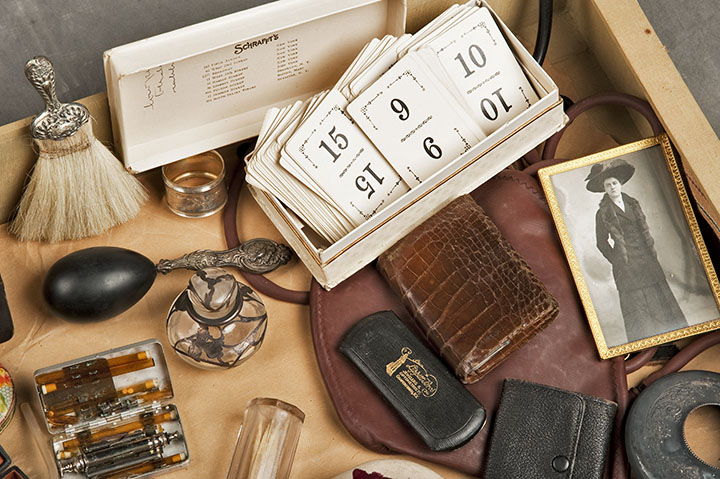
I almost forgot. Tomorrow’s (10 February, 2013) London Sunday Telegraph Magazine “Seven” will feature an article on the project written by Lucy Davies. I haven’t seen it yet, but check it out if you are in the UK.
San Francisco

Hey everyone, tomorrow I fly to San Francisco to help plan how my portion of the “Changing Face of What is Normal” exhibit will be hung. (Providing Logan in Boston is open for business. We had 20 inches of snow here in Western Massachusetts overnight, and Boston got totally wailed.) I’ll try to post daily from out there. I don’t know how much free time I will have, if any, but if you are in the area and want to meet up for a brief visit, just send me an email. It might work. This photo is from Flora T’s case. I think I published it in an earlier post, but lately this image has been sticking with me. The print I made is absolutely beautiful.
Binghamton Asylum Glass Plate Negatives

In the late 1980’s Brad Edmondson and I went down to the Binghamton asylum buildings that I was photographing for my original New York State asylum project. While were in the “Castle” building we came across a room that was filled with boxes of glass plate negatives of patients from the early days of the asylum. It was an amazing trove of images and we immediately hoped to be able to do something with them. We had no luck getting access, but I have thought about them over the years. Craig Williams from the New York State Museum arrived at the facility on the morning of 11 September, 2001 to have a look, but events of that day put the kibosh on his access. About a month ago I heard that the Broome County Historical Society had finally made arrangements to check out the plates. On Friday I went to Binghamton to have a look at their efforts to organize, clean, and catalogue every plate. It is such a relief to know that they are finally in safe hands and will be preserved.

The negative’s eventual home is still up in the air, but the Greater Binghamton Heath Center which runs the facility is eager to get them into safe hands. Here you see one of the volunteers cleaning the non emulsion side of a plate. They are all a bit dusty, but otherwise in amazing condition.

Here’s another box of unexposed plates. Love the graphic design.

I am always on the lookout for bits of ephemera from the buildings. Another object from the collection is this very cool typewriter.

I’ve never seen one like this and haven’t had the time to research the brand. Anyone out there ever heard of the Printype Oliver Typewriter?

It is a beautiful machine and I like the little character in the photo below.

Old keyboards are also interesting.

Thanks to the Broome County Historical Society and the Greater Binghamton Health Center for allowing me to see the plates. And to Roger Luther who like me has a great interest in New York State asylums.
 Jon Crispin's Notebook
11 comments