Sutro Baths
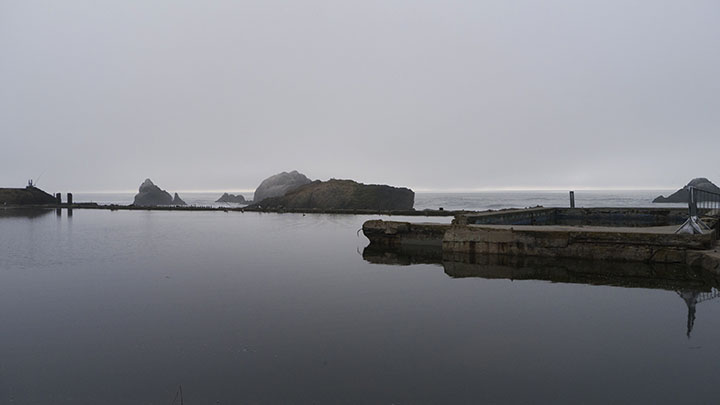
I am sitting in the San Francisco airport waiting for my redeye flight home. This morning’s quick meeting with the team ended well. I know know pretty much what I need to do in the next few weeks as far as printing goes.
I had yesterday pretty much to myself. Around noon I met with an old friend from Ithaca, Katie Harhen and we ate a couple of dozen oysters in the Ferry Terminal and had a great time catching up. She is a really wonderful person and has created a great life out here in the Bay Area.
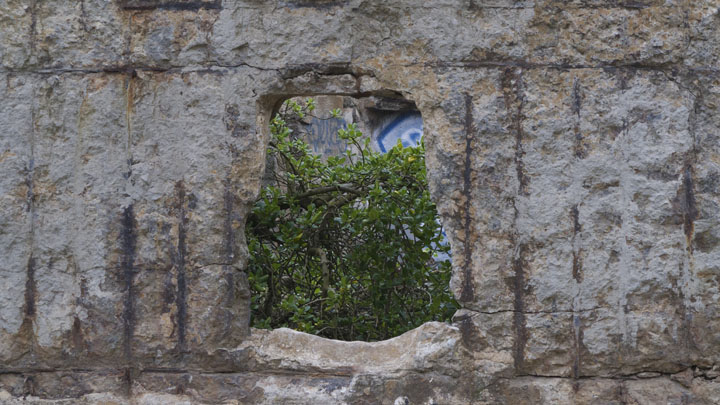
I had been hearing about the Sutro Baths from the Exploratorium folks and Stephanie Bailey said it was her favorite place in the area. I hopped on the Geary bus and after a long ride out to the western-most part of SF got to a cliff above the ocean.
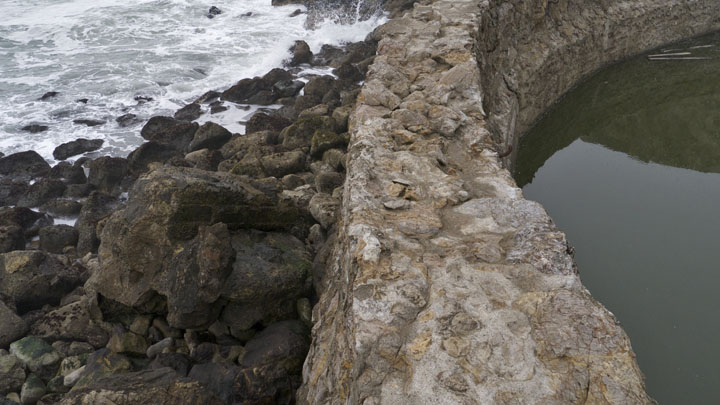
I especially like the fact that except for a few spots one is totally free to roam around the ruins without having to be warned of imminent danger. It is part of a National Park, and for now the only areas that are closed off are to do with a river otter that has taken up residence. (He wasn’t there when I showed up.)
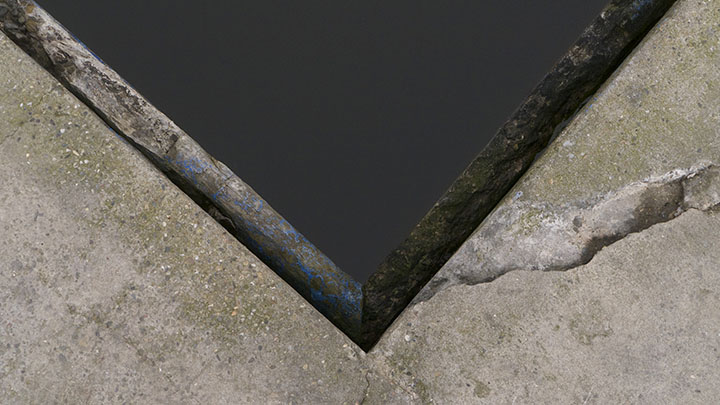
There was a little tunnel through the rocks that was kind of eerie. You could hear the waves crashing and in a few spots could actually see the water.
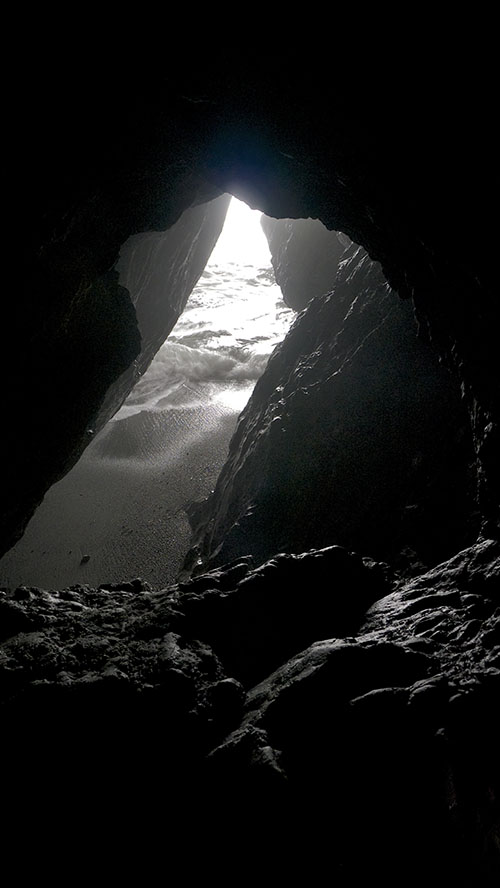
The ocean was a steely gray for most of the time I was there.

It was foggy and quite cold when I arrived and just as I was leaving at about 5.00, the sun came out.

The flora reminded me a lot of what you would see on the Cornwall coast.

It is a very special place. And the gift shop at the top of the hill is way cool. I got a great mug and a bunch of vintage postcard reproductions. It is always completely baffling to me how something as cool and popular as the baths can virtually disappear. Check out some other links to the history of the place and be sure to visit if you are in the area.
Shenango China

This beautiful plate was underneath my little metal teapot at Golden Coffee this morning. Ever since I lived in central New York State I have turned plates over to look for the Syracuse China mark on the back. Here’s a link to a previous post. I was surprised to see the logo on the back of this plate.

To me it looks like a Native American strangling a big dog (Mr. Rorschach anyone?) When I searched the company name I saw other examples that make it look like a Native American sitting on a blanket hitting a drum. No definitive answer though. This is particularly interesting to me since I grew up in Meadville, PA which isn’t far from New Castle. Sadly, the company is now closed.
Telegraph Article

The Lucy Davies article about the suitcases is now online. Here is the link to the story. And here is the link to the slideshow. It is getting quite a bit of response. / Things are moving along at the Exploratorium. It is all about working with a committee, so it feels a bit different, but when done, it is going to be very interesting. / The 14 suitcases arrived safely last week in these lovely blue shipping containers and are being prepped for display. It is all quite exciting.
Long Day

It has been a long but good day sorting out plans for the Exploratorium exhibit. I’ll post a longer update tomorrow morning. In the meantime, as someone once said, “When in Rome, do like Romans” (or at least drink their beer).
Golden Coffee

My flight to San Francisco went smoothly. I am staying at the same part of town where Claire Larkin, Peter Carroll, and I stayed when we were working on a project for the Smithsonian American Art Museum. We came to Golden Coffee for breakfast most mornings. It is fabulous. They were still closed this morning when I went out to get tea, but I’ll head over there in a bit to have breakfast and then off to the Exploratorium.
Sunday Telegraph Magazine
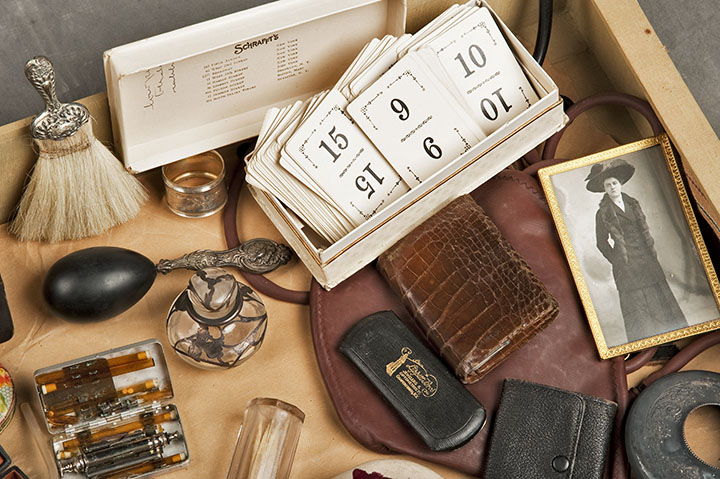
I almost forgot. Tomorrow’s (10 February, 2013) London Sunday Telegraph Magazine “Seven” will feature an article on the project written by Lucy Davies. I haven’t seen it yet, but check it out if you are in the UK.
San Francisco

Hey everyone, tomorrow I fly to San Francisco to help plan how my portion of the “Changing Face of What is Normal” exhibit will be hung. (Providing Logan in Boston is open for business. We had 20 inches of snow here in Western Massachusetts overnight, and Boston got totally wailed.) I’ll try to post daily from out there. I don’t know how much free time I will have, if any, but if you are in the area and want to meet up for a brief visit, just send me an email. It might work. This photo is from Flora T’s case. I think I published it in an earlier post, but lately this image has been sticking with me. The print I made is absolutely beautiful.
The Amazing Beverly Courtwright
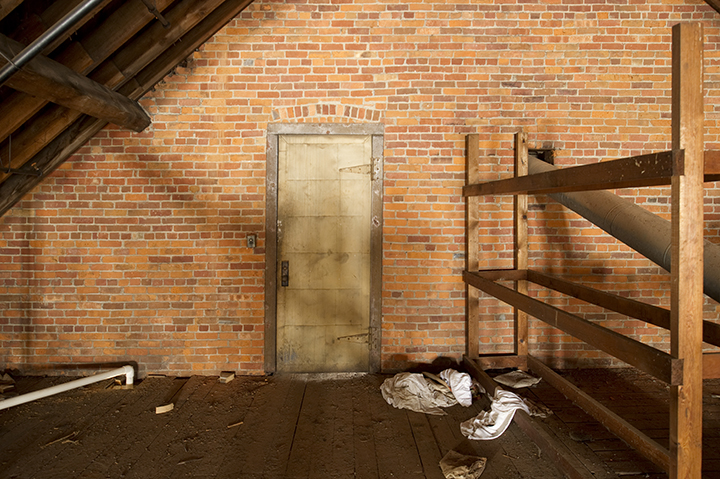
I have always given primary credit to Craig Williams for saving the Willard suitcases, and his contribution to the preservation of these objects was enormous. But if it wasn’t for Beverly Courtwright’s connection to Willard and her tremendous respect for the patients and their lives, the cases would have been lost forever. On Saturday I got the chance to meet her for the first time, and thanks to the corrections folks who now control the site, we were allowed to go into the attic for a few minutes. It is behind this door that in May of 1995 Bev “rediscovered” the cases. She had become one of the Willard employees heavily involved with the transition team responsible for shutting down the psych center. As a storehouse clerk, part of her task was to go through all the buildings to determine what should be saved and what could be thrown out. She described the first time she opened this door and saw the cases stacked up as a surreal experience, and told me that she felt a “whoosh of energy” sweep over her.

She grew up in the area, and as a child remembers Willard patients coming to her home through the Family Care program that allowed for patients not in need of direct care to live temporarily in private homes.
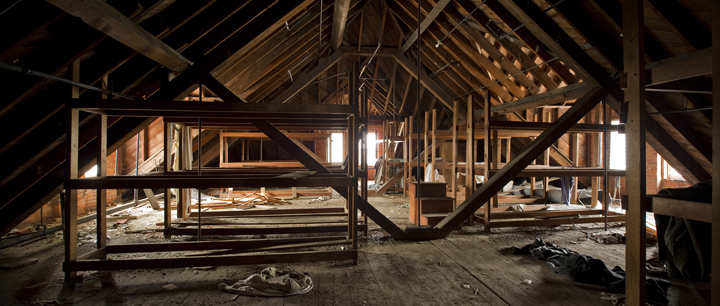
This is what the attic now looks like when you walk through the door. The racks are on either side of the attic with men’s cases on one side and women’s on the other. When Bev was talking about being up here for the first time it literally gave me chills.

You can see the letters on the racks representing the first initial of the surname of each patient. Whomever set up the system did an amazing job. I find it so interesting that as in the residential parts of the buildings, men and women were segregated up here as well.

There were a very few items left behind that could not be linked to a specific patient. This coat was one of them. / As my work on this project continues, I am constantly overwhelmed by the people I meet and the stories that they have to tell. Late last night I got an email letting me know of a new comment on this post. Scroll down toward the bottom of the comments section and read what Stephanie had to say. / Getting into the attic and meeting Bev really tied together everything that I have been trying to say with my work on this project. She is a truly remarkable person with a huge heart and the ability to convey a great sense of connection to the people who were at Willard, and I just want to thank her for all she has done.
Binghamton Asylum Glass Plate Negatives

In the late 1980’s Brad Edmondson and I went down to the Binghamton asylum buildings that I was photographing for my original New York State asylum project. While were in the “Castle” building we came across a room that was filled with boxes of glass plate negatives of patients from the early days of the asylum. It was an amazing trove of images and we immediately hoped to be able to do something with them. We had no luck getting access, but I have thought about them over the years. Craig Williams from the New York State Museum arrived at the facility on the morning of 11 September, 2001 to have a look, but events of that day put the kibosh on his access. About a month ago I heard that the Broome County Historical Society had finally made arrangements to check out the plates. On Friday I went to Binghamton to have a look at their efforts to organize, clean, and catalogue every plate. It is such a relief to know that they are finally in safe hands and will be preserved.

The negative’s eventual home is still up in the air, but the Greater Binghamton Heath Center which runs the facility is eager to get them into safe hands. Here you see one of the volunteers cleaning the non emulsion side of a plate. They are all a bit dusty, but otherwise in amazing condition.

Here’s another box of unexposed plates. Love the graphic design.

I am always on the lookout for bits of ephemera from the buildings. Another object from the collection is this very cool typewriter.

I’ve never seen one like this and haven’t had the time to research the brand. Anyone out there ever heard of the Printype Oliver Typewriter?

It is a beautiful machine and I like the little character in the photo below.

Old keyboards are also interesting.

Thanks to the Broome County Historical Society and the Greater Binghamton Health Center for allowing me to see the plates. And to Roger Luther who like me has a great interest in New York State asylums.
Roasted Veg

I roasted some veg for dinner tonight. I usually steam them for a few minutes to get them ready for the oven. When they come out of the steamer, the colors are very intense. Here are some sprouts, carrots, and small onions. Later I added potatoes. I put some olive oil in a bowl, lots of salt, pepper, and herbes de provence then roll ’em around. Into a very hot oven for an hour. So tasty.


5 comments